Leaving Los Angeles
There are times when I think back to when I was a moody teenager during a family holiday in a damp Bundoran resort. On one of the least wet days, we were packed into the Nissan Vanette and headed off to a remote Glencolmcille. I failed to see the benefit of marvelling at the same green-brown landscape in Donegal that we had left behind at home. But in reality, I was more put out at having to leave the cute girl in the hotel that I had been hoping to engage in conversation.
I remember standing against a grey sky, looking out over a patchwork of small, stone-walled fields that seemed to stretch endlessly across the hilly landscape. A small red tractor drawing a silage harvester was moving quickly between them in a desperate race against the impending rain. The duo were zipping in and out, cutting the grass of each field in turn. Coming from North Mayo of larger, irregular-shaped fields, I was struck by how small and uniform these Ulster ones were.
I must have said something to my father about how easy it would be to end up harvesting the wrong field, but it wouldn’t matter so much because each one was tiny. And I remember his reply as his eyes squinted against the dying light.
“It doesn’t matter how small the field is," he said, “If you’re working in the wrong one, every second you’re there is too long.”
I never did work up the courage to chat to that girl, but I did carry my Dad’s words with me. And in recent months, they have come back into my mind. Because that, in the end, is what leaving Los Angeles has come down to.
Not failure. Not even frustration, exactly. But the growing realisation that, for us, this is simply the wrong field to be working in.
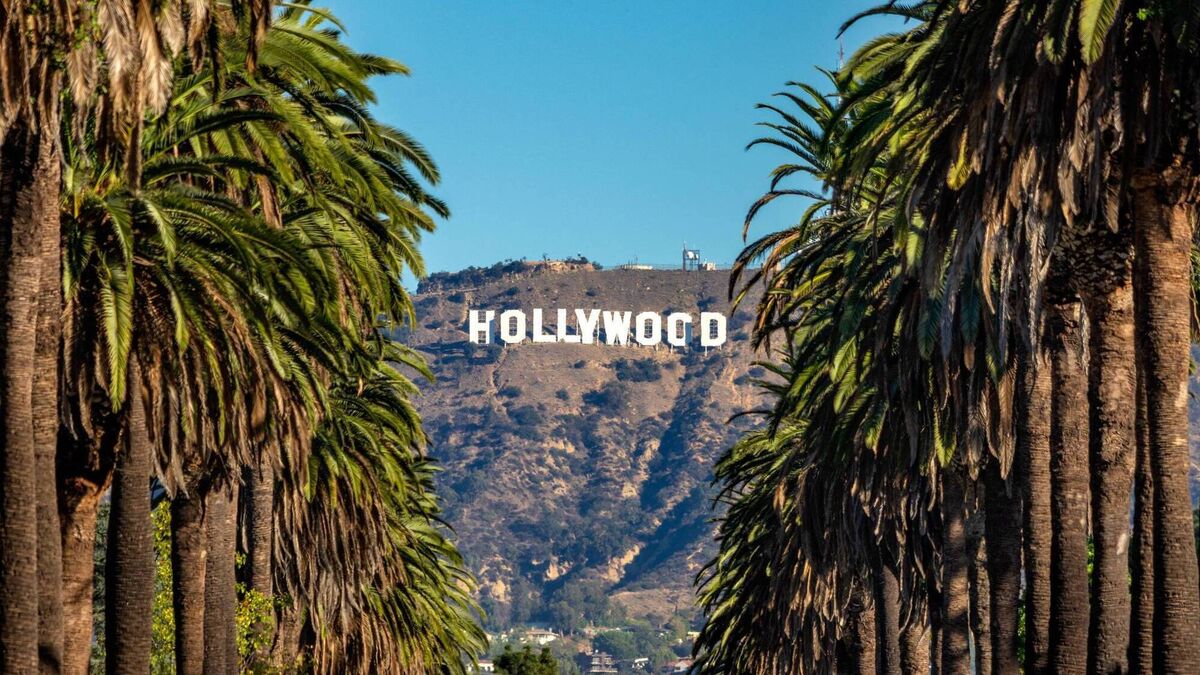
My wife and I came to Los Angeles, as so many do, drawn by the promise of opportunity in film and television. For decades, this city was the centre of that world. The place where careers were made and where 'The Industry', as it was simply known, was concentrated in all its forms.
That aura still exists. You see it each year in the spectacle of the Oscars, in the mythology that surrounds Hollywood, and in the continued belief that if you want to “make it” this is where you need to be. But the reality on the ground has shifted.
Work has been leaving Los Angeles for years now. What began as a gradual drift, to places like Atlanta, Toronto, and further afield to Ireland, the United Kingdom and Eastern Europe, has accelerated into something more permanent. Productions follow tax incentives, less red-tape and lower costs, and increasingly they do so without any real need to return.
At the same time, the industry itself is changing. Traditional cinema is in decline, cable television has been eroded, and streaming platforms are locked in constant competition, searching for a profitable model that still seems just out of reach. More and more viewers are turning instead to platforms like YouTube or TikTok, or to short-form 'vertical' dramas designed for smart-phones rather than TVs or movie theatres.
Alongside that comes a quieter but more profound shift. The rise of artificial intelligence raises serious questions about the future of creative work itself. Scenes that once required hundreds of extras can now be simulated. The large-scale productions that sustained thousands of jobs are becoming leaner, more efficient, and inevitably, less reliant on people.
For actors, writers, crew, and producers, the effect is cumulative. Work has not disappeared entirely, but it has thinned, fragmented, and in many cases moved elsewhere. The ladder has not just become harder to climb. It has begun to collapse from the top down, with those once in secure positions moving into roles that displace those below them.
And even if the work were still here in abundance, a more basic question remains. What kind of life does Hollywood now offer?
It is often said that Los Angeles is a difficult city, and that is true in ways both obvious and subtle. The traffic alone is enough to test anyone’s patience. Journeys of a few miles can take hours, and the daily grind of commuting creates a baseline level of stress that rarely lifts. But it is not any one thing that wears you down. It is the accumulation of small, constant frictions.
The simple act of going out - to eat, to shop, to run errands - becomes a series of negotiations. Prices rarely feel final. Taxes (federal, state and city) are added at the till, tipping is expected, and increasingly expected at higher rates. The moment of paying carries with it a quiet moral pressure, a sense that you are being judged, that you must respond correctly. Even liberal Americans have become fed up and are drawing a line at up to 30 per cent tips for often barely mediocre service.
Basic commercial transactions can become tense. Sales representatives without any paid-time-off are pushed to sell constantly, turning even casual interactions into transactions of sell, sell, sell. Retail return policies are so loose that conflict has become normalised. Those who complain the loudest are often rewarded, and staff, under pressure to avoid scenes, must absorb that tension. Don’t have the receipt? Returning a half-used shampoo bottle or returning clothes for the fifth-day in a row? Doesn’t matter, just yell, cry, scream and argue you are a victim and the harassed front-of-store employee will call the manager who returns your money for an easy life. Of course, you will jump online later to leave a nasty review, which the store will balance out with a fake 5-star commendation of their own. Some take it further by falling down in the building and suing later. Some just shoplift items knowing the security staff are told not to physically intervene. Some will do both.
Movement through the city brings its own challenges. Driving is often aggressive, road-rage common, parking scarce and expensive, and public transport - while extensive in theory - creates its own strain in fearful uncertainty. You are never entirely sure what you will encounter, as almost every bus or train journey will feature a public interaction with a disturbed, dangerous or perverted person, with or without the overwhelming smell of human neglect.
Overlaying all of this is a constant awareness of instability. Homelessness, visible mental illness, and low-level criminality or disorder are part of the L.A. landscape. Police sirens, fire-engine sirens, ambulance sirens and buzzing helicopters are frequent, loud, and unavoidable. There is a sense here that anything could kick-off at any moment, as Californian wild-fires can and do.
None of this is overwhelming on its own. But taken together, it creates a condition of low-level, day-to-day continuous stress. And that matters more than we might think.
Humans are well equipped to deal with short bursts of pressure, through moments of urgency, even danger. What we are less suited to is the slow, constant drip of tension that never quite switches off. Over time, it changes how we behave, making us shorter, sharper, more defensive. It turns ordinary interactions into points of anxiousness.
You see it in how people speak to one another. In the impatience. In the edge that creeps into routine exchanges. And, inevitably, you begin to feel it yourself.
There is, of course, another side to Los Angeles. For those who are successful, who find stability and carve out a space for themselves, the city can still offer a great deal. But that space is increasingly expensive and hard to secure, and for many, particularly those who came for film and TV, the balance no longer adds up.
In our own case, the shift has been more gradual than sudden. Our work is no longer tied to a single location or is easier done online. Opportunities exist elsewhere, and in some cases are easier to access from outside Los Angeles than within it.
So the question becomes a simple one. Why stay? Who are we disappointing?
The small farmer-Catholic-guilt reflex in me thinks we should stick it out but then I remember my own work cataloguing letters in the vast Imirce collection of emigrant correspondence at the University of Galway. History has often been quite different.
Those who left Ireland for North America in the nineteenth and early twentieth centuries moved often. They followed opportunity where they could find it, shifting from place to place before eventually settling. And even then, not always permanently.
My own great-grandparents, James and Margaret Heffron, left their native Ballycastle for Portland, Oregon, shortly after the Titanic disaster but changed their minds before disembarking, to travel on to San Francisco, where my grandfather was born. They later moved to New York raising three more kids, while James developed a very successful chauffeur business. However, he had only sights on opening a general merchant business at home and relocated back to Ireland during the throes of the Irish Civil War. Unable to secure a farm in Ballycastle, the family moved to Moygownagh just in time for the 1926 census (just released). They had almost come full circle.
It is something I also recognise in modern America too. People often move. There is less sense of finality about place, and more of a willingness to begin again. Less ties to hometowns. And so, as we are leaving Los Angeles, we do not see it as an ending, or a defeat. It is simply a continuation.
We do not yet know exactly where we will ultimately settle.
And perhaps that is no bad thing.
Because, as a wise man once told me, if you’re in the wrong field, “every second you’re there is too long”.