School divestment process needs flexible approach
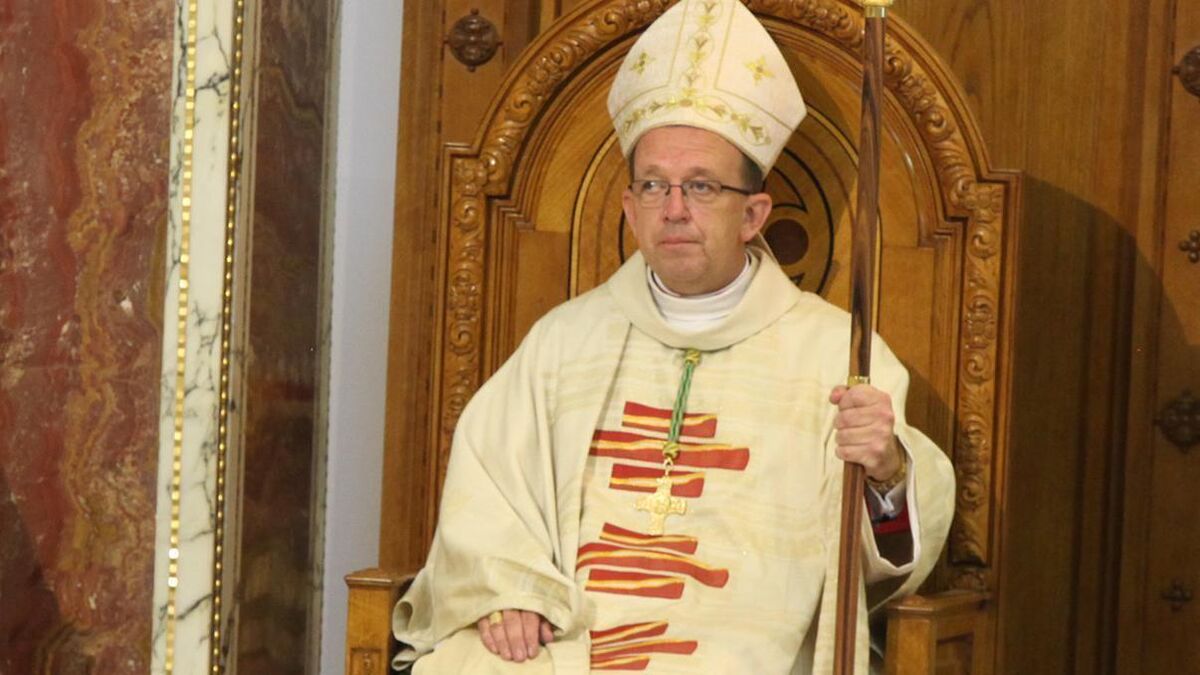
Bishop of Meath Tom Deenihan has 'has brought a much-needed air of reality to a seemingly interminable debate' about the future of Catholic schools. Picture: John Mc Elroy
Once bishops could be seen but not heard, apart from the regular interventions of the famous bishop of Cork, Connie Lucey, an outspoken and combative character whose main platform was the Confirmation circuit. Among his favoured subjects were: moral decline in Irish society, the dangers of communism and atheism, threats to Christian society worldwide, trade union militancy and ‘immoral influences’ in the media – including . More recently, Catholic bishops for good reason have tended to avoid the media. It’s even said that the compelling wisdom behind their apparent vow of silence is the belief (as one bishop conceded) that ‘we’re only annoying people’.
So the recent intervention of the Bishop of Meath Tom Deenihan at a function honouring the 50th anniversary of a Catholic primary school, St Oliver Plunkett’s in Navan, is unusual - particularly in its directness. Catholic schools, he said, are popular, well supported, serve their communities and are genuinely inclusive. But, he continued, the depiction of Catholic schools is generally ‘negative, ideologically driven and adversarial’. They are presented as ‘grim places of indoctrination that children are forced to attend by Church and State’. That discourse and narrative, he concluded, is ‘ill-informed and false’. Yet, he continued, ‘various groups, supported by funding from ideological, philanthropical entities, many from outside the State, continue to lobby politicians and media with a rather narrow, nuanced and distorted narrative.’
A few markers are needed to give context to what the bishop is saying. One, parents are the prime educators of their children. Two, the State has the responsibility to provide education. Three, what makes it difficult to introduce, say at primary level, a fair and equitable educational service for all Irish children is the huge, almost overwhelming number of Catholic children in comparison to those from other religious denominational schools and non-faith schools. Four, the Department of Education for the last fifteen years – since the then Minister for Education Ruairí Quinn set up the Forum on Patronage and Pluralism in 2011 and which has continued under seven Ministers for Education to the present time – has had a policy of securing a process of divestment of Catholic schools in order to secure a fair and equitable educational service for mainly non-faith schools. Five, the Catholic Church has accepted the need for divestment of schools, including the divestment of Catholic schools.
While in theory the divestment process was accepted as obvious, necessary and important, the gap between Ruairí Quinn’s hope to see 1,500 out of the then total of 3,000 primary schools divested varied substantially from the then prediction of a spokesman for the Catholic School Partnership (CSP) who suggested that a transfer figure of 10 per cent was more realistic. In a recent analysis in , Patsy McGarry commented that ‘as of 2017 just 10 schools in Ireland had completed the divestment process’ and concluded that the CSP figure was ‘nearer the mark’.
What has emerged is that while all are agreed that the divestment of Catholic schools is an essential prerequisite in securing a fairer system for all schools, the process is much more complicated and delicate than some of those involved are prepared to admit and this is apparent in reactions that extend from insensitivity to depicting Catholic education in Bishop Deenihan’s words, as ‘negative, ideologically driven and adversarial’.
Clearly the divestment process is patently ‘not working’. Inevitably, this is leading to huge frustration on the part of those responsible for moving the process forward. Recently Séamus Mulconry, the general secretary of the Catholic Primary Schools Management Association, suggested that ‘if some of those making the loudest noises... stopped treating it (divestment) as an ideological point-scoring exercise and looked at it as a shared challenge for both church and the State, I think the problem is solvable’.
Other difficulties encountered by the divestment process, especially in situations where community or school support has to be ‘encouraged over the line’ are misinformation, scaremongering, secretive clergy objections, community interference, as well as suggestions of enforcement, coercion, even bullying. In other words, across the full spectrum of standard local consultation.
At the same time it’s not rocket science, as we say, and shouldn’t be beyond the goodwill, respectful support and Christian patience of different religious traditions to gather support for a project that is doable, workable and necessary for the common good. That said I listened recently to someone who had direct experience of a situation that seemed ideal for the divestment model.
In a parish with four Catholic schools, each of which had around an estimated minority of 20% Church of Ireland pupils, it seemed ideal for the divestment of one Catholic school and the movement of the 20% of the other schools to the divested school building. But even what seems like a simple solution became unstuck. Respect and flexibility would seem to be important constituent factors in making real progress over the divestment of schools but sometimes one or both are absent from the process without leave.
In bringing clear accusations against those who are more interested in ideological grand-standing than in devising a middle way towards securing a fair and equitable educational service for all schools, Bishop Deenihan has brought a much-needed air of reality to a seemingly interminable debate that seeks to impose conditions on those who seem to expect even demand not just their right to the freedom and opportunity to be loyal to their own traditions but in the process to presume to adjudicate on the traditions of others.
Unless all sides are prepared to respect the rights of others and to adopt a flexible approach towards working to achieve what is possible to achieve, the effective stand-offs that demand that others capitulate in deference to the superiority of one agenda simply ensure that the whole process will eventually run into the sand. The policy of picking off low-lying fruit to impress those who agree with us may entertain the troops but its ultimately a counsel of despair.