A sensible way to spend our tax windfall
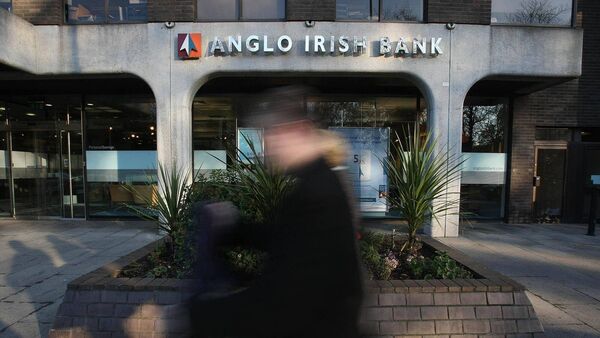
The former headquarters of Anglo Irish Bank on St Stephen's Green in Dublin.
Having too much money is a strange difficulty. We are unusual among the countries of the world in that we have a huge and growing budget surplus. In an era of cutbacks and strained budgets, it is an Irish peculiarity to have plenty. It is a particular peculiarity for that to be a difficulty. But a difficulty it remains.
The latest projection is that our surplus - what we have left over as a state after everything budgeted for is paid - will reach €9 billion this year. That’s a lot of money. It should be a good issue to have to contend with. It shouldn’t be a problem.
But it increasingly feels like it is. Because as the surplus grows, so do the demands for the government to spend it. In a society where so many are under pressure, and where the price of everything continues to grow, that is understandable. And with inflation only going in one direction, those pressures and those demands are only going to get even more insistent.
What’s the problem with that? If we have money to spare why wouldn’t we spend it fixing problems in our society and reducing people’s burdens? Isn’t that what it’s for?
The issue is that we are not sure how long this surplus will last. And because it is so big, the stakes in spending it freely are higher.
To understand those stakes, we need to understand where all this surplus is coming from. It is almost entirely due to a massive surge in corporation tax, the tax on company profits. The surge is well known but the scale of it isn’t always appreciated.
The overall tax take from Corporation Tax used to be a small part of our overall tax take. It wasn’t long ago that the tax took in €4 billion a year: it is now heading for forty – yes, that’s right, heading for €40 billion. This tax alone now represents well over a quarter of our overall tax take.
What has caused that massive jump? Is it because our economy has been growing with more companies making profits from that growth? That explains only a small portion of it. Almost all of the increase has come from the decisions of a very small number of international companies. The detail of this need not detain us, but changes in international tax arrangements from 2015, meaning a number of companies have brought more of their intellectual property assets here, have worked out very favourably for Ireland. The tax take has therefore increased exponentially – without us having done anything in our real economy to earn it.
Many think that a very good portion of this tax is a pure windfall, which won’t last. With a few decisions in international boardrooms, large chunks of it could disappear. In short, no one knows whether we can count on large portions of this money.
This is why it is a problem to spend it. It would be a manageable problem if the money went on one-off things that last for years, like hospitals, roads, water plants. It is a bigger problem to use it for current expenditure, where you are obliged to spend the same amount again the following year, and so on.
Since the Corporation Tax intake started to grow so rapidly, we have essentially doubled our expenditure as a state – and a very significant portion of that increase comes on the back of income we are not fully sure of. If this was the finances of an individual, they would be awake at night, and not because they were planning how to spend more the following day.
But as a country, when you have such a big surplus, it is very hard to resist the calls for more spending, especially when the pressures on people are real. So, what is the best thing to do with the money?
We have been saving some of it for what is called the ‘rainy day’ and to build up a fund for the costs associated with us all getting older into the future as well as the challenges of climate change. That’s a good thing. But many think we do not save enough, and fear that the share we are saving is reducing over time. We should save more not less is the argument.
But with all those real pressures - and protests and blockades - it is really hard to build a political consensus to do that. In this climate, to argue that we should save is becoming more and more difficult. So is there a way we could build a consensus about what to do with this huge surplus, that doesn’t involve spending it all?
Perhaps there is. Back in 2008, as we all know, the banking bubble burst. All of us were left with massive bank debts, which we did not create, but which were strapped around our shoulders. It was desperately unjust. These debts were not our responsibility. They have hung over our society and our politics ever since.
We got quite a lot of the money back but the final debt we incurred from the bank bailout comes to at least €30 billion, depending on how you account for it, with Anglo Irish Bank responsible for the vast bulk of it. That money is never coming back. Worse, it still sits on our national debt pile, weighing down our futures.
We can’t seem to find a political consensus around the need to save for the future, so maybe a political consensus could be found for doing it another way.
If we have a massive windfall from a tax that we didn’t really earn and we have a load of debt from something that wasn’t our fault, could the action arising be obvious? Isn’t there a kind of justice in using €30 billion of this corporation tax windfall to pay off banking debt that was not of our making?
If we tried to establish a national consensus around that, would that bring us together? Would it command widespread support?
Politically, it might be easier to resist demands for more spending now, if we said we were going to use the money, not to save, but to get Anglo Irish Bank off our collective backs.
And it wouldn’t be blowing the money, far from it. When a downturn happens in the future – as it will – it would be a serious relief to have €30 billion less of debt on the national balance sheet. It would reduce our interest repayments today and make any future borrowing less expensive. There is surely something in the idea that paying off the debt - getting rid of the nightmare legacy of Anglo Irish Bank, a bank that turned on its head all idea of prudence - might just be a more politically palatable way to save.