Connacht GAA is exposed to some hard truths
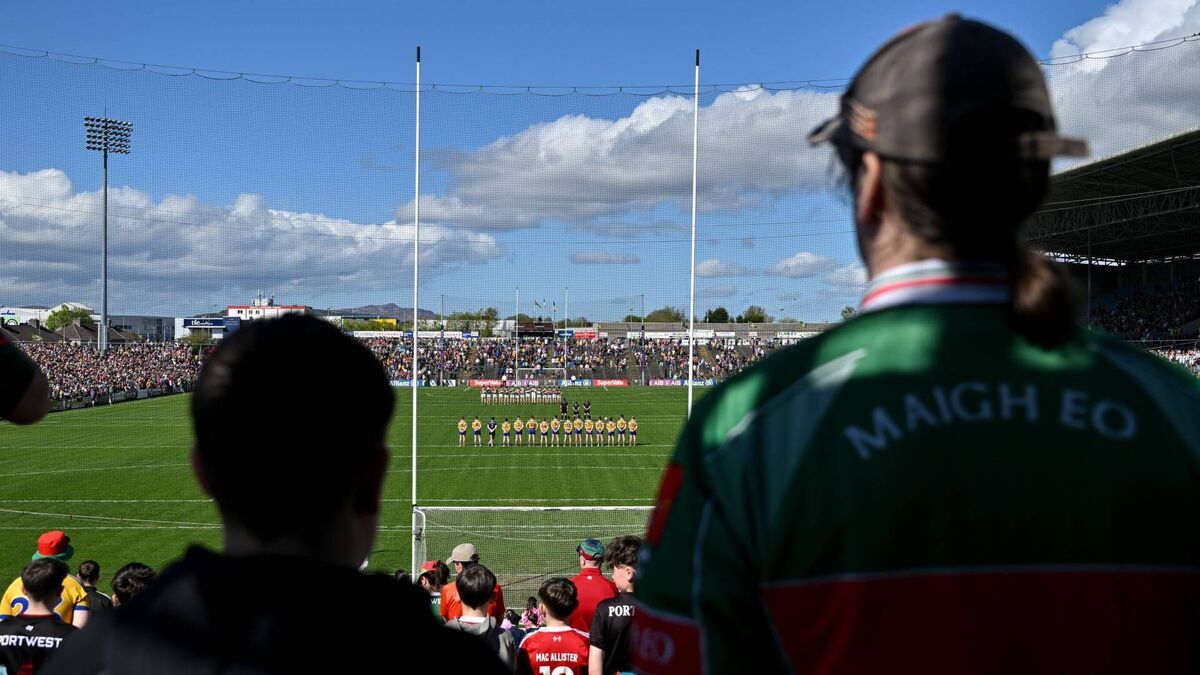
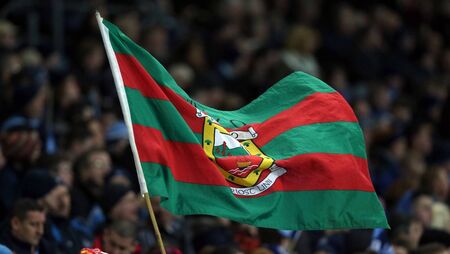
The players and fans stand for a minute's silence before the Connacht SFC semi-final between Mayo and Roscommon which saw a smaller than expected attendance of 15,321 pay into Hastings Insurance MacHale Park in Castlebar. Picture: Paul Phelan/Sportsfile
Oscar Wilde once described a cynic as a man who knows the price of everything and the value of nothing.
Sporting administrators, it could be said, occasionally act as though they studied economics at his knee. When Connacht GAA raised ticket prices this year only to watch attendances dip, some officials may have muttered under their breath about modern supporters: too fickle, too entitled, too fond of the couch and the screen. Nobody wants to go to matches anymore. Nobody appreciates what they have.
And yet elsewhere in the world, in a country where inflation has spent the last few ears rampaging through household budgets like a drunken bull in a china shop, supporters have been handing over money with the enthusiasm of pilgrims buying candles.
In Argentina – where pensions wilt, grocery bills mutate by the fortnight and the peso evaporates as quickly as it is earned – River Plate have recently sold out over 100 consecutive home matches in their stadium on the outskirts of Buenos Aires.
That is 85,018 people. Every time. For four years straight.
More than eight million tickets have been sold in a nation where many families struggle to buy food. All of this suggests one of two things: either something was put in Argentinian water systems that has caused the denizens of its capital to completely lose their minds, or the thing being sold in the city is not merely football.
In truth, what happens at the Estadio Monumental is not a football match in the way we commonly understand the term. It is closer to liturgy.
Hours before kick-off, the streets around the ground begin to throb. Smoke rises from grills. Beer flows. Drums beat somewhere in the distance as if there’s an ancient tribe preparing for a change of weather. By the time the teams emerge onto the field, the stadium is no longer a venue but an organism – roaring, twitching, convulsing in red and white.
And all the while there are fans behind the goal who have paid good money for the privilege of not watching the match at all.
They spend the 90 minutes with their backs to the pitch, arms aloft, conducting the stands like demented choir masters, summoning noise from over 85,000 throats as if personally responsible for keeping the heavens from falling in. The football, in many ways, is secondary. The match is merely the reason everyone agreed where to meet.
That is the part too many administrators miss when they stare at spreadsheets and wonder why one crowd arrives gladly while another mutters at the turnstiles.
River Plate are not selling football. They are selling belonging. They are selling memory.
They are selling the weekly reassurance that, in a world where governments collapse, currencies melt and life generally behaves like a shopping trolley with one bad wheel, there remains one place where everything still makes sense.
And this, of course, is the awkward lesson for Connacht GAA.
Because the issue is not that supporters in the West are uniquely tight-fisted, nor that a rise in ticket prices has triggered some great populist revolt against modernity. It is simply that the Connacht championship football does not – yet – occupy in the public imagination the same sacred real estate as a Sunday at the Monumental.
That is not an insult. It is a market reality.
For all its history and tribal pull, the Connacht championship remains a product still under construction – compelling on its best days, certainly, but not yet so indispensable that supporters will rearrange life around it without a second thought. It's not so immersive that the occasion itself becomes worth the admission before a ball is kicked.
And therein lies the danger for administrators everywhere: mistaking affection for addiction.
People may love their county. They may cherish the colours, the jersey and the inheritance of it all. But love, as many a poet and divorce solicitor can attest, has its limits when the price of devotion begins to outstrip the experience on offer.
Connacht GAA priced its championship as though it had already become a premium product. The turnstiles have thus far delivered a crueller verdict.
That is not to say Connacht GAA were wrong to believe their championship can command more. But value in sport, as in any marketplace, is not determined by the seller’s confidence in their own wares. It is determined by what people will pay when given the choice.
And that is the uncomfortable honesty of attendance figures: they care little for aspiration. Turnstiles are unsentimental things. They do not applaud strategic plans or nod politely through committee meetings. They simply count those who came and those who stayed at home, then present the answer in cold arithmetic.
River Plate does not fill the Monumental because some committee in Buenos Aires has decided their product is premium. They fill it because 85,018 people keep turning up and declaring, with their wallets and their voices, that it is.
That sort of demand cannot be decreed. It cannot be wished into existence by pricing strategy, nor summoned by invoking history and hoping supporters salute. It must be earned first.
Connacht GAA, perhaps, have priced according to what they believe the championship ought to be worth rather than what supporters presently believe it is.
That is not proof that the competition lacks value. Nor is it proof that supporters are unwilling to pay for quality. It may simply be evidence that the product has not yet reached the place its administrators believe it has.
Oscar Wilde also observed that the truth is rarely pure and never simple. The same applies here. Ticket prices alone did not thin Connacht’s crowds, just as atmosphere alone does not fill the Monumental. But if this summer has offered any lesson so far, it is that supporters have a habit of telling sporting bodies exactly what they think a product is worth – if only through the eloquence of empty seats.