Hazel – The tree of knowledge
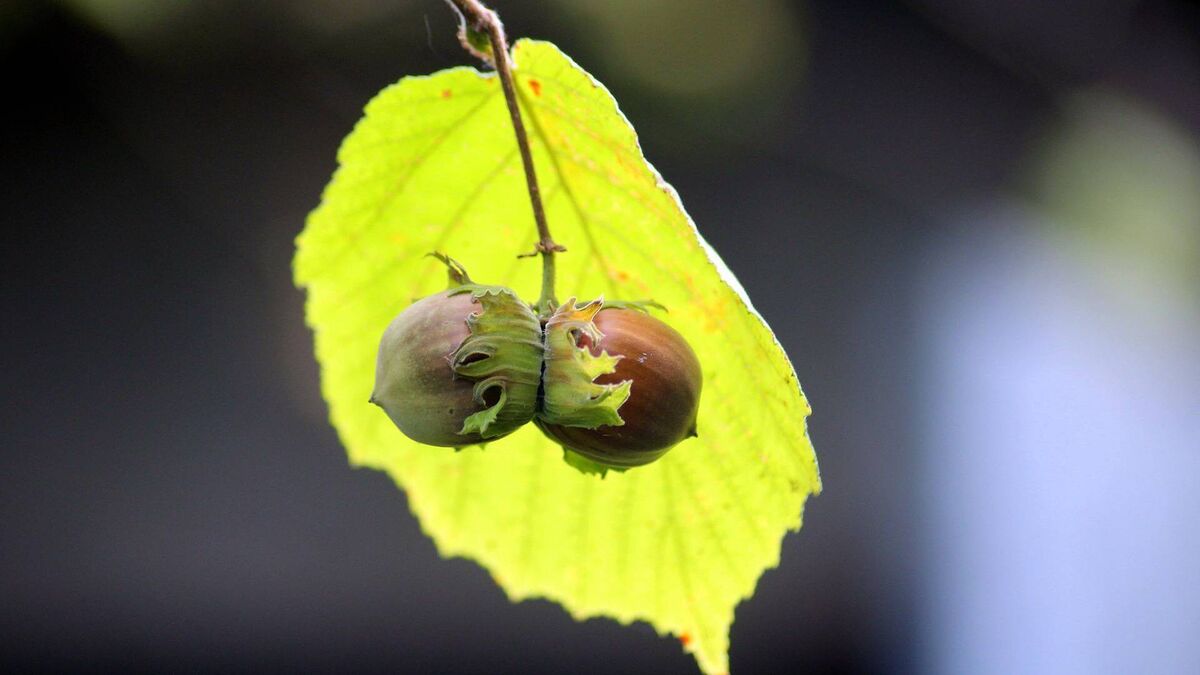
While arriving home with a bag of hazel nuts was an added bonus, cracking open the shells was another day’s work.
The Celts believed that all trees were sacred; each had a special curative property or spiritual significance. Among our native trees, few were held in higher esteem than the hazel – the Celtic Tree of Knowledge.
It is difficult to walk along an Ox Mountain river or climb an Ox Mountain slope without encountering a hazel tree. At this time of year, when their leaves turn and their fruit falls, it is not hard to imagine why the Celts found them to be both magical and useful.
The hazel is associated with mystical wisdom, poetic inspiration, and prophecy. In ancient Ireland, the hazel was considered a noble tree, one of the seven "noble trees of the woodland". This is likely due to i The Tree Council of Ireland gives a simple yet informative introduction to the hazel by pointing out its many uses.
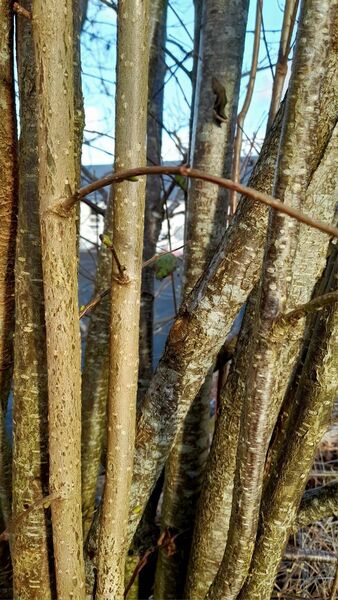
“A native species with many uses and an ancient history. Hazel nuts are one of the foods associated with the very earliest human settlements in Ireland of Mesolithic man, who also used hazel as the strong flexible timber for his huts. Hazel bushes may be coppiced i.e. cut right back to a stump, and will re-grow.
“The slender timber poles that result from coppicing were used in the construction of wattle and daub, and fences. Hazel is also a traditional material in the construction of eel and lobster traps. Hazel grows as an under storey in oak and ash woodlands or as pure hazel woods.”
Hazels are plants of the genus Corylus of deciduous trees and large shrubs native to the temperate Northern Hemisphere. The genus is usually placed in the birch family. Hazels have simple, rounded leaves with double-serrate margins. The flowers are produced very early in spring before the leaves. The fruits, or nuts, are topped with a husk, or hat, which partly encloses the shell. The English name for the tree and its nut is derived from the Anglo-Saxon haesel knut, haesel meaning cap or hat.
Hazel has long been a favourite wood from which to make staffs, whether for ritual use, for medieval self-defence, as staffs favoured by pilgrims, or to make shepherds crooks and everyday walking sticks. In the case of the latter two, the pliable nature of the hazel was used to bend the stems into the required shape. It was also customary to bend the hazel shoots when still on the tree to ‘grow’ the bend into a crook or walking stick. The wood readily splits lengthways and bends easily, which makes it ideal for weaving wattle hurdles for use as fencing or as medieval house walls when plastered with mud and lime. Hazel stakes bent to a U-shape were also used to hold down thatch on roofs. Like willow, young hazel shoots were used to weave a variety of baskets and other containers.
The Celts believed hazelnuts imparted wisdom and inspiration. There are numerous variations on an ancient tale that nine hazel trees grew around a sacred pool, dropping into the water nuts that were eaten by salmon (a fish sacred to Druids), which absorbed the wisdom. The number of bright spots on the salmon were said to indicate how many nuts a salmon had eaten. A Druid teacher, in his bid to become all-knowing, caught one of these special salmon and asked a student to cook it, but not eat it. While he was cooking, a blister formed and the pupil used his thumb to burst it. The student naturally sucked the burn to cool it, thereby absorbing the fish's wisdom. This boy was none other than Fionn Mac Cumhail and went on to become one of the most heroic leaders in Irish mythology.
provide information on the hazel, ranging from the supernatural power to the practical. They say that archaeological evidence from pollen analysis has shown there was a rapid expansion in the range of hazel between 11,000 to 6,000 years ago.
“Because the large nuts are not dispersed over great distances by small mammals, this has led to speculation that Mesolithic peoples may have transported the nuts with them as a food source, and thereby aided the expansion of the tree’s range.”
The Irish word for hazel is . When I discovered this word, it presented me with a light bulb moment because where I live in south Sligo, hazel groves, of which there are many, are commonly known as coillín or culeen. Coillín doesn’t just mean ‘small wood’ it means… hazel wood.
I remember two local culleens in particular; one along the banks of the river Moy and the other on the slopes of Knocknashee. The one along the Moy was positioned with the river on one side and a collection of ancient field monuments on the other. It was easy to see the fabled connection between the river and the salmon and the hazel in that situation. Maybe the was a Moy salmon.
The other Culeen, on Knochnashee, had an even more spectacular location, positioned as it was on the face of the ‘Hill of the Fairies’. Now that I know the connection between the Celts and the hazel, I imagine that this grove was cultivated by the ancient people who once lived on top of Knocknashee. My National School was at the foot of Knocknashee and while there, we had a teacher who had a fondness for taking the pupils on regular nature walks. These walks often took the form of a cross-country trek to the hazel wood on the face of Knocknashee. As children, we viewed these ventures as time-killing exercises but strangely enough, I remember them much better than some of the things I learned indoors. Those little hazel trees, grouped as they were on the slopes of the fairy hill, were indeed ‘trees of knowledge’.
While arriving home with a bag of nuts was an added bonus but, cracking open the shells was another day’s work. The assortment of tools required, if you didn’t want to risk cracking your back teeth, were many and varied. Generally, a pliers, a small hammer and a flat stone did the trick but even at that, little fingers often got pinched and hammered in the process. Squirrelling one’s way to the tasty hazel kernel took time and patience but was always worth the trouble.
Hazel wand Even the word hazel is inspirational. It conjures up thoughts of ancient woodland, wisdom, strength, and nourishment. The name of a girl, the name of a place; all magical. Hazelwood is an area of ancient woodland located just a few miles outside the town of Sligo on the shores of Lough Gill. It is a beautiful place to spend time and is the place that inspired the W B Yeats poem, . Was Aengus fishing with a rod or a magic wand? Using hazel, both options were open to him.