Tiny little bombs of health and flavour
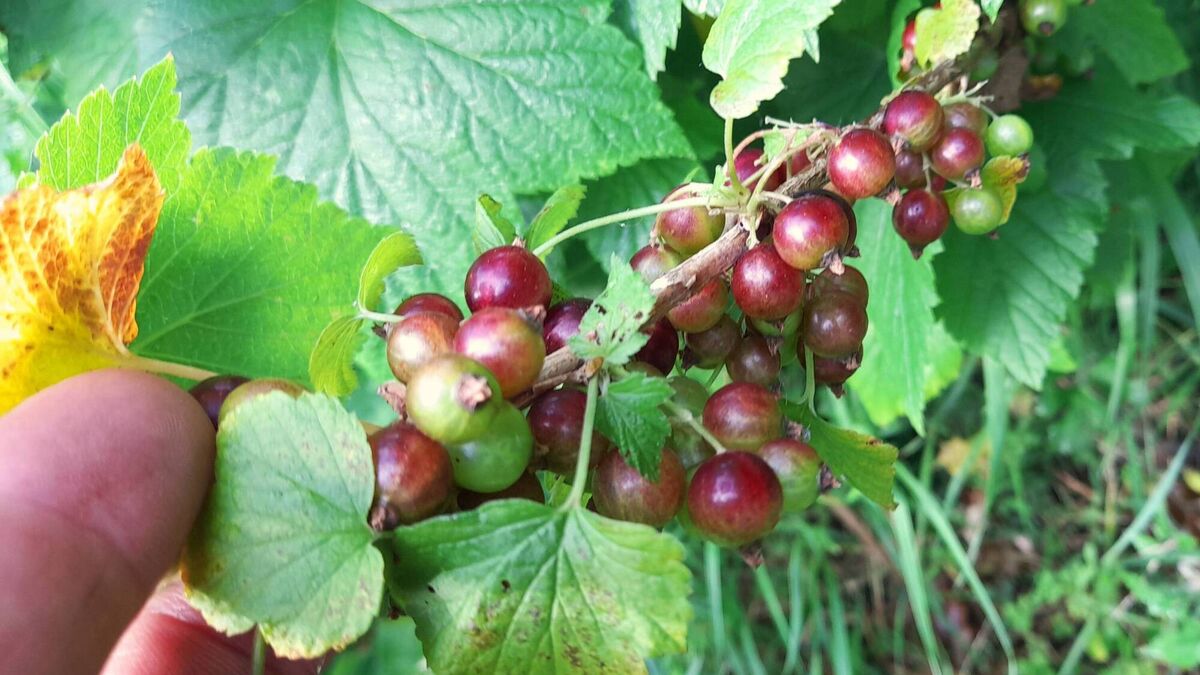
The blackcurrant is native to northern Europe and northern Asia. Picture: Pat McCarrick
Visit the surrounds of an abandoned Ox Mountain cottage and you will find the remains of an old fruit garden; an old apple tree perhaps or some overgrown blackcurrant bushes.
Blackcurrant bushes are resilient; they will survive, even if bulldozed into some realigned ditch. They grow easily and, if given half a chance, will provide fruit each year. Each spring they blossom, offering their flowers to the bees in exchange for pollination; planning a fruit crop that will be delivered in early July.
Described as, ‘tiny little bombs of health and flavour’, there is not a fruit that carries a greater punch. As well as containing over three times more vitamin C than oranges (pound for pound), blackcurrants are also packed with antioxidants. Studies have shown that blackcurrants can help strengthen your immune system, boost cognitive function, help reduce gut inflammation, improve vascular health and even fight cancer. Not bad for a little fruit that is no bigger than the nail on your little finger.
The blackcurrant is native to northern Europe and northern Asia. It was reputedly cultivated in Russia from as early as the eleventh century, but they were not widely grown in Europe until the seventeenth century. Blackcurrants eventually arrived in Ireland, being cultivated here for the last four to five hundred years. Easily maintained and well-suited to the Irish climate, blackcurrants are prized by jam-makers and those who experiment in sauces and home wines. There are now many modern varieties of blackcurrant, most of them named after Scottish mountains - Ben Gairn, Ben Lomond and Ben Connan.
Blackcurrants are very easy to grow from hardwood cuttings or a ‘slip’. Take 30cm cuttings in winter and place them directly into the ground, where they will often root and grow new plants. The process doesn’t involve a lot of time and effort but the results can be very rewarding. An established plant can reward you with up to 5 kgs of fruit each year, remaining productive for up to fifteen years.
Blackcurrants can be juiced, stewed, turned into compotes, baked in pies and of course, they make a fantastic jam. Even their aromatic leaves are of use and can be dropped into sauces and desserts to add flavouring. If you buy an established bush, the Royal Horticultural Society offer a simple guide to planting and growing your own blackcurrants:
As many as 95% of the UK’s blackcurrants are used to make the popular drink, Ribena, which was first produced in 1938. During World War II, Ribena was given to children free of charge as a vitamin C supplement. Also, in the war years, the British government encouraged home gardeners to grow blackcurrants for their high vitamin content, as citrus fruits were almost impossible to obtain at that time.
Despite their delicious flavour and numerous health benefits, blackcurrants are not so well known, or even liked, in America. The fruit was banned there during the early 1900s because it was blamed for the spread of a fungus that killed white pine trees, threatening the US timber industry.
Blackcurrants have recently made headlines as scientists at the University of Leeds have developed a non-toxic, sustainable hair dye using discarded blackcurrant skins from the local Ribena factory.
My father loved blackcurrants. He always had several bushes of them in his sizable fruit garden. As I have often mentioned in relation to him, he liked things that were either useful or productive and there are few things more useful or productive than a collection of blackcurrant bushes. He would nurse them along each winter by minding and manuring them and spring by petting and pruning them. I don’t think his bushes were a particularly high-yielding variety but he gave them every opportunity.
While these bushes gave leaf and put forth their blossoms in late spring, by the time the crop came in, it was midge-infested July and the job of picking the currants was usually accompanied by the discomfort of having to fight off such blood-sucking hoards. He would try various concoctions, varying between Jays Fluid and aftershave lotion, to ward off the midges but the continuing torture never seemed to dampen his enthusiasm for blackcurrant picking. The following spring he would propagate even more bushes to provide an even greater harvest.
He eventually got to the stage where he had about a half-acre of blackcurrant bushes. In addition to this, he had plenty of bushes of other fruits verities in his collection. There were redcurrants, gooseberries, worcesterberry (wasterberry), and the odd apple tree or five. The worcesterberry, by the way, seemed to be unique to my father’s garden. It is reputed to be a cross between a blackcurrant and a gooseberry, but it’s not! It is a wicket, thorny bush, designed by the devil himself, that provides a fruit akin to a small, bald and bitter gooseberry. This fruit however, does make one hell of a great jam!
A half-acre of currant bushes also means a half-acre of surrounding grass. For years, my father managed the cutting of this grass with his scythe. Later he got a lawn mower but as he got older, and was less able to manoeuvre his way between the bushes, the mowing became my job. It was no great hardship for me; I loved mowing grass and felt that most gardening problems could indeed be solved with a well-aimed lawnmower.
Each spring, as the grass began to grow, I would pull that starting cord and roar my father’s trusty lawnmower into action. This of course happened at the very time of year when the blackcurrant blossoms came forth and needed the privacy that both themselves and the local bees needed to do what it is they do best. I know that the pounding those poor bushes took from the passing lawnmower never did them any good but, strangely, crop yields never seemed to suffer - there always seemed to be too many of them to be pulled as the latest attack of midges arrived for their evening feast of flesh.
If you have a little space on the sunny side of your garden and you have an inclination for jam-making, try a few blackcurrant bushes. Each spring you will delight early bees with sweet blossoms and each July and you reap a rich and plentiful reward – as the midges eat you alive!