The smartest ones will be the first to go
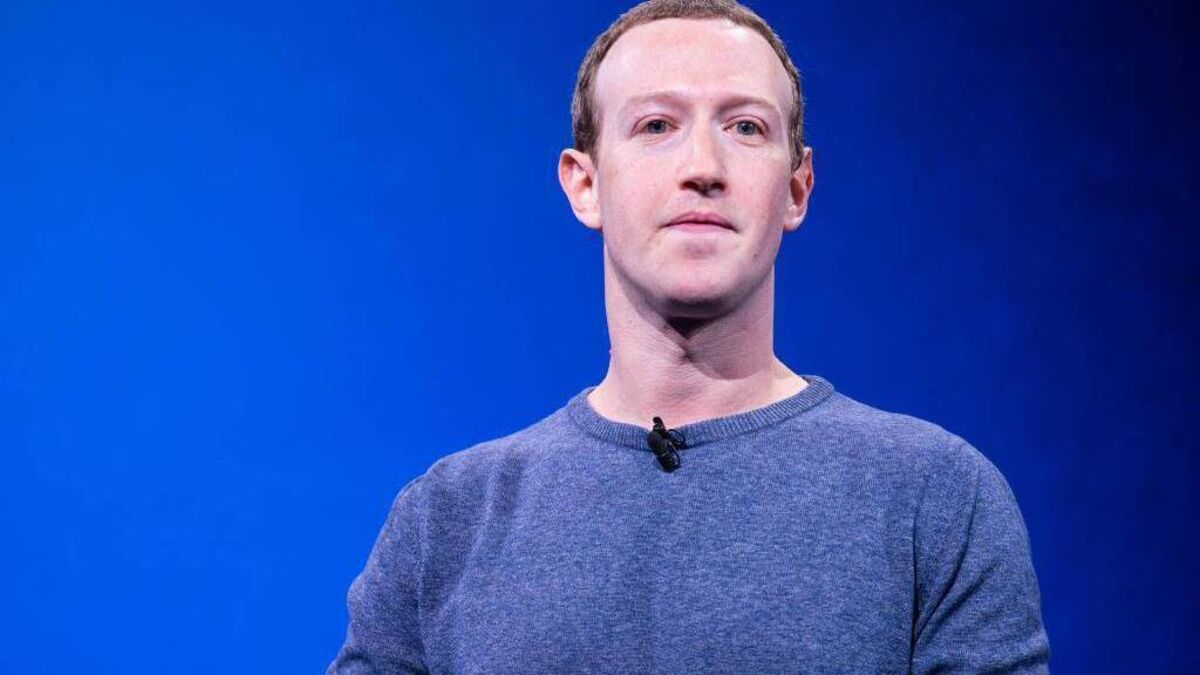
Mark Zuckerbeg, CEO of Meta, has made AI the top priority of the company.
Meta made $27 billion in the first three months of this year. Then it sacked 350 people in Dublin. I’m not saying there’s a connection, but I’m not not saying it either.
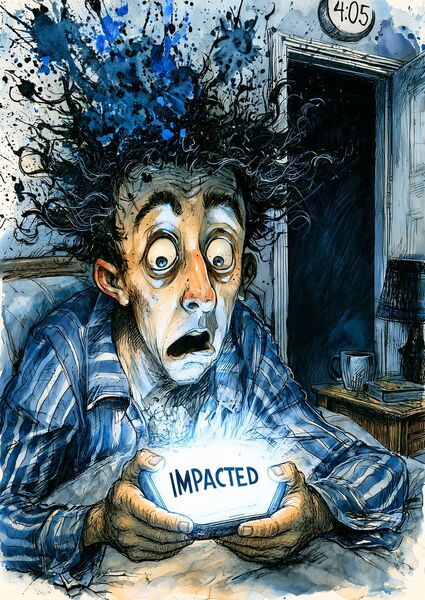
The word they used, in the emails that landed at 4am, apparently timed so that HR in California could field calls during business hours while the impacted parties were still in their pyjamas, was . As if you were a wisdom tooth. Around 350 people at Meta’s Irish operation woke up to that in May. The company had just posted profits of $27 billion for the first quarter of 2026, up 61% on the same period last year. Not struggling. Barnstorming, in fact. And yet, once the latest round is complete, its Irish workforce will be less than half its size four years ago. Oracle followed suit, cutting around 150 jobs in Ireland. Amazon. TikTok. The fintech Block. Even Covalen, which does content moderation and other services for Meta, announced 700 redundancies in the same week. Over 92,000 tech workers have been laid off globally so far in 2026.
The reason isn’t a crash. There’s no dotcom implosion, no Lehman's moment. The reason, delivered with the breezy confidence of a man who will never himself be replaced by software, came from Mark Zuckerberg in January.
“We’re starting to see projects that used to require big teams now be accomplished by a single very talented person,” he said.
One person. Very talented. And one AI.
Ireland’s relationship with the big American tech companies has always had the quality of a Faustian arrangement that everyone involved agreed not to call one. We provided low corporate taxes, a well-educated, English-speaking population, and an easy entry point to the European Union. They provided high-paying jobs and gargantuan corporation tax receipts, and everybody smiled for the cameras and the IDA press releases. The top 10% of earners in this country pay about 60% of all income tax and Universal Social Charge. Multinationals employ a disproportionate share of those people.
It’s worked, to be fair. It’s worked brilliantly. But nobody designed it to withstand this.
The International Monetary Fund (IMF), which visits Ireland regularly and issues warnings with the tactful urgency of a doctor who doesn’t want to alarm you, recently said that AI could affect more than 40% of jobs in Ireland by either replacing them outright or remodelling them beyond recognition. They noted that Ireland is “relatively more exposed” than other advanced economies to what they delicately called the “novel economic risks” the technology brings. The Economic Social and Research Institute (ESRI) put a somewhat tighter figure on it: around 7% of jobs displaced in the short to medium-term.
Seven per cent doesn’t sound like much until you ask which 7%.
Because here’s the twist that would have seemed like satire five years ago: it’s the educated ones at the top. Not the jobs that involve getting cold and wet. Not the jobs requiring physical presence, human decision-making about another human, or the ability to read a room. The jobs at risk are the ones Ireland spent four decades building its entire economic identity around. Entry-level law. Graduate financial services. Tech support. Content moderation. Data analysis. Junior software roles. The ESRI said it plainly: AI adoption among Irish firms is likely to cause job losses concentrated among highly educated workers, indicating the strong exposure of high-skilled occupations to AI technologies.
Boosting education levels to drive employment has been the basis of Irish government policy for as long as anyone can remember. The deal was: stay in school, get the degree, get the good job. We kept our end. The economy, for a while, kept its end. And now the technology has changed the terms mid-contract, and nobody’s quite sure who to complain to.
Ask any beleaguered 2026 graduate how they are faring in the jobs market, and you’ll hear something that sounds familiar but sits a little differently. Graduate vacancies were down 13% on the previous year in February, and youth unemployment has risen sharply. Employment in the Information and Communications Technology (ICT) sector for workers between 15 and 29 fell by 20% between 2023 and 2025, while employment for workers aged 30 to 59 in the same sectors grew by 12%. The young are being squeezed out first, which is both economically logical and morally bleak.
The part people miss isn’t just that there are fewer jobs. It’s that the apprenticeship model for professional life, the years of tedious grunt work through which you learned a craft, built relationships, and became competent, is quietly dissolving. You can’t learn to be a lawyer by doing the interesting stuff first. The interesting stuff comes after years of the other stuff. AI just ate the other stuff. Nearly half of Irish employers have scaled back their hiring for graduate and entry-level positions. Rising expenses and increased automation, they say. That covers a multitude.
They were told that education was the answer. Get the points, get the degree, join the knowledge economy. And the knowledge economy is precisely what AI wants. Not the hands. Not the backs. The knowledge. The processing of information, the drafting of documents, the synthesis of data, the writing of code, all of it now reproducible at a fraction of the cost, by something that doesn’t need health insurance or a desk in the Grand Canal Dock.
This is the generation that came of age during pandemic lockdowns, only to face a recovery that turned out to be an ambush. In a previous era, the exit route was at least geographically obvious. London. Boston. Sydney. Parents would press a few hundred euros into your hand at the airport and feel terrible about it. But as one writer noted recently, that same story is now playing out in those places too. The ambush is global. There’s nowhere to emigrate to, because everywhere has the same problem, just with less guilt about it.
The rotating Taoiseach, Micheál Martin, in an obtuse manner, described this situation as “unclear” while standing outside a new medical device factory in Galway, which tells you everything you need to know about the gap between political language and the thing it’s describing. Peter Burke, the Enterprise Minister, told workers, “The Government will have your back.” I don’t doubt he meant it, but I’m just not sure what that means in practice when the entity removing the jobs is also the entity the Government has spent forty years courting with all the ardour of a small country in love.
What makes Ireland’s position distinct and worse, really, than most of Europe’s is the concentration. The tech sector alone represents nearly 10% of wages and over 6% of total employment. Around 300,000 people work in IDA-client multinationals. Fifty-seven cents in every euro of corporation tax comes from just ten companies. If those companies decide to do more with fewer people, and they are actively and enthusiastically deciding exactly that, Ireland feels the draught more than most.
Amazon, Meta, Microsoft and Google are expected to spend $725 billion on AI infrastructure this year. That money isn’t going on people. That money is going on the thing that replaces people. The companies are profitable because they are replacing people. And because the companies are profitable, the Irish government, which depends on those companies like a coastal town depends on the tide, finds itself in the surreal position of cheering on the very machine that’s eating its workforce.
The European Commission, with characteristic understatement, published a report this week warning that Ireland’s reliance on US multinational tax revenues “continues to create risks to the stability of public finances". You could say that. You could also say that a man standing in a river up to his chin risks getting his hair wet.
The Central Bank, also not sleeping, noted that valuations in the AI sector have reached high levels and that debt financing for AI is already higher this year than in any previous full year on record. There are people who wonder aloud what happens if the bubble bursts. Ireland, they say, would feel it more than most. We always do.
Here in the windswept west, away from the glass campuses and the professional posturing, this creeps into our economic reality differently. The tech sector’s troubles feel remote and abstract until you meet someone who got the infamous 4am email. Perhaps a freshly minted graduate came home from Dublin, quietly, with a degree and no realisable plan. Until the sense that a generation was promised something and had it quietly rescinded begins to gather into something harder to name.
We’ve been here before, in different clothes. The island has a long institutional memory for being told the departure is regrettable, but the decision is final. We even have a word for it, buried somewhere in the language we gave up to become employable.
Ireland got very good at being smart. Turns out the machines are better at it. And unlike the last lot who took our jobs, they don’t even have to cross the water to do it.