Starmer leaves one very positive legacy to these islands
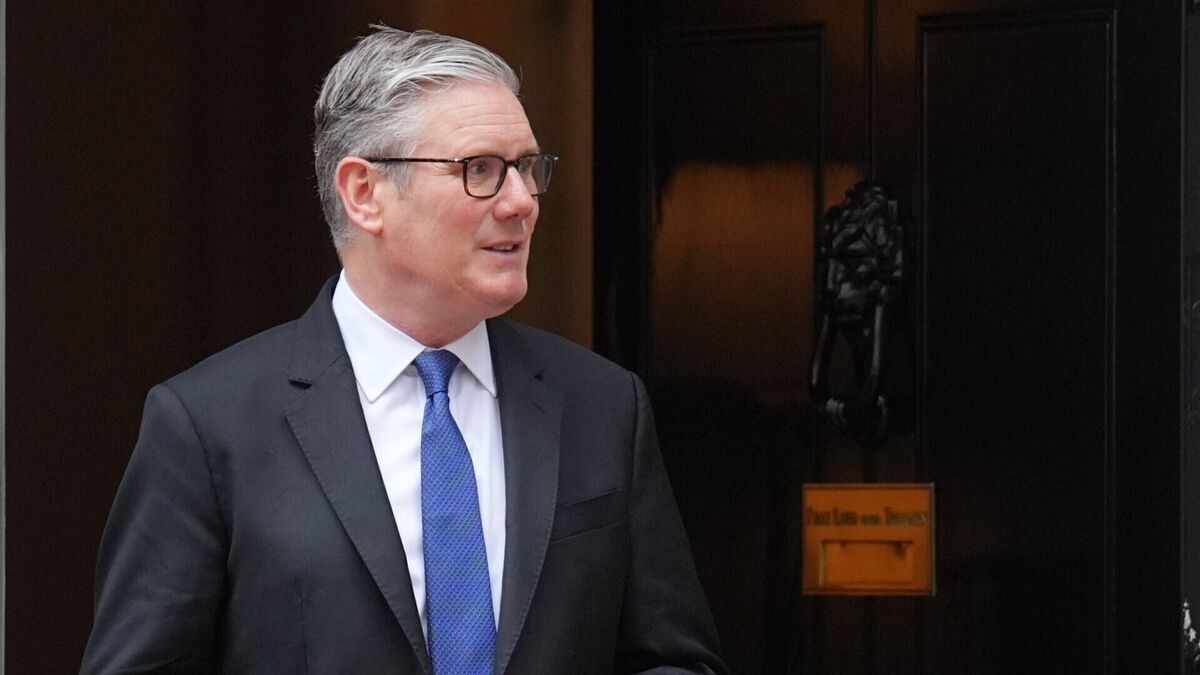
British Prime Minister Sir Keir Starmer has pushed for a social media ban for under 16s. Picture: James Manning/PA Wire
The nature of Keir Starmer’s departure from Downing Street was surprising, but it has brought one of his final acts as Prime Minister into even sharper focus - banning social media for under-16s.
While his tenure might be reviewed in a very mixed fashion, this is one move that could and should outlive the internal party battles and his general indecisiveness.
There is little doubt that Starmer saw such an opportunity for this. There is also very little doubt that his motives, as a parent, appear quite sincere in this regard.
It is one of the biggest issues parents are grappling with and Starmer has experienced it himself as the father of two teenagers. The fact both are now beyond the age covered by the ban suggests he is acting from conviction rather than self-interest.
His summation of the reality of the problem facing millions of parents around the world was striking.
“All I want for my own children, hand on heart, is for them to be happy and safe. I ask the question now – do we truly believe that social media creates a happy environment for our children?
“Do we truly believe that it’s a place where they can feel safe? I don’t think I even need to answer those questions, do I? Every parent can see it with their own eyes. Social media is making children unhappy. It is making it easier for bullies to harass and abuse them.”
He has moved the discussion to where it ought to be – child protection. The happiness and safety of our children is our primary target as parents and such a desire is extremely difficult to align with so much of life online nowadays.
This is not an anti-technology outlook. The internet and technology can be a wonderful place. A great place for learning and connection. But the data on the dangers is clear.
Just last week a comprehensive Irish survey reported that nine in ten Irish teenagers reported encountering at least one harmful or distressing online experience in the previous three months.
We need to distinguish between productive digital activity and algorithm-driven social media use. There is a world of difference. Confusing the two has muddied this debate for years.
Many parents will recognise signs of teenagers - and increasingly younger children of national school age - sleeping less, becoming more withdrawn and appearing more anxious. It has happened almost unknowingly, by stealth.
From a local perspective, Emmet Major is a leading youth worker and has co-ordinated the Planet Youth survey of young people. Every child in Mayo fills this out after their Junior Cert so the results give a great local insight into issues they face across many strands, including online and social media.
He has observed, through the survey, a substantial spike in time spent on social media among Mayo teenagers and the number of teenagers experiencing a sleep deficit (less than six hours a night) was also increasing at a worrying rate across the last six years. Lack of sleep is, he said, the biggest preventable health issue. That’s because 80% of the respondents have their phone in their room at night but if those percentages could be flipped to 80% not having the phone in their bedroom at night, ‘we would have a much happier, healthier bunch of kids’ he told us in Achill earlier this year.
He revealed that the 2024 survey showed 36% of respondents got their first smartphone at ten or younger. That’s how the whole issue has devolved. At the risk of sounding like a dinosaur, I got my first phone in Leaving Cert and in the years that followed, even with the advent of smartphones, I never thought that withholding a phone until secondary school would be considered some sort of achievement.
Bans are never perfect and will not solve all the associated problems on their own. As well as that, some children will find a way around them. That is already happening in Australia. But smoking and alcohol bans for particular ages are not perfect either and are breached. The aim isn’t perfect compliance. It is creating a new social norm and takes control back from the social media companies to the state itself.
Which is a vital shift.
Starmer has, on these islands (I wouldn’t be always inclined to group them!) moved the matter from a battle parents have to fight either individually, or collectively through smartphone free childhood groups, to one where the State will intervene to protect its youngest citizens.
I've seen that battle first-hand on Achill. Earlier this year, parents from across the parish came together to form the Achill Smartphone Free Childhood group, an initiative with a simple aim: to delay smartphones and social media until secondary school.
A comfortable majority of Achill parents signed up. There was opposition too, illustrating how difficult these conversations can be and the pressure parents feel not to leave their own child isolated.
Ultimately, something many parents agreed on was that this is not a battle parents ought to be fighting in communities but the slow pace of State action on this left parents with no other choice.
Now it feels like a Rubicon has been crossed.
Australia acted first. Seeing it happen in our own part of the world is something altogether different.
Despite all the data to back this up, many parents who have expressed concerns about the dangers of social media have, in some quarters, been dismissed as out of touch, alarmist and anti-technology.
Starmer’s move is a game changer.
I am convinced we will look back on this period in a decade to come and wonder how did we let such permissive access to social media and the online world and its sophisticated attention-harvesting technology to children under 16 and, more particularly, of national school age.
The UK government says the move is about ‘giving children their childhood back’ and reducing harm from highly addictive social media platforms. It is something so many parents struggle with and many relent and give access because it has become the norm and they understandably do not want their child to be socially isolated when many of their friends are on social media and possess smartphones.
This move will completely change things. It is taking back the power that parents and the State ought to have. It is demonstrating that governments do not trust social media companies to regulate themselves. Somehow, across the board, social media companies have been let play by different rules than they should be subject to.
Starmer’s move brings into focus how Ireland will approach this subject. A ban here has been discussed and Tánaiste Simon Harris has indicated he wants Ireland to use its upcoming EU Presidency to advance the discussion and potential legislation around age limits and age verification, hinting Ireland may even proceed if EU-wide agreement is not forthcoming.
Both the Tánaiste and the Taoiseach have expressed strong views on this, with Micheál Martin describing social media as ‘the public health issue of our time’.
Because of Britain’s move – perhaps a rare benefit of Brexit in that they could act unilaterally on this – it becomes much harder for Ireland to fob off and kick down the road. Particularly when you consider the border on their island. You can have the situation where a 14-year-old in Strabane is not allowed access to TikTok but can cross the bridge to Lifford and all is above board.
For years, parents have been told this is their battle to fight. Decide when to get the phone, allow Snapchat or don’t. Hope your child isn’t the only one left out. That was never right. Parents were up against companies whose entire model was based on engagement and addiction.
The UK has recognised that this is no longer simply a parenting issue. It is a child protection issue. Ireland now has not just an opportunity but, I would contend, an obligation to do the same.