The wildflowers of the Ox Mountain region
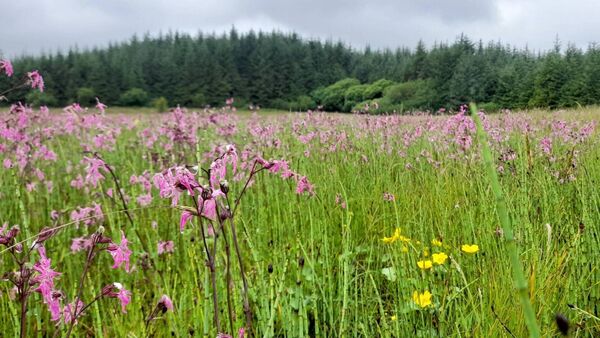
Ragged Robin is a delicate reddish pink flower of the marshes and damp meadows with deeply cleft, feathery petals. Picture: Pat McCarrick
I was fortunate in recent times to be asked to provide images for a 2026 calendar. The calendar is being published by the Mill Community Cafe in south Sligo and features as its theme, 'Wildflowers of the Ox Mountains'.
It was a labour of love. I was taking photographs in the mountains but I was also gaining an education. I discovered many beautiful flowers that I was previously unaware of and this week I hope to share some of my new-found information with readers.
Wildflowers are important because they support biodiversity, particularly pollinators like bees, and by providing essential food and habitats. They also help improve soil health by reducing erosion and enhancing water retention. Additionally, wildflowers contribute to the natural beauty of our region and add to our cultural heritage.
writer Christina Nunez (2021) gives us more of a world view with a piece she wrote about wildflowers on America’s Great Plains. She suggests that, now more than ever, many of us are more conscious of how our well-being is connected to the natural world. She points out that we are all seeking a greater connection with nature and encourages people to escape to the outdoors where we are, “revived by the sights and soothed by the smell of flowers and trees".
Information from Wildflowers of Ireland tells us that, here in Ireland, we have over 800 flowering plants. Our mild climate and varied soil types are the major influences on this variety of plants. Our flora, while mostly shared with Great Britain, contains 15 plants which are not found there.
But back to the Cloonacool calendar and its depiction of 12 local Ox Mountain wildflowers. The following is an account of four of our most unusual and attractive blooms. The information provided is drawn from two sources, Wildflowers of Ireland and Irish Wildflowers.
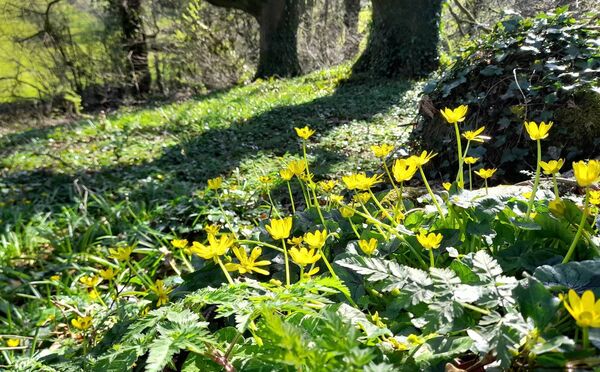
I photographed this flower because it was growing in an attractive setting and without knowing its identity. Goldilocks Buttercup, not to be confused with the regular buttercup, is an unusual plant in that it often displays deformed flowers with some of the golden-yellow petals missing. It flowers from April to June and dies off by late summer. This is a plant that likes damp woodland, hedges, and secluded laneways. It belongs to the wider Buttercup family and, in common with other members of that clan, it is poisonous.
I love this flower, not so much as a single flower but because of the way that a whole grove of them can spread colour over a mountain meadow. This is a delicate reddish pink flower of the marshes and damp meadows with deeply cleft, feathery petals. It flowers from late May to early August. This perennial scentless plant must be one of the prettiest to be found along our mountain. Its five petals form ragged blossoms designed by nature to withstand the wind.
Ragged Robin is much loved by butterflies among them the Common Blue. The plant is also suited to the long-tongued bee, who feeds on the nectar produced by the plant. Sadly, Ragged Robin is no longer as common as it once was.
This delicate, powder blue flower is a delight, appearing as it does on dry ditches in late summer. It demands so little yet provides so much. From July to October, it is such a delight to discover Harebells as their bell-shaped flowers nod and dangle from thin, curving stems. This plant is found in limestone mountain areas, dry grassland, and roadside ditches.
Two things about this little flower; being close to the ground, it is difficult to photograph and the other thing is its intriguing name. This little-known plant has very distinctive features. It seems the 18th century Swedish botanist, Carl Linnaeus, found this wildflower to be so beautiful that he gave it the name of Mount Parnassus in Greece. Bees and pollinating insects are attracted to the plant by a mild honey-like scent. This flower blooms from June to October and the plant is mostly found in moist grassy places and mountains roadside verges.
Estimates are that as many as 120 species of wildflowers are under threat in Ireland, six are on the verge of extinction. Through education and awareness of the diversity of our wildflowers, maybe, just maybe, the tide can be held back a little longer. A small mountain field left to its own devices blooms again very quickly and a section of lawn or garden turned into a tiny wildflower meadow provides pleasure for man and insect alike.
If, each month during 2026, you want to enjoy examples of our Ox Mountain wildflowers heritage, get a copy of the Mill Community Café calendar (€10 per copy). You can do this by calling to the café in Cloonacool, 11am to 2pm, Friday to Sunday, or by emailing this column.