By-elections have an energy all of their own
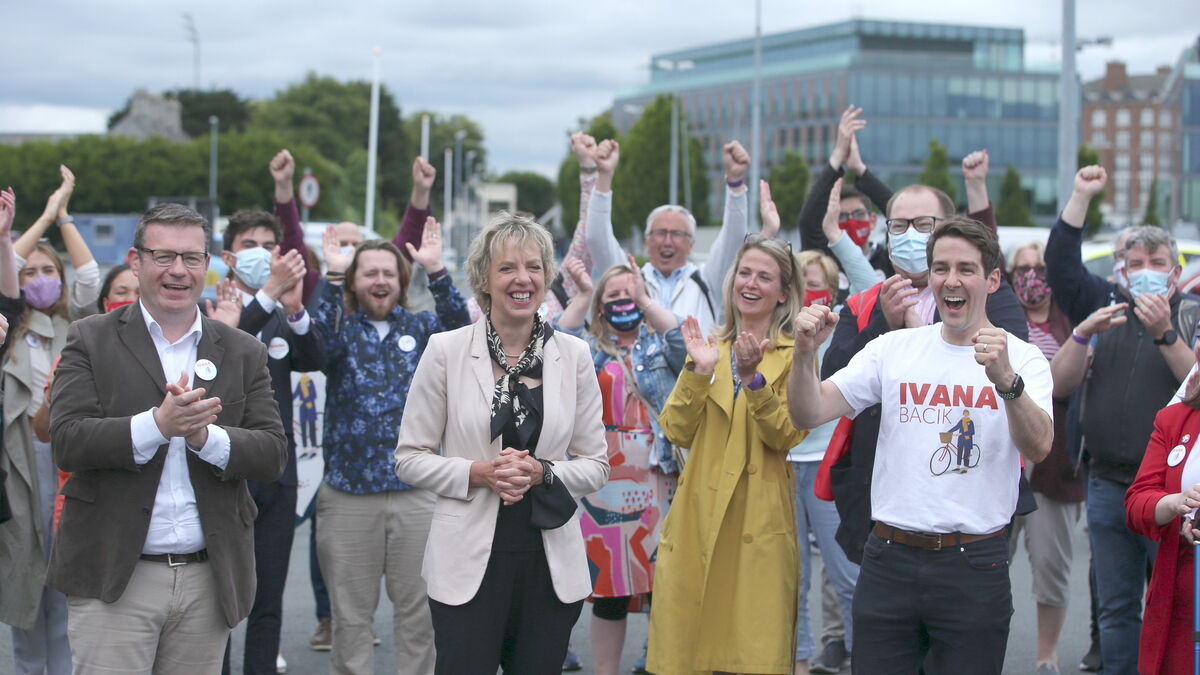
Labour's Ivana Bacik is pictured celebrating in 2021 after she topped the poll in the Dublin Bay South By-election. Picture: Stephen Collins/Collins Photos
The news that Dara Calleary will be Director of Elections for Fianna Fáil in the Galway West by-election is no surprise. Being the Fianna Fáil ‘Minister for Connacht’ means you must do that role for sure. Those who know him know that he will see it as no burden, even though he will surely be under no illusions about the scale of the challenge.
For by-elections are hard going. They are especially so for government parties. Government parties - it is said - don’t win by-elections in normal times, let alone in whatever we could call these times. If your voters don’t come out in numbers to support you and your opponents transfer against you, it is hard to win.
There will be two of them in May, in Dublin Central and Galway West, arising from the departure of Paschal Donohoe to his new international job, and from Catherine Connolly’s election as President. The by-elections will replace one TD from the government side, and one from the opposition. Both sides therefore come into these contests level.
By-elections are the National Football League of politics. They matter, and you want to do well, but ultimately they don’t decide who climbs the steps on the really big day of a General Election. That is a truly different contest.
By-elections are only truly consequential when government majorities are tight. But this time, with one government and one opposition seat up for grabs, the outcome won’t have a major impact on the government’s majority. The government can politically live with losing one seat from their side. That’s an advantage and a disadvantage for them.
Notwithstanding all that, by-elections can and do have an impact in terms of the political programme and cohesion of a government. If the government loses both by-elections by a small margin, it will be no big deal. Indeed the government parties will declare it a victory, or at the least a lack of endorsement of the opposition. That will give them a boost, even in defeat. But if they lose both big, that will shake the confidence of the government side.
Such a loss would make government TDs wobbly and fuel internal criticism within the government parties, as well as put pep in the step of whoever wins them. If the combined opposition parties poll well individually, and transfer effectively, it will show definite signs that their alternative government is taking shape. If they spend the whole time arguing among themselves, that will shake that perception.
But in whatever scenario, and however much political talk there is, no one will think that these results will decide the next election. This is because general elections and by-elections answer different questions and say different things. General Elections answer the question ‘who governs’. In our last general election the answer to that was ‘the same will do, but without the Greens’. That was pretty much it.
By-elections answer very different questions. How those questions are determined will form the backdrop of much of our politics over the coming months. In by-elections, a single issue or factor can become the question and thus determine the result. This can be about general dissatisfaction with the government, or be based on a specific issue. What is likely is that a particular grievance and issue in the constituency will crystallise that general dissatisfaction.
When that issue emerges and becomes clear, the opposition parties will start saying that the question for voters is do they want to ‘send a message’ to the government about it. The main reason governments find it hard to win by-elections is that it is almost impossible to counter that with a ‘don’t take risks/steady as we go’ type message. That can work - and has worked - in General Elections, but it won’t work in a by-election where there is no way the government will fall over the result. That’s the problem for government parties: if it really doesn’t matter to the stability of the government, your voters are most likely to stay at home.
The defining question in a by-election can also be geographical, where one part of the constituency asks if it needs and deserves the new TD in their area. That latter question is more likely of course to appear in Galway West than Dublin Central. And Galway West is all the more interesting as it has a country/city aspect to it that makes it unusual in a west of Ireland context.
When geography emerges as the question in a by-election, the ballot boxes from the area that feels hard done by will defy all party logic and national voting patterns. ‘Give X location its voice’ then becomes the message for any local candidate in that part of the constituency. That gives a geographically well-placed government candidate a shot. Government parties will therefore be doing a lot of talking about how hard working their candidates are ‘on the ground’.
Whichever becomes the most important factor, anyone who has experience of campaigning in by-elections will tell you that there comes a moment in a by-election campaign when that factor - whatever it is - becomes the local talking point and people settle on what they are going to do about it. When it does, no other issue will get a hearing, and the result is decided.
Between now and May, we will see all that and more play out. There will be lots of expectation management from all sides. There will be local polls. There will be candidate selections - and probably some rows about that. Candidates in the by-election will need media training as they will get a lot more national media exposure than most candidates or even most ministers do in general elections. Those interviews take up huge amounts of time and are hardly worth it. For most of them, each candidate will get to say about five sentences.
There will be endless discussion about transfers, and of transfer pacts and patterns. Transfers matter more in by-elections than in general elections - in either contest it is hard to see anyone getting elected on the first count. What you advise voters to do about transfers will be a question for all the parties. The left will say transfer left, but they will be asked which left should come first. The government parties will be asked whether they recommend transferring to each other. The voters will make up their own minds.
But how they decide what question the by-elections will answer is most important. The parties will try and impose their question. On this, the voters will also make up their minds. But as Dara Calleary and all Directors of Elections in Galway West will know, if the people of Galway West decide they want to send a particular message, whatever it is, the messenger will be elected. But when it comes to the General Election, it won’t really matter.