The uncrowned king and what comes after
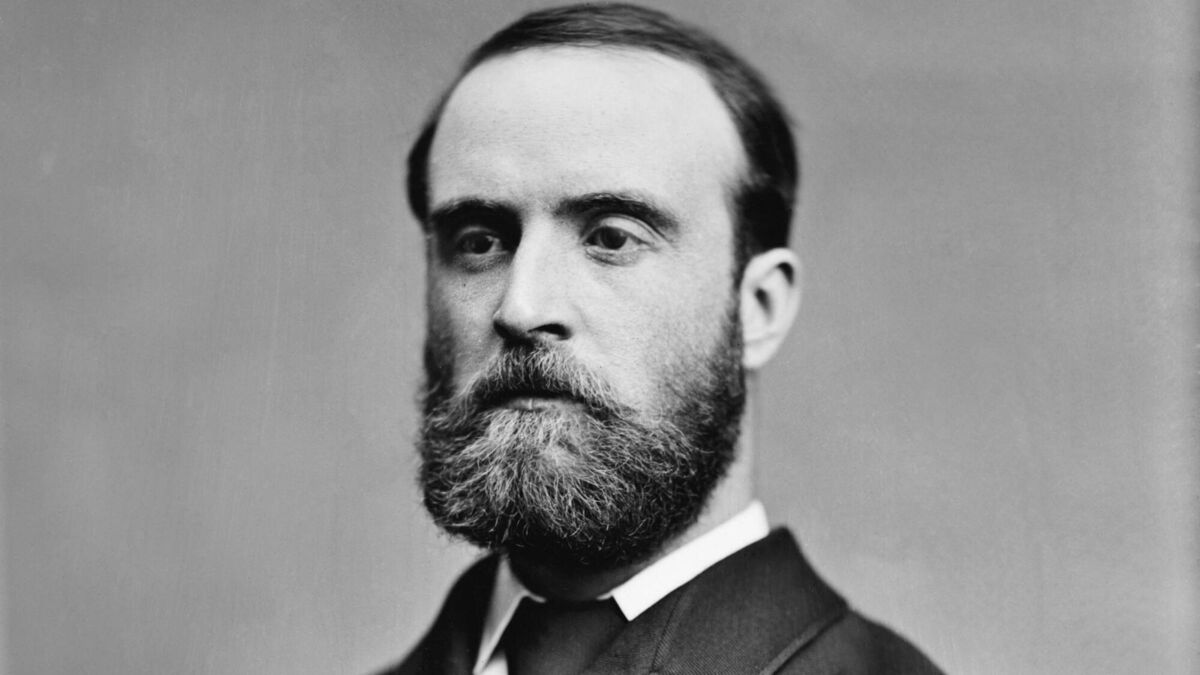
Charles Stewart Parnell's downfall offers a salutary lesson in the dangers of focusing a political movement around one person.
On the morning of November 18, 1890, readers of encountered a revelation that lit a fuse which would quickly explode Irish politics apart. Captain William O’Shea had filed for divorce from his wife Katherine O’Shea.
Nothing terribly interesting there. But, it was the man who was named as the co-respondent who caused Catholic priests, bishops and Irish Parliamentary Party MPs to splutter into their morning cups of tea. Mrs O’Shea’s lover was Charles Stewart Parnell.
It was not simply that Charles Stewart and Katie, as she was called by friends (or Kitty by Parnell’s enemies, using the contemporary slur for prostitute), had an affair. It was the scale and duration of it. For nearly a decade, while leading the Irish Parliamentary Party and pressing Britain toward Home Rule, they were lovers. He had visited her home in Eltham regularly. Children had been born who may or who may not have been his.
Political colleagues had whispered. Some knew. Many chose not to know. But once their affair entered legal court, all bets were off. The man once dubbed the 'Uncrowned King of Ireland' by one of the leaders of his party, Tim Healy, was now described in stark legal language as an adulterer.
The effect in Victorian Britain and Catholic Ireland, where public morality and political authority were inseparable, was shocking.
The Catholic hierarchy, whose stature in Irish society was pre-eminent, could not ignore the scandal and condemned the leader of constitutional nationalism. Within weeks, the Irish Parliamentary Party had split almost evenly between Parnellites and Anti-Parnellites and local society followed. Irish nationalism was torpedoed.
Only months earlier, Parnell had emerged triumphant from the Pigott forgeries scandal. He had crushed in the Special Commission which had claimed he supported the terrorist assassinations of the Phoenix Park murders. He had forced William Gladstone to embrace Home Rule. He had held together constitutional nationalists, agrarian reformers and militant Fenians who had little patience for constitutionalism at all. Home Rule did not merely seem possible; it seemed inevitable.
But with his power now irretrievably damaged, Parnell lost it all.
Parnell refused to step aside. He toured Ireland. He fought. He believed he could recover. But the coalition he had assembled depended not only on parliamentary numbers but on moral authority and Liberal cooperation in Westminster. Once those pillars cracked, the structure faltered.
He died in 1891, aged 45, his health broken by relentless strain. His Home Rule Party did not reunite until 1900 but by then, the political atmosphere had shifted. Unionist resistance hardened and younger nationalists were growing impatient. Constitutionalism no longer felt sufficient to many and would ultimately ignite the 1916 Rising, War of Independence, Civil War, and see the division of Ireland into Northern Ireland and the Irish Free State, with the strife that was to follow.
It could be argued, this was all a due to the exposing of Parnell’s affair.
The lesson is simply that movements built too closely around one dominant figure become vulnerable when that figure falters.
Which brings us, cautiously, to America.
More than four hundred days into his current term, Donald Trump presides over a political movement that many believed had been vindicated by his return to office and winning of the popular vote. His victory was interpreted not merely as personal redemption but as confirmation that the broader MAGA agenda, on trade, immigration, cultural politics and executive authority, had secured a durable place in American life.
Making America Great Again, Again.
Yet politics is rarely static. Trump’s approval ratings are slowly, but inexorably, falling and he is currently on 39% net disapproval over issues of immigration, foreign policy, jobs and the economy, taxes and inflation.
Criticism is emerging from within as well as without. Steadfastly loyal supporters, such as ex-Congresswoman Marjorie Taylor Greene, have voiced strident dissent on specific issues, especially the Epstein files release which Trump’s administration is mishandling spectacularly. Policy debates expose differing priorities inside the coalition over pursuit of foreign wars and political interference in other counties. Meanwhile, several Trump-supporting politicians such as Rand Paul have criticised ICE’s aggressive methods against illegal immigrants.
This does not signal imminent collapse. But it does raise a structural question that Irish history understands well. Is the movement larger than the man?
Parnell managed to bind together constitutional moderates, land reformers, and militant nationalists under one disciplined banner. The unity worked because he commanded authority across factions. When he fell, the factions did not disappear. They reverted to themselves.
If American conservatism is presently held together by one dominant political personality, what happens when that personality exits the stage? The departure may be sudden or gradual. Trump is 80 years old this year and even if he survives the Epstein scandal, a Democrat blowout in the mid-term elections will have many Republicans questioning his leadership.
Whether it be death, ill health or election loss, who then inherits the MAGA coalition?
Loathe him or love him, Donal Trump is a singular leader in American politics. No other personality has a pinch of the charisma, political instinct and media dominance required to keep the Trump coalition together.
Can economic nationalists, cultural conservatives, libertarians, America-First populists and institutional Republicans remain aligned without a central gravitational force? Or as I believe, will they diverge back into their own interests?
Because I think that it is in planning for that eventuality, that Democrats and European countries must focus their energies.
The underlying economic and social conditions which led to Trump’s arrival on the US political stage (twice) will need to radically change for Democrats (and anti-Trump conservatives) to oversee a better United States for its citizens. This means actually fixing such issues as immigration, healthcare, housing, voting systems and economic inequality.
Similarly, Trump has exposed the lack of leadership in Europe both militarily and politically, regarding climate change, the Ukraine war and Gaza genocide and how reliant the continent is on both unelected bureaucrats and the United States armed forces.
Several anti-Trump friends of mine believe we must focus on protesting Trump’s egregious activities. I think it is also possible to walk and whistle at the same time. Protest now, sure, but plan for the future because I think it is approaching faster than many realise.
The Irish experience of Charles Stewart Parnell offers a sober reminder: the most important election is often the one after the dominant figure departs. In late 1890, few could have imagined that the scandal of one man’s private life would reshape the trajectory of Irish nationalism for generations.
Movements that become inseparable from their leaders risk sharing their fate. MAGA is likely no different.
The deeper question, in Dublin then and Washington now, is not whether the 'uncrowned king' will fall, but when, and if the cause survives him intact. History suggests we plan now for when Donald Trump is not around.