The elder art of not giving a damn
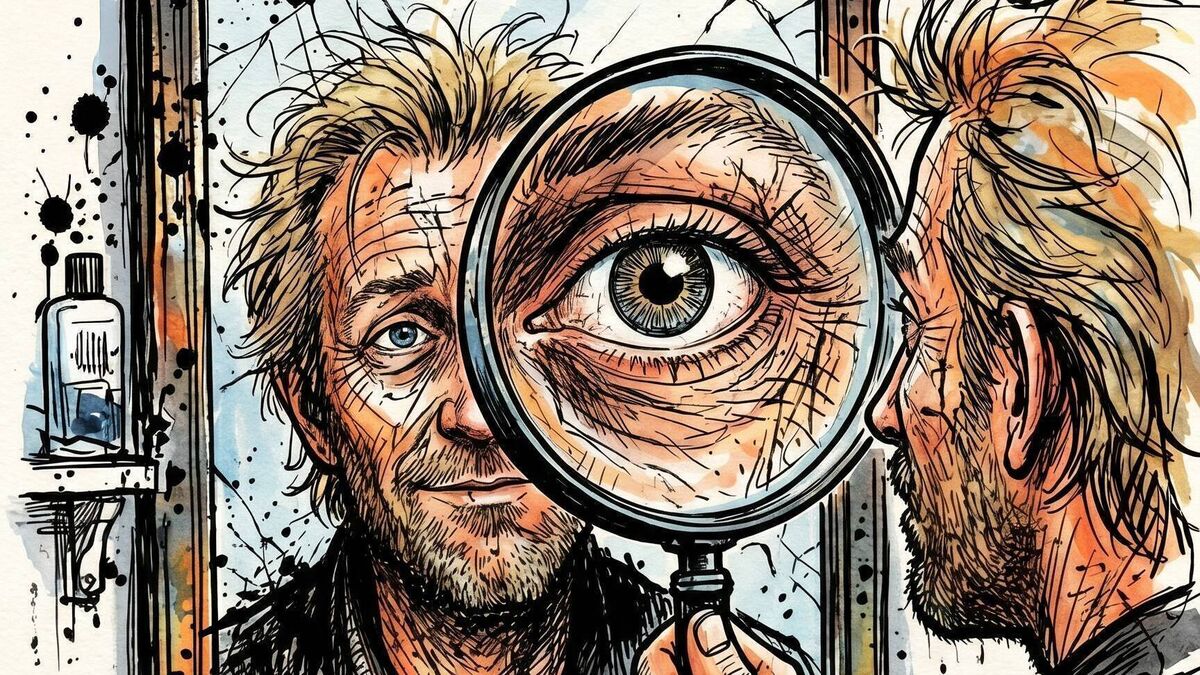
Ageing always feels like it’s happening to someone else - until one morning, the coffee smells right, and the light is doing something beautiful, and you’re standing in front of a mirror, and you think: well, here we are then. Illustration: Conor McGuire
There’s a particular kind of morning - and if you’re anywhere near sixty, you’ll know the one - when you wake up, and the light through the window curtains is doing something theatrical, the coffee smells like it actually means it, and somewhere between the duvet and the bathroom mirror you think: how in the name of God did I get here so fast?
I had one such morning recently. Standing in front of the glass, peering at evidence, cataloguing the accumulated archaeology of a face I thankfully still recognise. The lines are still fine, but they’re coarsening, a little more emphatic. They’ve stopped apologising. And here’s the thing, and I wasn’t expecting this - I didn’t entirely mind.
The dreaded faraway seventh decade, an era that belonged to other people, those respected elders of my youth. To parents, to priests and men made venerable by distinguished careers. Curmudgeons who wore cardigans and slippers and argued at funerals about the last Mayo match. Now, by rite of passage, it belongs to me, and I’m strangely, unexpectedly comfortable.
And as I’m sitting in the Mayo reading my paper on a Sunday morning that smells of roast beef and a timber fire, with the tenebrous sky doing its usual brooding out the window, you might be wondering the same thing A I am: what exactly are you supposed to do with the rest of it? Because nobody - not the doctor, not the priest, not the well-meaning neighbour with the Aldi bags and the unsolicited opinions - really tells you what comes next.
Philip Roth, not a man known for comforting reassurances, wrote that old age is “a massacre”. Cheerful. But he wasn’t entirely wrong about the ambush of it. What he missed - or perhaps deliberately ignored in his later grumpiness - is that the ambush comes with an unexpected gift. The gift is clarity. Brutal, unasked-for, rather wonderful clarity.
The French have a phrase, , the freedom of misery or despair, which sounds far more romantic than it is, but it gestures at something real. That once you stop pretending time is infinite, something loosens, and you stop holding your breath. You stop performing and prioritise living.
Montaigne, that glorious 16th-century Frenchman who basically invented the personal essay and would have been insufferable to sit next to at dinner, spent a large portion of his later years writing about how to live. His conclusion, boiled down to something manageable, was roughly this: stop deferring your actual life to a future self who may or may not show up. He could have been talking to every Irishman and woman who ever said “we’ll do that trip someday”, or “I’ll take it easier once the kids are sorted” or - the great Irish favourite - “sure we’ll see”. We’ll see. The three most expensive words in the language.
Here’s what nobody wants to admit: the money thing. I know, I know, it’s vulgar to talk about money. We’re Irish. We’d rather discuss death, infidelity, or the precise failings of our local county council. But the relationship you have with money after sixty has to change, and radically, or you will spend your healthiest remaining years hoarding resources for a future self that, frankly, might not be great craic to fund. Your eighties-self - sitting in a chair with a blanket - won’t be booking a villa in Puglia or driving the Wild Atlantic Way at sunset with the radio loud. You will.
Spend it on experiences. Not things. The things will end up in a car boot sale on a wet Sunday in Castlebar, sold for a few euro by a grandchild who has no idea what any of it meant. Experiences become memories, and memories - as any neurologist or decent novelist will tell you - are essentially what we’re made of by the end.
Julian Barnes, writing in N about his own terror of mortality, reached something like a workable truce with the finite: that a life richly attended to is not diminished by its ending. That’s the play, really. Attend to it. Turn up for it. Stop watching it through a window and twitching the curtains.
There’s another thing. The approval thing. God, the approval thing. The amount of life we waste - I include myself here, loudly and without reservation - trying to impress people we don’t even particularly like. The overstated gesture, the careful name-drop, the studied casualness about the holiday that was, actually, very expensive. In your twenties, fair enough: you’re finding the edges. In your forties, it’s mildly embarrassing. In your sixties, it’s practically a moral shortcoming.
Yeats - and you can’t write about ageing in the West of Ireland without referencing Yeats at some point, it’s practically legislation - wrote in about the terrible vanity of appearances, the way we perform ourselves into exhaustion. The mask, he understood, eventually fuses to the face. Unless you take it off. The sixties are when you take it off. When you realise, with something approaching physical relief, that nobody is watching anyway. They’re all too busy managing their own anxious theatre.
The late, great Nuala O’Faolain - a woman who understood the second half of life with unflinching honesty - wrote in about what it meant to finally stop needing the world’s permission to exist. It’s one of the more quietly revolutionary things she said, and she said a lot of quietly revolutionary things.
Then there’s the perennial technology conversation, reinvented for every generation, which I approach the way I approach a suspicious dog: carefully and with premeditation and without sudden alarming movements. The temptation, at sixty, is to treat new technologies with the wariness of a man who has been burned before. And we have all been burned. In the 1980s, we never quite mastered VHS recorders and their maddening complexities. We may have been equally reproached by the broadband promise that turned out to be a seasonal fantasy in rural Mayo. Foiled by every software update that reorganised the computer desktop and left you updating every application for a fortnight.
But refusing to engage is just a different kind of cowardice. A willfully ignorant retreat inside the familiar is not wisdom, it’s just atrophy wearing a familiar cardigan. The phone in your pocket contains more navigational, medical, cultural, and knowledge assistance than any previous generation could have dreamed could be immediately available. Most of us are using it to check the weather and to message inanities. That’s a waste.
Being up to date isn’t about chasing the pretence of youth, it's about staying in the conversation. And the conversation, as it turns out, can always stay interesting.
What all of this amounts to - the spending, the experiencing, the refusing to perform, the cautious acceptance of the new - is something embarrassingly simple. It’s permission. The permission you’ve been waiting for someone else to grant, which nobody was ever going to grant, because it was always yours to give yourself.
Simone de Beauvoir wrote that old age is something beyond my life, outside it, something of which I cannot have any full inward experience. What she meant, I think, is that ageing always feels like it’s happening to someone else - until one morning, the coffee smells right, and the light is doing something beautiful, and you’re standing in front of a mirror, and you think: well, here we are then.
Here we are. The question isn’t how you got here. The question - the only one that matters now - is what you’re going to do with the morning.
And the morning, unlike a lot of what came before it, is entirely yours.