Saving our native Irish honeybee
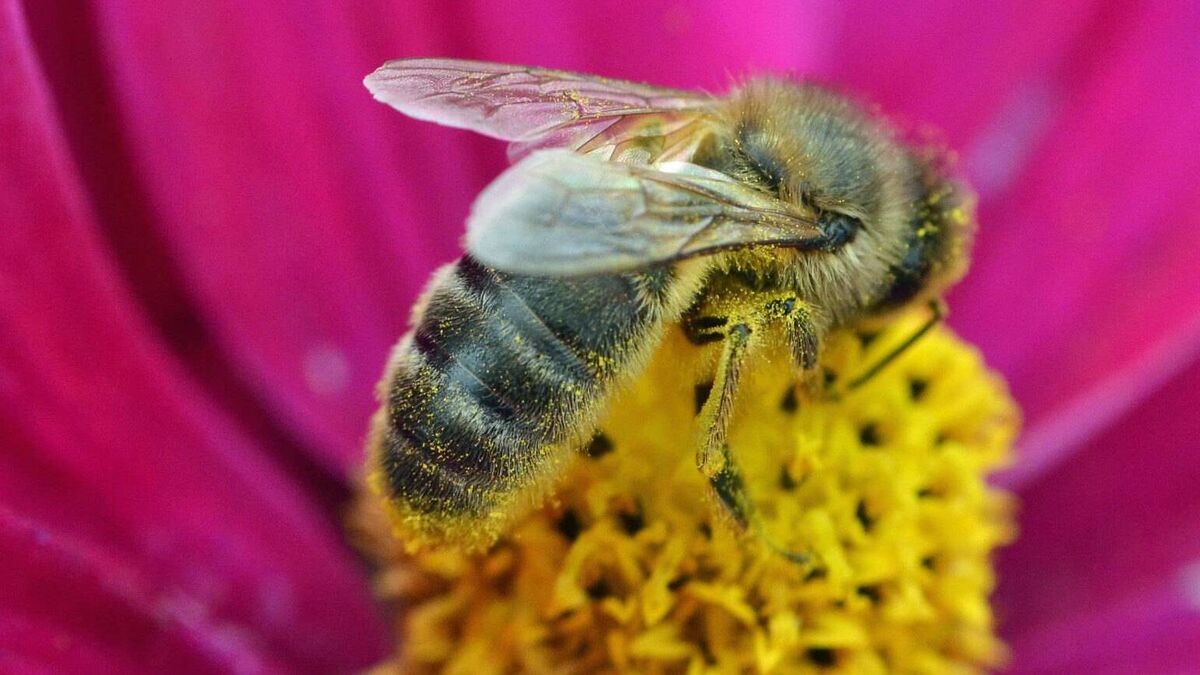
There are 99 species of bees in Ireland but there is only one native honey bee.
As we walk the roadways and isolated lanes of the Ox Mountains, we will hear the hum of bees this summer. These buzzing things go about their busy lives, asking for nothing, minding their own business and managing their secret world. I have written about bees in the past, their special ways and their value to mankind, but I feel we can never know enough about them.
I think it is not unfair to suggest that most of us have little more than a passing interest in these magical creatures, these insects that matter much more than we might realise. At this stage, there is no doubt, that they, having helped us for so long, are now in need of our help.
The native Irish honey or black bee is our only indigenous honey bee. Highly adapted to our Irish weather - it’s not easy making honey in the rain - this particular species can fly at lower temperatures, even in light drizzle, and is very resourceful with its winter food stores. The Irish Native Rare Breeds Society tells us that scientific research and DNA analysis has confirmed that, despite facing major problems, a sizable population of the native black honey bee remains in Ireland.
There are 99 species of bees in Ireland but there is only one native honey bee. Our honey bee evolved and adapted over thousands of years thriving in our unique climate. Not only is it an important native pollinator it also has a special place in Irish culture. Ireland has a long tradition of beekeeping; the concept of having bees in the back garden and honey on your bread extends way back in time.
Unfortunately, a destructive mite, Varroa, was imported with some bees into Ireland in 1998 and along with a number of viruses brought in with it, spread with devastating effect throughout the resident honey bee population. Prior to that, there were lots of honey bees living in the wild. Many of the wild colonies were killed by the Varroa mite but experts now know that not all died out and thankfully, they are again on the increase – it appears our native bee was not just able to adapt to our changeable climate but also to the many other threats it has encountered in recent times. The Irish Native Rare Breeds Society explains the rescue work currently taking place.
The Native Irish Honey Bee Society (NIHBS) was established to promote the conservation of our native bee throughout the island of Ireland. The Society strives to raise public awareness of our special honey bee and its importance, and acts in an advisory capacity to groups and individuals wishing to promote and preserve it. NIHBS is also involved in the continuous education of its own members, and Irish beekeepers in general, in the theory and practice of honey bee improvement through lectures, literature, and workshops. The following is a summary of their efforts.
Interestingly, the protection of our native honey bee features in a bill currently before the Oireachtas. The bill was passed in the Seanad in late 2024 but is currently in the Dáil at the second stage, pending further debate. The following explains the aims of the bill.
I heard of an organisation recently, Bees on the Roof, who have come up with a unique idea. Based in Dublin, Bees on the Roof offer managed rooftop beehive installations and biodiversity educational programmes that bring the very best in sustainability, environmental and wellness benefits to various workplaces or educational facilities. Bees on the Roof offers a unique, urban rooftop beekeeping program for organisations by providing a professional beekeeper to install and care for their rooftop beehives. Interestingly, Bees on the Roof, specifically source and maintain the native Irish honey bees.
"Tell it to the bees" is a phenomenon that stems from an ancient folklore tradition where beekeepers whispered significant family news such as births, deaths, marriages to their hives. People believed that since bees were sacred messengers, keeping them informed would prevent them from swarming away, producing poor honey, or dying.
Today, the phrase and the tradition remain and is often used as a metaphor to symbolise vulnerability and the human desire to be connected to nature. If you come across a hive of native Irish honey bees, with the owner’s permission, maybe you could do what the old people did, when a family member would walk up to the hive, gently tap on it, and quietly relay their news in a respectful whisper. In this instance one might say, “You are in danger, but help is at hand.”
The bees and their lives and their role in mankind’s survival presents us with a certain responsibility. If pollinators in general were to be lost, mankind would only survive for four years. Whether we understand bees or not, that is the reality of our situation. We don’t have to know everything to know what is the right thing to do.