Time to tackle the scourge of e-scooters
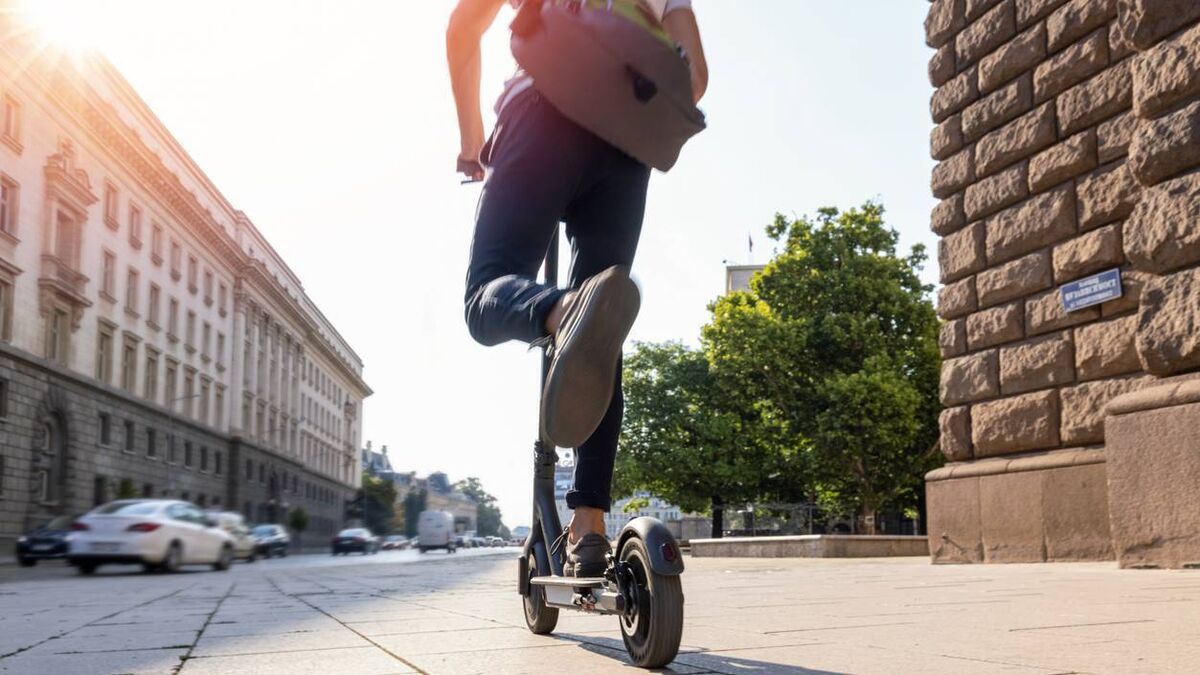
Multiple agencies will need to be involved in sorting out the e-scooters problem.
The news last week that yet another young man has died in ‘a scooter accident’ increases even more the numbers dying on our roads as a growing litany of loved ones are left bereft and sometimes broken as they strive to negotiate a path through what is almost invariably a personal, family and community calamity. It is truly a Via Dolorosa, a Way of Sorrows – the term used for the route to the old city of Jerusalem walked by Jesus on his way to his crucifixion. Our hearts and our prayers go out to all who are in any way part of the slipstream of that grieving.
Readers of this column will know that I’ve long ranted against our failure as a nation to protect, within the limits of reason, as many as we possibly can from such carnage. For Irish people part of the problem in dealing with this challenge is one particularly debilitating characteristic of Irish public discourse – a refusal to accept what to so many may be obvious and necessary. It can take us so long and at such appalling cost to implement a policy that will, everyone knows, be eventually implemented in ‘X’ number of years’ time when the legacy of their avoidance is impossible to ignore.
A recent example is decoding what can be done about the dreaded e-Scooters. Two weeks ago I watched an interview on television with a mother whose teenage daughter lost her life when she was run over by an e-scooter. As the tears ran down her face and her distress was so appallingly evident, she begged the authorities to properly regulate the defective protocols surrounding e-scooters, a worry that she now shared with many other parents and that had delivered to her door a life-long legacy of distress with the death of her daughter.
These words are prompted too by an article in on June 20 by Conor Pope, who is that newspaper's consumer affairs correspondent. Back in 2019, Pope was so fascinated by ‘the zippy little machines all the rage at the time’ that he demonstrated it to his colleagues, who begged for a turn ‘to whizz through the newsroom on the nifty device’!
Pope bought one himself and, on a damp April day at the junction of Abbey Street and O’Connell Street, he zipped around a corner at 15 km/h. Unfortunately, when the scooter went from under him it threw him so close to a bus that he immediately started reviewing his commuting options. A few days later he had another scare after which, he wrote, ‘I decided scooting was not for me’. As an adult, Pope realised the danger but worried about those ‘we can’t really expect to know better’, especially young people.
A few weeks ago, a team of doctors from Children’s Health Ireland (CHI) expressed grave concern at the scale of injuries among young e-scooter users – with traumatic brain injuries now the leading cause of admissions to Temple Street’s paediatric neurosurgical centre. While CHI and the Road Safety Authority have shared an awareness campaign, CHI stressed that more was needed. One obvious need is the implementation of the current rules, such as they are. E-scooters are technically limited to people over 16 years of age and are not allowed to speed above 20km/h. To check out how those rules are respected, just look around you!
Worryingly, from a comment made at the Oireachtas Transport Committee by the Minister for State at the Department of Transport, Seán Canny, that the misuse of e-scooters ‘was down to stupidity’, we can’t expect too much from that source. Canny told the committee that the Government is ‘considering a range of measures’, including requirements to register, insure and tax e-scooters. What Canny calls ‘considering a range of measures’ is another way of saying ‘kicking a can down the road’.
A different perspective is that of Dr Irwin Gill, a consultant in neurodisability at Temple Street Hospital, who believes that ‘more action at the highest level can’t come quickly enough’. While he points out that injuries among Ireland’s youngest e-scooter users cover a broad spectrum, the most troublesome are the traumatic brain injuries, which have increased by fifty per cent in the past year. The effects of traumatic brain injury, Dr Gill explains, often only become apparent over time – in regard to neurocognitive skills such as memory, learning behaviour, attention, self-control, self-regulation.
Gill points out that when the legislation was passed making e-scooters legal in 2024, no one foresaw ‘the present level of injury and I think there’s an obligation on the Government now to respond to what we’re seeing’. The gap between policy based on what we know now (Gill) and what we knew then (Canny) needs to be closed off - quickly. Every option, Gill suggests, needs to be kept on the table including getting e-scooters off the roads completely.
Conor Pope poses that glaringly obvious question: is it time to take e-scooters off the roads?
Multiple agencies will need to be involved in sorting out the e-scooters problem. The Department of Transport need to be more motivated and proactive than just ‘considering a range of options’. Health care professionals, who are at the coal-face of the fall-out, need to share some home truths. Grown-ups need to behave as ‘the adults in the room’ – including parents who buy them for their children. And the young, who need to be introduced not just to a device that helps them whizz around nonchalantly on roads and streets often trying to impress their friends, need to be introduced to the possible prospect of living for many years with a nuerological condition.
We’re mesmerised by so many Americans who take guns for granted and yet can’t make a connection with the shooting outrages that occur all too frequently in that strange county. Here at home we wouldn’t want our children to see, much less own a gun. But we buy them e-scooters!
Memo to parents: an e-scooter is a lethal weapon.
Memo to Mr Canny: Just get it done!