Price of oil continues to shape our world
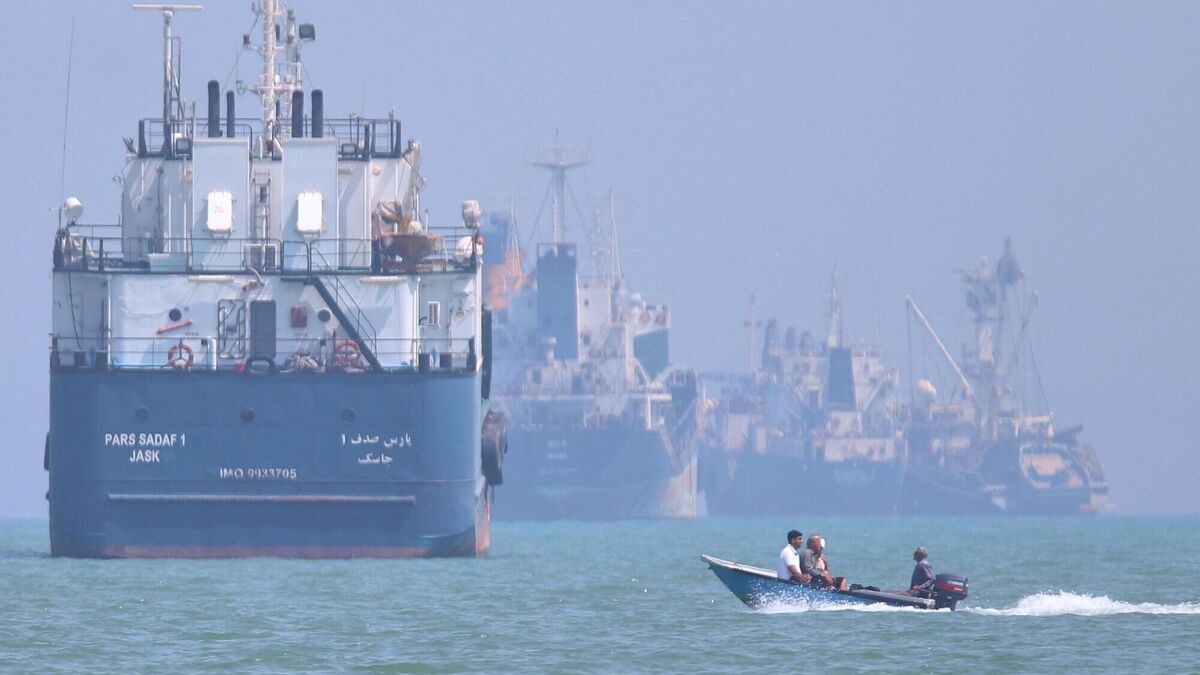
A small motorboat passes anchored vessels in the Strait of Hormuz off Bandar Abbas, Iran, earlier this month. Picture: Amirhosein Khorgooi/ISNA via AP
The price of oil is the determining factor of so much of what goes on in the world. That has been true for a long time, of course, but the last few weeks has been a particularly strong reminder that oil makes the world go round. Its value is measured in both monetary and social terms – it impacts all aspects of life. That value is huge, which is why oil is also known as liquid gold.
Oil has powered much of the world and its economy since the late 19th century. In doing that, it generated enormous wealth and economic development – in some places. Access to oil at the right price was absolutely crucial to economic success. That has not been a fair or balanced process by any manner of means.
Environmentalists will tell you why that dependence on oil is such a bad thing. Burning it produces a lot of carbon emissions, and the role of that in climate change is an ongoing story. Weaning us off oil dependency is therefore a phrase we all have heard a lot of over the last couple of decades. There has been quite a lot of success in doing that, tempered by the growth in demand for energy more generally. Those parts of the world that did not experience any significant form of industrialisation in their economies in the 20th century have now started to grow very dynamically. The very poorest countries in particular are trying to grow, and grow fast.
It is very hard to argue against those countries – who did not use oil to industrialise in the past – saying they need and deserve more energy now. Because of that demand and even with all the advances in new ways of generating energy, oil still matters economically to the world in a way few other economic factors do.
The price of oil as a commodity, measured and priced in barrels, obviously impacts the price of energy both at the pump and in the home. But it also impacts the price of foodstuffs and the manufacture – and thus the cost – of a bewildering array of products. The amount of things that rely on oil either to be made or produced is extraordinary. You could fill a newspaper article many times over listing them. The most important though is in the production, supply and price of food. Inflation in that has major and obvious impacts.
Coal, not oil, was the source of energy in the early stages of industrialisation. When coal was near to iron ore it made it relatively easy to make better and better grades of iron, and ultimately steel. That is why places with coal – England, Belgium, Germany, parts of France – were so quick to industrialise.
How then did coal get replaced by oil? The coal that drove the Industrial Revolution made for a pretty sooty world, as readers of books about life in those countries and in those times will know. It is dirty, heavy and vast amounts of it have to be burned to produce the energy you need. Oil, by contrast, is an altogether more efficient way of producing large amounts of energy.
As the world changed from a coal to an oil-based economy, it was transforming. It started to happen from the start of the 20th century and continued in the industrialised countries right up to the 1970s. Inefficient and sooty coal was gradually being replaced in one industry after another by what was felt to be cleaner and more efficient oil. We in this country didn’t know much use of either – at least not in any widespread sense – until much later in the twentieth century. There are lots of advantages to never having had to rely on coal as an industrial fuel.
Elsewhere in Europe, in those places which had industrialised early, much which had been fuelled by coal was replaced by oil by the early 1970s. That created the conditions for the first oil shock of 1973, when in response to war in the Middle East, oil producing countries raised the price of a barrel of oil significantly, and overnight.
It had an immediate effect – those of an age will remember the queues for petrol – but its real effect was much deeper and more longer term. Looked at internationally, the world was changed fundamentally after those events in 1973. Up to that point, oil in what was then the industrialised world was cheap, and stayed cheap over time. This allowed industrial manufacturers to produce goods cheaply and thus export them competitively. It allowed cold climates and places to be warmed easily and without much by way of insultation. It allowed huge cars to be both built and driven around cost effectively.
By raising prices dramatically, the oil producing countries changed that global dynamic. Yes, the price of oil has gone up and down since then, but the underlying dynamic of those early industrialised countries paying more for oil has not changed. That has changed more than its price: it has been one factor in the rebalancing of global trade, away from Europe and the Americas, places which had dominated so much of that trade from the 19th century onwards. That is a really big change driven by control of the price of oil, which continues to shape our world in all sorts of ways. Even with recent news, that will likely remain the dynamic for quite a while yet.