Synodality is the future of Catholic Church
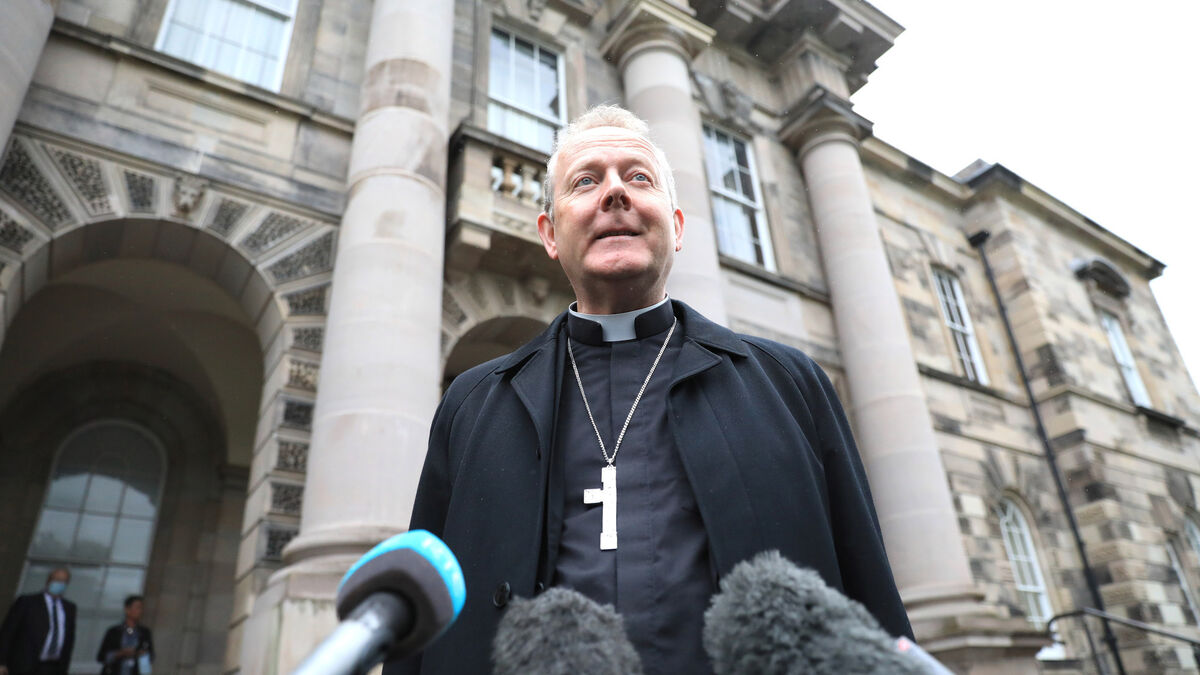
Archbishop Eamon Martin gave an upbeat and positive address to the National Synod.
Just over a week or so ago, 300 delegates from all corners of Ireland gathered in the CityNorth Hotel in Gormanstown, County Meath for the Irish National Synodal Assembly. The task was to consider the latest stage in a reform programme that is intended to give direction and purpose to the Catholic Church as inspired by the late Pope Francis.
Effectively, the reform is re-setting the Church on a synodal pathway – in short, revisiting and reactivating the long-neglected vision of the Second Vatican Council (1962-65) of ‘a People’s Church’. In simple terms, it recaptures a way of being church that is more effective, more purposeful and more ‘user friendly’ in responding to the challenge that modernity represents for Catholicism today.
The importance word here is ‘SYNODALITY’, meaning a shared responsibility for all the baptised in the future of their Church: in governance; in discerning change; in employing strategies of active listening; in consensus in decision-making; in being transparent and accountable; in courageously naming difficult truths and in employing participative structures in every possible way. Its intention is to move the Catholic Church, now in its third millennium, into the modern world and making it ‘more fit for purpose’.
Inevitably, the prospect of this ‘church revolution in approach and in resetting’ has divided Catholic opinion and the Gormanstown Synod was the latest of three similar gatherings – the first in Athlone in 2022, the second in Kilkenny in 2025 and now Meath in 2026 - to devise what Francis called ‘a new way of being church for the third millenium’.
Finding our place in the modern world and devising a future to pay due respect to the teachings of Jesus Christ can seem like turning around a huge ocean-going liner in a busy sea and setting a new course and direction. It takes time and effort to secure unity without necessarily demanding uniformity and at the same time making space to ensure that no one, despite the challenge of different perspectives, is swept overboard. Inevitably too, some are, in Maggie Thatcher’s phrase, ‘not for turning’ and insist on clinging to the wreckage rather that in shaping a different church.
On entering the mammoth CityNorth Hotel over a week or so ago, that perspective was clear. For all the world like a great liner parked awkwardly in a sea of green fields, the hotel evinced a conviction of being part of a different world. However, on entering this new and exotic space, a more homely reminder of things past was a veritable mountain of the latest edition of the newspaper free on offer to the 300 delegates. At first sight it appeared a predictable publicity campaign to increase that paper’s circulation. On closer examination it seemed much more than that – as if it had definitively thrown its weight against the Synodal Pathway in that pages 2 and 3 were exclusively devoted to a long article rubbishing synodality.
Fr Andrew McMahon, a parish priest in the North of Ireland, decreed that Synodality was ‘significantly out of sync with the reality of Church life here’; it was failing ‘to offer the Church a realistic programme going forward’; and its claims were ‘likely dependent for its delivery on an ever-expanding bureaucracy’.
It is of course easy to dismiss untested ambitions for reform and easy too to fuel fears and phobias as with McMahon’s comment – ‘the potential for harm to children, youth and others by the promotion of LGBT plus ideologies’. McMahon (and the ) adopt a presumptive judgement that the jury is still out on synodality. They’re wrong.
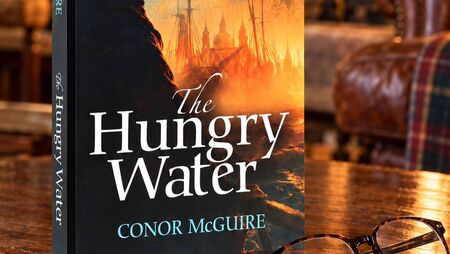
In the words of theologian Eamonn Conway, in his impressive book , ‘the Church is now convinced that synodality is means by which questions and issues are faithfully addressed and means which best enable discernment consistent with what God wants of his church at this time’. With synodality, Conway writes, the People of God both accept ‘change and remain faithful’. It is possible, indeed necessary to embrace both stances’.
Anyone adopting the McMahon/ thesis that synodality is still merely an option (or a choice or a suggestion to be still debated), would be disabused of such a perspective if they attended the Gormanstown synod. There the Bishop of Meath Tom Deenihan described the synodal pathway as ‘a springtime for the Church’ and ‘a new phase in the acceptance of Vatican Two’.
Archbishop Eamon Martin of Armagh in an upbeat and positive address indicated that the Irish bishops who had already walked ‘the synodal path with the people, religious and clergy (of Ireland) were meeting next week and looked forward to reflecting on today’s assembly’ as ‘the church needs to act to benefit all those who have been excluded, abused, wounded and hurt.’ And it is now abundantly clear that most Irish Catholics - though not most priests - are happy to respond to the living tradition of a synodal church – to move in order to remain faithful.
There is absolutely no doubt now about the attitude of the Irish Church to synodality. The presence of Pope Francis seemed to hover over the Gormanstown event as did the comfort of Pope Leo’s persistent endorsement of Francis’s vision of a synodal church. The implementation phase of the synod continues unabated and has overtaken any and every presumption of a divided jury. And not least because at the end of the general assembly in October 2024, the church has accepted that Pope Francis used a formula of words that made the Final Document magisterial – in that he ruled that synodality is now here to stay.
The maturity that attends this choice was very evident in the Gormanstown gathering where respect for divergent views was honoured and critical comments were welcomed. Gormanstown saw the emergence of a flush of groups and entities - mainly conservative Catholics attempting to control or manage the synodal way - some of whose legitimate attendance as Catholics may be open to question. However, as an understanding grows of the new reality that synodality is effectively now part of the teaching of the church, synodal gatherings will be less driven by political considerations and by efforts to ignore or oppose or limit or undo its remit. It will simply represent what Eamonn Conway calls ‘an operative culture whereby all the People of God fulfil their particular and distinctive role and responsibility in discerning how best the Church can fulfil its mission’. And where mischief-making can be named for what it is.
There is now no other way.
It is clear that the synodal journey of the Irish Catholic Church, inspired by the prophetic vision of Pope Francis and the uncompromising endorsement of Pope Leo has attracted the full support of the Irish bishops and Irish Catholics and is, despite inevitable and predictable push back, moving firmly towards a clear validation of synodality as future focus of the Irish Catholic Church.