A pleasant, positive read in a troubled world
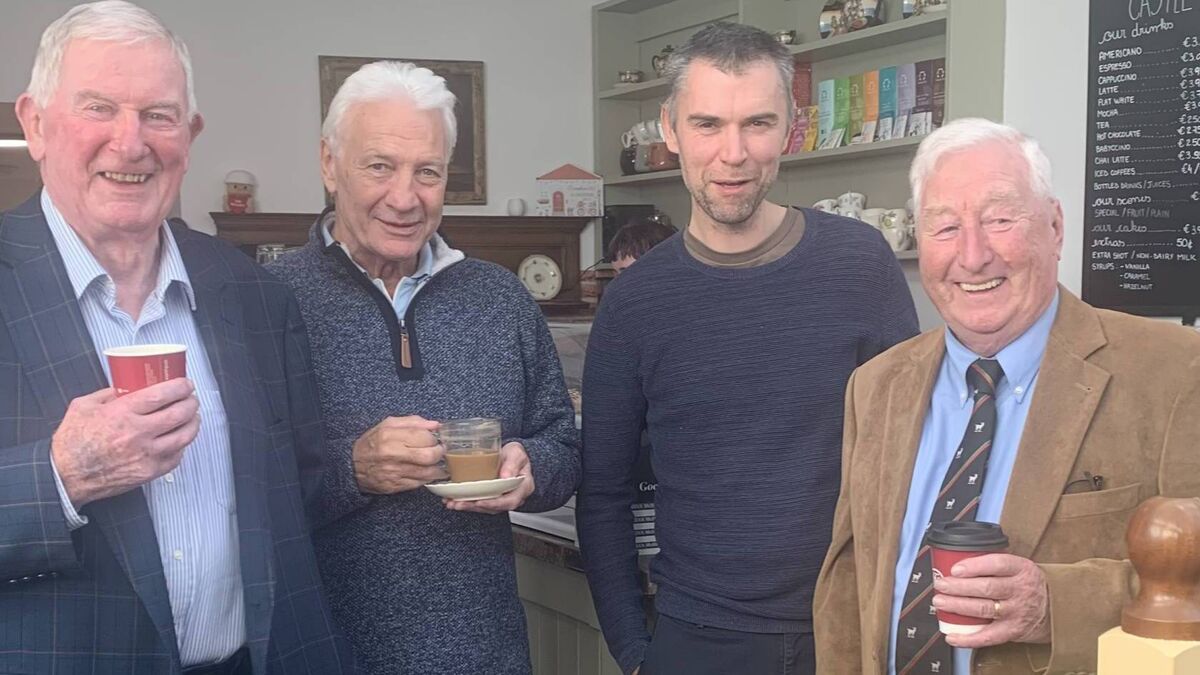
Damian McHugh (far right) pictured in the Castle Bookshop in Castlebar at the launch of his new book 'The Good Life', with, from left: Christy Loftus, Willie Joe Padden and David Brennan.
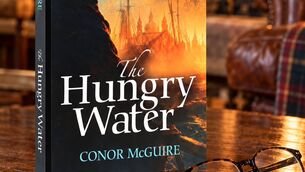
Your scribe had the considerable honour of launching a new publication, , upstairs in Castle Books, Castlebar the other day. The book is written by Damian McHugh, a native of Swinford who started life as a journalist working with the . He preceded me as the man in Castlebar. Damian led a varied career, becoming a lawyer and an educator.
The foreword to this book is written by superheavyweight champion boxer and renowned senior counsel Mel Christle, who was Master to Damian’s devil when Damian blotted his notebook to enter the Kings Inn and become a lawyer.
The Dublin launch of was performed by that most erudite and acclaimed broadcaster, Seán O’Rourke, who is yet another of the wonderful crop of journalists the West of Ireland sent to Dublin. Seán started with the in Galway, but in this year of Grace and Mayo celebration, we won’t hold that against him. So you can I was in exalted company when asked to do the launch.
Damian has been there, done that and he was offered the t-shirt by Charles J Haughey who, through Mr Anthony J Hederman, SC, asked Damian to head up the Government Information Service. Damian told Mr Haughey where to stuff it. Politely of course. One would not expect anything less from Damian.
is a pleasant read. It is about a good life, well lived. It is also a detailed record of a life in journalism, a life in law, a life in education, but it is, at the end, about family, about his wife Claire and their six children.
The very title, , tells much about Damian. In a troubled world, he is positive, he looks forward, he see the good in people, and he sees the bright side of even the dreariest outlook.
Journalism is seen by many people - and especially by journalists themselves - as a wonderful and exciting career, full of idealism, truth-seeking, fact-finding, scoops, sensationalism and reward, the Fourth Estate, the voice of the people, holding government and those in authority to account.
And journalism is, in its own way, all of those things. There has been a wonderful tradition of journalism in Mayo. The county was to the forefront in newspaper publication stretching as far back as the early 1800s. There was a spread of publications with newspapers published in Ballina, Ballinrobe, Castlebar and Westport.
There were some fairly exotic titles. , the and more recent publications like the now defunct .
The long-serving , and with a history of continuous publication for upwards of 200 years are thankfully still with us. In two years’ time, the will celebrate its 200th birthday. That’s some achievement.
These publications supported Davitt and the Land League. After an initial reservation about 1916, they supported the War of Independence, supported nationalist candidates in the local elections and, at all times, while bringing local news to the people, editorialised for justice and fair play for the people of the West. The papers were family owned - the Doris brothers in Westport, James Daly and the Gillespies in Castlebar and the De Vere family in Ballina. It was a great time to be involved in journalism.
So, when Damian McHugh took his first tentative steps into journalism as the East Mayo Correspondent for the in 1961, he was entering a profession that had some standing.
He had dreamed of becoming an airline pilot but how could that compare with the excitement of gathering notes on all the goings-on in Swinford, Kiltimagh, Charlestown, Bohola, Foxford, Ballyhaunis and all points in between.
He spent six years with the before being enticed to Roscommon where he worked under Micheál O’Callaghan in the . He did not let the grass grow under his feet in Roscommon and in 1968 was headhunted by Seán Ward of the .
Damian arrived at de Valera’s paper at an exciting but demanding time. He was assigned to Northern Ireland at a time when the Civil Rights marches organised by People’s Democracy were getting under way.
He covered the battle of Burntollet Bridge where the march from Belfast to Derry was ambushed, with the connivance and support of the Royal Ulster Constabulary, by loyalist and unionist protestors. It was the touch paper that led to 30 years of the Troubles in Northern Ireland.
It was also a time when Damian and Claire were starting a family. Damian was on duty in Derry when he got a call from Claire’s father to tell him that Claire had been brought to hospital in Castlebar, having gone into labour. He arranged with his editor to depart Derry, and drive to Castlebar to be with Claire and to welcome Damian junior into the world. He missed the birth of his first born but in the late ‘60s that was not such a big deal.
Damian had acquired an excellent shorthand note and was selected to report on a number of tribunals including the 7 Days tribunal into illegal money lending in Dublin and the Arms Trial in which Charles J Haughey, Neil Blaney, Captain John Kelly and Albert Luykx were put on trial in Dublin for an alleged attempt to import arms for distribution to the besieged nationalist community in the north.
He was appointed High Court reporter and became acquainted with numerous high profile judges such as Cearbhaill O’Dálaigh, Mr Justice Kenny, Declan Costello, Seamus Henchy, Brian Walsh and Herbert McWilliams and he also took an interest in how the law operated.
It was not all sweetness and light in the Four Courts, at least not for reporters. They were assigned a 'Press Room' which, in winter time, was freezing. There was an open fire in the room but no fuel. During his time covering Mayo County Council, Damian had become acquainted with Henry Kenny TD, who, at that time, was in charge of the Office of Public Works.
Damian contacted Deputy Kenny and explained his predicament with the igloo that was the Reporters’ Room. Henry Kenny solved the problem, directing his staff to provide two bales of briquettes daily to keep Damian warm. A simple solution but a heart-warming one.
As part of his High Court beat, Damian met Bart Daly who published the Irish Law Times Reports and this relationship led to Damian writing his first book 'Libel Law - a journalist’s handbook'. The book became a sort of bible for working journalists and Damian was engaged to deliver a number of workshops around the country, including here in Mayo in Breaffy House Hotel.
With an increasing interest in the law, Damian was persuaded to take a pre-Bar course in the College of Commerce, Rathmines. Damian worked his way through the Kings Inns and qualified at the first time of asking. He took silk, as they say, in a wig borrowed from former Attorney General, Peter Sutherland. Damian’s own wig, ordered from London, had not arrived in time. It could be argued Mr Sutherland’s wig was not a bad substitute.
Taking silk was a huge undertaking that required the consent of Claire. Times were tough on a young family. The were frugal employers and reporters' pay was not great, so Claire had to return to nursing at night to help with the family income. It was an undertaking that Claire willingly took on. This book is a story about family as much as anything. Claire and their children are at the heart of everything.
There’s a lot more to . There’s the issue of homelessness which is not just a recent phenomenon. There’s the demise of the Irish Press Group - the first step in a long and lingering deterioration in the newspaper industry. There’s reporting on EU affairs from Strasbourg, meetings with Presidents, first court appearance and a win.
There’s educating a future Taoiseach and Finance Minister, Simon Harris. The jury is still out on whether that’s a feather in Damian’s cap. We’ll wait and see.
There’s death and dealing with grief. It’s all in .
- Oscar Wilde