School divestment has failed miserably
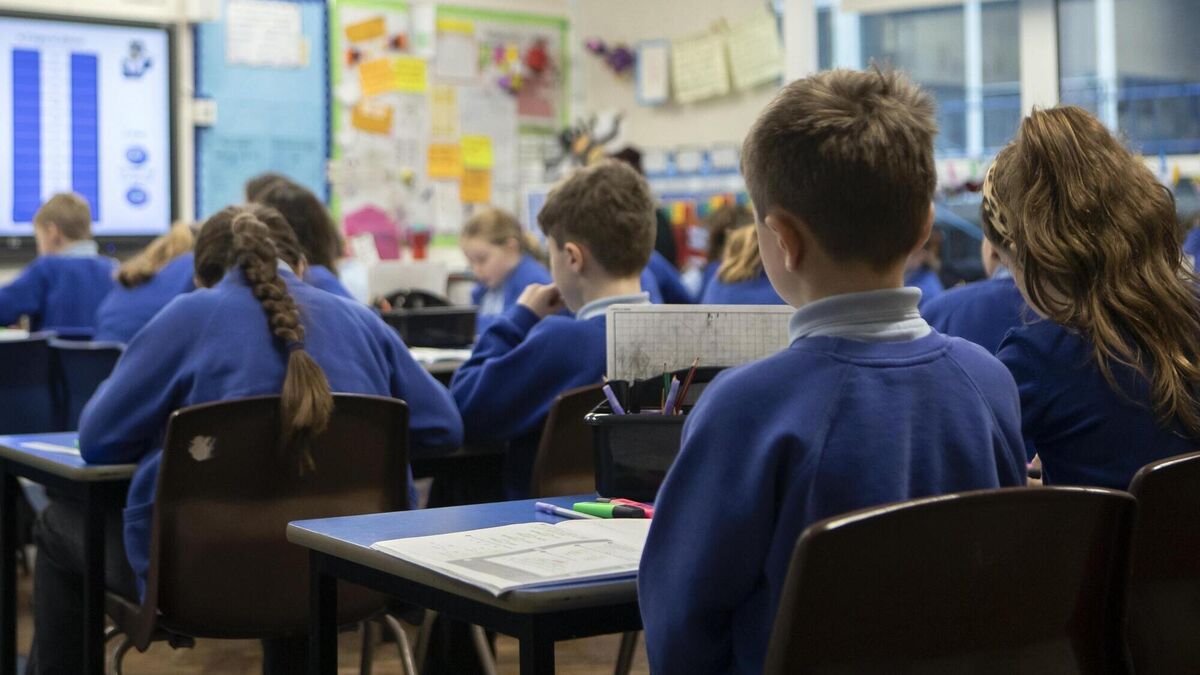
Entire generations of children will pass through our education system before the current pace of change delivers anything remotely approaching pluralism.
The recent article by Brendan Hoban (May 12, 2026) calling for a “flexible approach” to school divestment reflects a debate Ireland has now been having for so long that many parents have simply stopped believing meaningful change is ever intended to happen.
As a parent involved with Education Equality, I read the piece with a sense of deep frustration, not least because it repeats a number of misleading narratives that have increasingly been promoted by senior Catholic Church figures in recent months.
We can surmise that Education Equality is one of the groups that Bishop Deenihan was referring to. Education Equality is not a lobby group with deep pockets or political influence. It is an entirely voluntary-run advocacy group made up of ordinary parents and teachers, trying to ensure that children’s constitutional rights are respected in our state-funded primary schools. We receive no state funding. Many parents give their time, energy and expertise to the group because the issue affects their children directly and because they feel they have nowhere else to turn.
Yet discussions around divestment continue to portray parents seeking secular or genuinely inclusive education as somehow ideological or unreasonable, while the existing system is treated as neutral and perfectly normal. It is not.
Article 44.2.4 of the Constitution is very clear: children attending state-funded schools cannot be compelled to attend religious instruction against the wishes of their parents. But parents across Ireland know that the reality inside many schools bears little resemblance to the constitutional right.
Religious instruction in most Irish primary schools is not confined to a short optional class. It permeates the school day through assemblies, prayers, Masses, sacramental preparation for Confession, Communion and Confirmation, classroom displays, religious visitors, choir practices, retreats and faith-based activities embedded into ordinary teaching time. “Opting out” invariably means isolation, exclusion or sitting at the back of the classroom colouring (or in later years, reading quietly), absorbing everything while classmates prepare for sacraments. That is not meaningful equality.
The most striking aspect of these debates and Brendan Hoban’s piece is that the burden of compromise always seems to fall on the same families. Parents who do not share the majority faith are expected to be endlessly flexible, endlessly patient and endlessly respectful of religious ethos. Meanwhile, the constitutional rights of their own children are frequently treated as inconvenient administrative problems.
We are constantly told “divestment needs flexibility”, “divestment takes time”, “there are practical difficulties” and “parents don’t want divestment”. What remains underreported is the fact that divestment lies squarely within the remit of the patron, and the divestment process in pilot schools around the country has been riven with scaremongering and misinformation.
At this point, one thing we can all agree is that the divestment process has failed miserably. After well over a decade of promises, the vast majority of Irish primary schools remain under religious patronage. In many areas, families still have no realistic access to genuinely secular education or travel long distances to secure it. Entire generations of children will pass through our education system before the current pace of change delivers anything remotely approaching pluralism, a human right respected as standard in schools across Europe.
The obvious solution has been staring us in the face all along: faith formation and sacrament preparation should take place outside the school day, organised by families and churches, not embedded into the functioning of state-funded education. Indeed, the Archdiocese of Dublin committed publicly in September 2022 to moving sacraments out of schools and into the parish. Unsurprisingly, parents are still waiting for that change to happen.
Moving faith formation and sacraments to a class outside the school day would respect religious freedom far more honestly than the current model. Families who value sacramental preparation could engage with it fully and meaningfully through their parishes and communities. Children whose families do not share those beliefs would no longer be segregated or marginalised within publicly funded classrooms.
Instead, Ireland continues trying to maintain an increasingly unworkable compromise where schools are expected simultaneously to function as inclusive public institutions and vehicles for religious formation.
Many practising Catholics themselves now acknowledge privately that the current arrangement weakens rather than strengthens faith. Sacraments have increasingly become cultural milestones detached from meaningful religious practice, while schools carry the impossible burden of trying to reconcile faith formation with modern expectations of equality and inclusion.
And yet parents who raise these issues are often accused of attacking religion itself. The parents involved in Education Equality come from a wide range of backgrounds and perspectives. What unites us is not ideology, but the belief that state-funded schools should genuinely belong to all children equally.
That should not be a controversial proposition in a republic. What is increasingly controversial is the idea that parents must continue quietly accepting a system that routinely places the rights and comfort of religious bodies above the constitutional rights of children.
The real question is no longer whether Ireland can move toward a more inclusive education system. It is whether the State is finally prepared to acknowledge that constitutional rights are supposed to exist in practice, not merely in theory.