Dublin is now a shell of its once former self
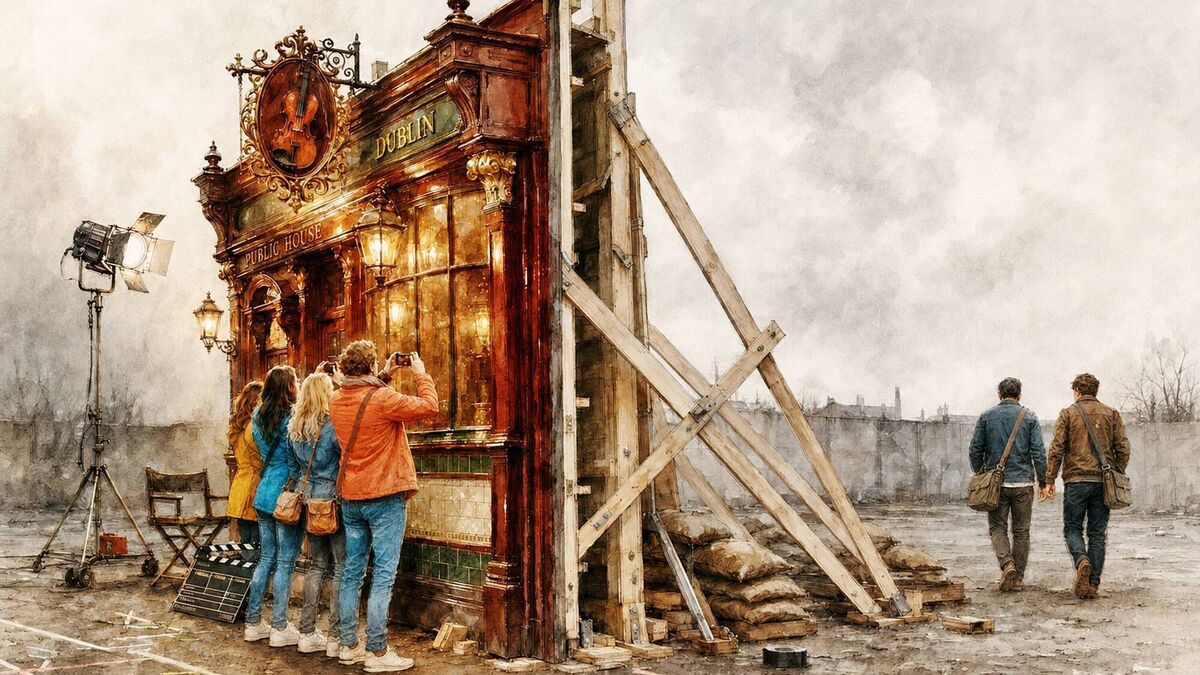
The set is immaculate, but the cast has slipped out the stage door. Illustration: Conor McGuire
Painting in the dark. That's a real event, a genuine line on a genuine council programme, and if you want the whole of modern Dublin in three words, there they are. The city has taken to staging itself.
Once a month, last Thursday, the museums stay open past teatime, and somebody organises grown adults to stand in a blacked-out room with a brush, and this is handed to us as nightlife. ‘Dublin by Dusk’, they've called it. The name alone should have come with a resignation letter attached.
So might I be so bold as to state what nobody in City Hall will say with the microphone on? You don't draw up a monthly programme to re-energise a city that's alive. You draw one up for a city that's been embalmed and propped in the window. The pub from the brochure, the fiddle on cue, the pint of plain photographed before it’s drunk. Temple Bar has just been ranked the second-worst tourist trap on the planet, and Dubliners took the news the way you'd take a careless cousin's drink-driving charge. Grim, and not remotely a surprise.
And here's the joke sitting underneath the joke. The crowds aren't on the increase, and fewer people come now than came before the pandemic, six million odd against the guts of ten, and still the place feels wrung out and picked over. Which should tell you the trouble was never footfall. A city doesn't get hollowed out by too many visitors. It hollows out when too little of the city remains underneath them, when the thing they queued to see has been quietly sold off around them while they queued.
I'm not going to give out about the tourists, as tourists are easy marks, and we have all been that soldier on our package holidays. What's been at me lately is quieter, and worse. The people who make the whole performance run, the ones pouring the pints, turning the beds, carrying the overpriced chowder, smiling on command, can't afford to live in the city they're paid to be charming in.
The numbers are almost a laugh. A single person in Dublin now needs to clear around sixty-one grand after tax to rent an average one-bed flat. That's north of a hundred thousand before Revenue has its dip. On a lounge boy's money. On a commis chef's money. You can see where a sum like that lands. It lands with the hotels renting the flats themselves and billeting their own staff inside them, a company town in all but the brass band, the mill owner housing the hands so the mill can open at seven. Hundreds of them, quietly, right across the city. Sixty-two per cent of Dublin firms now say they're bleeding staff to housing that isn't there.
€2,600 a month for a two-bed now, and climbing with the seasons. Think for a second about who a figure like that prices out. Not the consultant. Not the young lad coding away in the plate-glass tower along the docks. The porter. The kitchen porter, the chambermaid, the girl clearing the glasses, who is the whole reason a stranger flies home and tells the neighbours the Irish were lovely.
Out here in the less trampled west, we've watched Dublin do this to itself for a decade, the way you'd watch a good-looking cousin drink, and there's no satisfaction whatever in having called it.
And the rooms those workers should be in? Above the pubs, round the back, the small dark boxes of the north inner city. We know exactly where they went. They went to the short stays, the lockboxes, the laminated card with the wifi code and a message about where to leave the key. The Government more or less owned up to it this year when it finally set up a register for short-term lets, which is the state's genteel way of admitting that the thing it waved through for a decade did, in fact, happen. The room that housed the city's worker now houses the city's visitor. So the visitor sleeps where the barman used to sleep, then grumbles that the barman seems harried and the welcome has a whiff of the assembly line off it. He's not wrong. It has. The man serving him was up at half five in Drogheda.
Dublin planning authorities have enabled the growth of a city centre hub that performs Irishness for a living and can't house the Irish who'd do the performing. Céad míle fáilte on the tea towel, a hundred thousand welcomes, and not one spare room behind the counter.
You used to be able to be poor in a city and still live in it. That was the bargain a city struck, the one real advantage it held over the bog and the boreen. Cramped and dear and worth it, because the work and the life sat on the same street, and you could stumble from one to the other. Dublin has voided that contract without telling a soul, and the register for the short lets is about the closest thing to an apology anyone's going to be handed.
There's a word the internet reaches for here, and I'll use it the once, then wash my hands. Cosplay, which to the uninitiated is shorthand for ‘costume play’. Dublin is cosplaying as Dublin. It has kept the costume and mislaid the body that went inside it. The snug, the fiddle, the fella who calls you boss, the harp engraved on the glass, all still there, all increasingly worn by people bussed in to wear them, or by nobody at all, because twenty thousand hospitality jobs have simply gone. Evaporated. Unfilled. The set is immaculate. The cast has slipped out the stage door.
And into all this, Dublin council arrives with its clipboard and flings open twelve museums, past dark, most of them for the first time in their long lives. A boat leaving the Point at seven for a turnaround around the bay. A pawn shop dressed up as an attraction, vinyl DJs, better than forty little happenings pinned to a single Thursday like bunting on a coffin. It calls the whole business a revival. It isn't a revival. It's a wake with a decent playlist. You can't programme your way back to a living city. A living city is an accident. It's the accident of ordinary people being able to afford to stand around in it, aimlessly, after work, with somewhere nearby to fall into bed. Take that away, and you're left holding the smell of the thing. Bottled. Sprayed on for the guests as they come through the door.
So the last Thursday of the month rolls round, and the lights stay lit a while longer on Dame Street, and somebody paints in the dark. While under the unflattering light of Busarus and the rush of Connoly Station, the last buses and trains fill with the people who made the welcome, headed home to the only rooms they can still afford, in a county the visitor will never set foot in, and the brochure will never shoot. Dublin waves them off into the dark. A hundred thousand welcomes. Mind how you go.