Fond memories of Walton’s Mountain
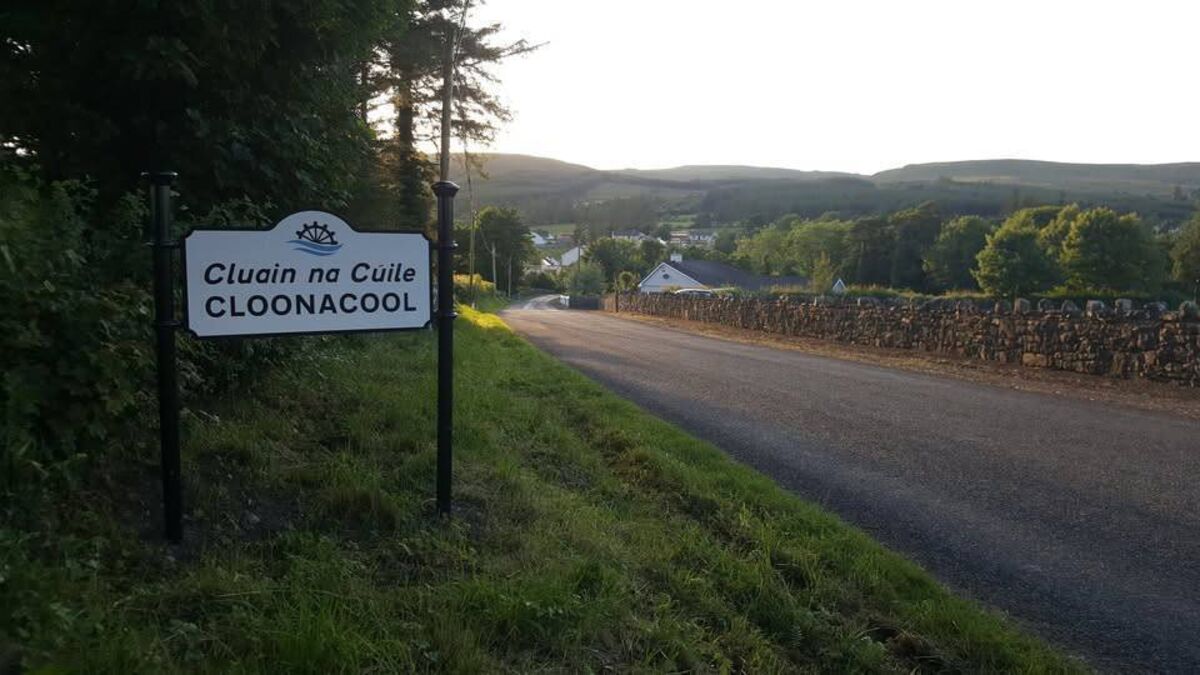
Where I lived in the 1960s, in the shadow of the Ox Mountains, there was the same cast, the same characters, the same values, the same drama and the same sense of belonging. Picture: Pat McCarrick
I watched on Netflix recently a remake of , that great classic tale of life on the American frontier. It reminded me of the television programmes of my childhood, series such and, of course, . I would find it difficult to choose between these three but if forced into a decision, would win out.
Walton’s Mountain rang bells for me and in many respects, mirroring my own upbringing in a rural mountain community. It was easy to relate to the basic themes of a hard-working father, a home-making mother and a large family living in difficult times.
The original book, on which the series was based, was entitled . The story is based on events in the author’s childhood home in Nelson County, Virginia. Diane Kemper, in her writings, outlines the details of the original story written by Earl Hamner Jr. I read a copy of Spencer’s Mountain at one time and found that it was indeed the same story as the Waltons, if a little more edgy in places. The original book is both a coming-of-age story and remembrance of a time when family values was more important than money in the bank.
The Spencer family in the book are rich in core values, but cash poor. The book follows the ever-growing family, their large extended family, and the small town run by The Company. The novel focuses on Clay-Boy, the eldest son of eleven children, as he forges into adulthood, and the entire family sacrifices what very little they have to send him to college.
For generations, the Spencers had lived on the mountain that bears their name. Hard times for all of America has changed this, and now Clay, the father, supports his family living in the Company town, working in the mill and doing any odd job available. He won’t allow one of his thoroughbreds, as he calls his children, to work in the mill. Clay-Boy is the first to graduate, and he could also be the first from the town to go to college.
The TV story is set on Walton's Mountain, a fictional mountain community in the fictitious Jefferson County, Virginia. The timing of the series is from 1933 to 1946, a period that extends from the Great Depression up to the end of World War II. The series finale, 'The Revel', revolves around a party and the invitation date is given as June 4, 1946. The Waltons, in a nine-season run, covered both an interesting span in American history as well as the inner workings of rural family life at that time. The final episode, depicting the attack on Pearl Harbor, was broadcast in December, 1978.
The characters of the Walton household include the parents, seven children, and their grandparents. The parents are John Walton Sr., a hardworking husband and father, and Olivia Walton, his religious and devoted wife. The children are John-Boy, the aspiring writer; Jason, the musician; Mary-Ellen, the strong-willed nurse; Erin, the thoughtful daughter; Ben, the handy mechanic; Jim-Bob, the inventive youngest boy; and Elizabeth, the youngest child, her red hair and freckled face endearing her to audiences everywhere.
When I was an impressionable teenager, I thought The Waltons were a wonderful family who lived in a wonderful place. Those old-time values of rural family life, neighbours with troubles, a community that cared and those life-changing incidents that are visited upon us all once in a while, appealed to me. I suppose I was a bit envious of the Waltons, having all that and maybe wished my own life, my own family, my own community was more the one on Walton’s Mountain.
Now that I am older, I realise that what appealed to me about the Waltons was that I could relate to their story. The longing and the desire it created in me was somehow deeply connected to my own life, my own family and my own mountain community. I didn’t realise that I was, in many respects, watching my own story and the story of every rural community. It was only time and place that blurred the boundaries.
Where I lived in the 1960s, in the shadow of the Ox Mountains, there was the same cast, the same characters, the same values, the same drama and the same sense of belonging. It was the kind of place one didn’t mind escaping from, and yet, in that escape, one also knew that it was the kind of place that would always hold a special place in your heart and mind.
The Moy flowed by the bottom of our farm. We lived far enough away for its seasonal floods for it not to impact our home – despite inundating our fields – yet close enough for my father to visit the local fishing holes on a Sunday afternoon. There were no catfish like in the Waltons river, but there were trout, lots of trout. In the days before the Moy was drained, some of these trout weighed over two pounds.
I was intrigued one time to hear my father tell of a neighbour he knew in his childhood who could snare trout with a hair taken from a cow’s tail. He saw him do it. My father, on meeting the man along the river one evening, said to him that he found it hard to believe that such a trick was possible. With that, the neighbour simply walked to a nearby cow, took a hair from her tail and, with the help of a short rod, formed a snare out of it. Leaning over the bank of the river, the man dropped the snare into the pool below and simply waited. In time, a trout unwittingly positioned itself in the waiting noose and was promptly whipped ashore.
We had another neighbour who would have fitted very easily into any episode of the Waltons. He was a gifted tradesman who ran his own sawmill and once built his own motorbike. The roar of the sawmill, powered by some ancient engine, would regularly ring across the valley whenever a roof for a shed was being cut or if a replacement driving rod was needed for a disabled mowing machine. A notice hanging over his work bench bore the warning, ‘It is expensive to make a silk purse out of a pig’s ear’. His giant workshop beside the sawmill was filled with all kind of semi-broken, semi-repaired items of steel and timber; the countless ‘pig’s ears’ he had been brought by hard-pressed neighbours over a lifetime.
He was the only man on the mountain to have a motorbike. The story goes that he built it himself, one piece at a time, a bit like that Cadilac in the famous song by Johnny Cash. The basic form of the bike was a BSA but there is no doubt that this gifted man made all its replacement parts over the course of its long life. It had a most distinctive sound as it trundled down the mountain road, to town or to the local pub. His sawmill and his motorbike remain memorable echoes of a more innocent, self-reliant time.
Not all life is like The Waltons. Not all mountains are like Spencer’s Mountain but there are many reminders in these great stories that point us in the direction of what is best in our own lives. Despite a sometimes-depressing current world situation, we might do well to remember that there are still good people everywhere, there are places of importance and communities that are worth their weight in gold.
Good night, Jim Bob! Good night, Mary-Ellen!