Price hikes on the pint will kill the rural pub
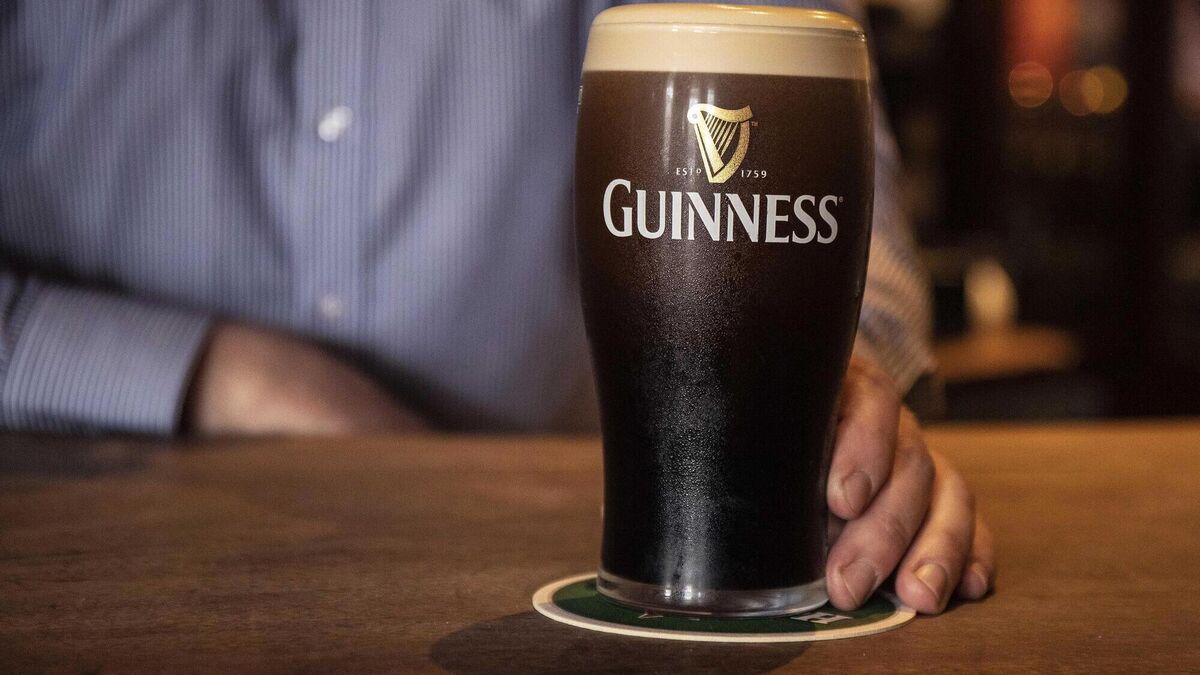
There’s a number that should be carved over the door of the Dáil chamber, every county council chamber, every meeting room in which serious Irish people make serious Irish decisions. Not the national debt. Not the housing deficit. Not the number of planning appeals per kilometre of coastline. No. The number is 166. That’s how many pints of Guinness the average Irish weekly wage can now buy. It sounds like plenty, until you realise it was 190 at the peak of the Celtic Tiger, and that we are now, by this most sacred of economic metrics, back to 1997.
We’re back to 1997, dialling up the internet, back to Boyzone on the radio and their appearances on the . Back to a time when you could still smoke in a pub and nobody had heard of avocado bread. We have, in the most Irish way imaginable, made extraordinary progress in every measurable direction and somehow ended up back where we started - standing at the bar, slightly poorer, slightly confused, wondering what happened.
What happened is Diageo.
Diageo, for those entirely unaware, is the British multinational that owns Guinness. The actual black stuff. The thing we built an entire national identity around. They raised their wholesale price by seven cents a pint in February. Seven cents, which doesn’t sound ruinous until you understand the glorious Irish mathematics of pub economics, whereby a seven-cent wholesale increase arrives at the customer as a 20 cent retail increase, in roughly the same way that a light drizzle in Mayo arrives at the Atlantic as a flood warning.
The price of a pint of stout has now risen 18% since November 2022, while the Consumer Price Index - the official measure of everything else - rose just 8.25% over the same period. In other words, the pint is inflating at more than twice the rate of the rest of the economy. We have achieved negative real pint growth. If you want to understand what’s actually happening to Irish living standards, forget the Central Bank. Just check the bar.
And it’s not as if we’re getting a better pint. It’s the same pint. Same glass. Same creamy top. Same two-minute pour during which the barman stares at the middle distance as though contemplating either the nature of time itself or what’s for dinner. The only thing that’s changed is that it now costs €6.01 on average nationally, €6.75 in Dublin, and a frankly sociopathic €10.45 in Temple Bar on St Patrick’s Day.
Ten euros and forty-five cents. For a pint. In your own country. On your own national holiday. There’s a word for that. Several, in fact, though most of them aren’t printable in the .
Someone in Dublin this March - a man called Matt Cortland, driven presumably to the brink of sanity by paying €7.80 for a pint - decided he’d had enough. He used AI to phone over 3,000 Irish pubs, asking each one the simple question: 'How much is a pint of Guinness?' He called it the Guinndex. It is, almost certainly, the most Irish thing that has ever happened involving artificial intelligence. A country that devoted centuries to producing scholarly saints and illustrated manuscripts has arrived at the age of machine learning and immediately pointed it at the bar.
The rural picture is bleaker still. The Vintners’ Federation of Ireland warned that repeated supplier price increases are causing rural pub closures, where pubs are already under severe pressure from declining footfall and rising operating costs. The rural pub - the last genuinely democratic room in Ireland, the place where the farmer and the solicitor and the fellow who fixes the broadband all stood equal before the one true God of the creamy pint - is closing at a rate that ought to prompt a national emergency. It doesn’t, because it’s not a housing estate or a data centre, and nobody’s issuing a press release about it.
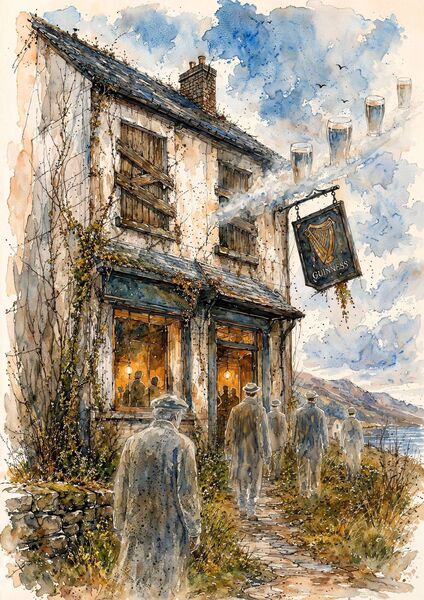
Out here in Mayo, you feel it. The pub that closed last winter. The one that only opens Thursday to Sunday now, because the margins don’t support a full week. The one that turned into an Airbnb, a tragedy of a very specific modern Irish kind - a building that once hosted wakes and lock-ins and the occasional impromptu session now hosts Danish cyclists who give it four stars but dock one for the WiFi.
Meanwhile, Diageo, in its correspondence to publicans, said it “continues to be committed to support your business and the wider hospitality sector in Ireland”. Committed to support, in the same way a man is committed to supporting his garden by repeatedly standing on the flowers.
The really exquisite irony is that Guinness 0.0 - the non-alcohol version, the great beige compromise of the wellness era - went up by more than the real thing. Ten cents on the fake pint versus seven on the actual one. Even our abstinence is being taxed.
And here’s the thing nobody quite wants to say out loud: the pub isn't simply a pub. It never was. It is - or was - the Irish solution to the Irish problem of being human. It was where you went after the funeral. Where you sorted out the argument with your sibling. Where the loneliest man in the parish had someone to talk to on a Tuesday night. Where teenagers learned, badly and noisily, how to become adults. Where local communities were held together by nothing more sophisticated than proximity, rounds, and the mutually agreed fiction that one more wouldn’t hurt.
One grieved publican succinctly summed up the situation: “Drinking at home, alone or in small groups, often leads to higher consumption and has real knock-on effects for people’s physical health, mental wellbeing and overall happiness.” In other words, the expensive pint isn’t keeping us sober. It’s just making us drink worse, alone, in front of the television, without the social friction that kept it manageable.
Like so much of our neatly packaged culture, we’ve outsourced the national drink to a British multinational, our calcifying national identity to a tourism brand, and the national conversation to WhatsApp groups. And we’re sitting at home with a four-euro can from Lidl, wondering why everything feels slightly emptier than it used to.
166 pints. That’s your week’s wages, carefully translated into meaning.
It used to be 190. We’re 24 pints down and still trying to work out where the night went.