People in authority need to know their limits
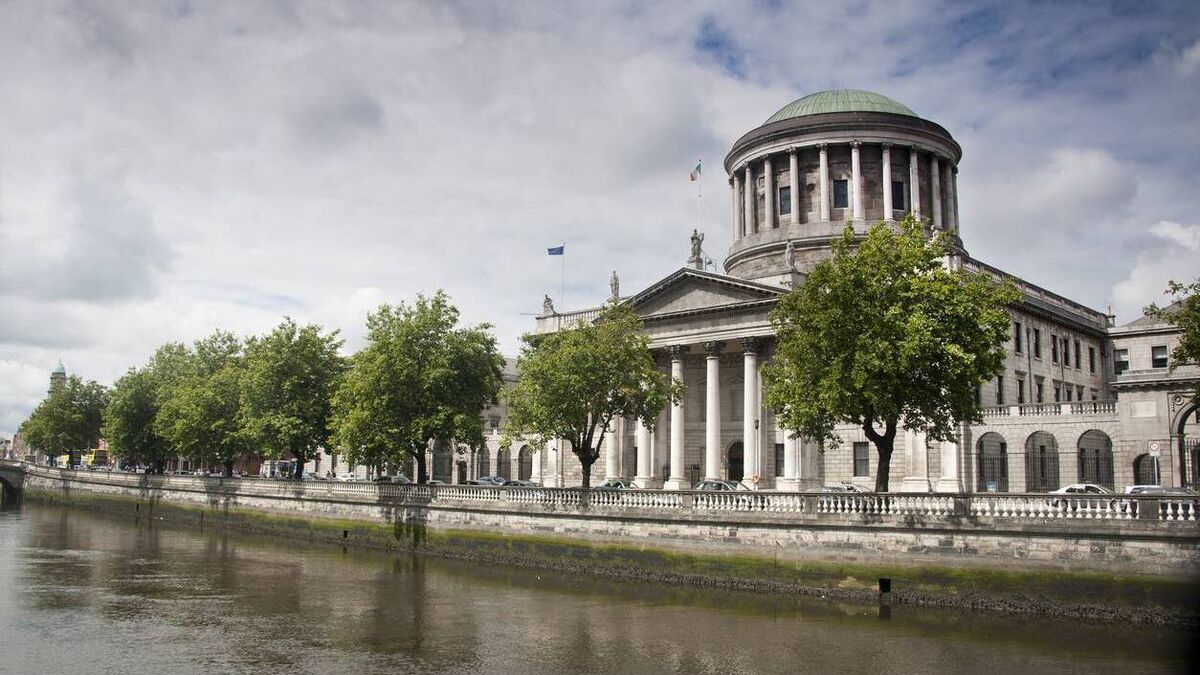
A High Court judge noted that fixing speed limits was a matter for the legislature, not the judiciary.
A District Court Judge recently refused to convict 34 drivers caught speeding on a road approaching Monasterevin in Co Kildare. The judge, Andrew Cody, had expressed the view that the speed limit on the stretch of road was unjust before he dismissed the 34 speeding cases.
Judge Cody’s justification (circulated in written comments at the outset of the hearing) was that Go Safe speeding vans had ‘deliberately targeted an unjust speed zone’ and compared the entrapment to ‘shooting fish in a barrel’.
So when the 34 drivers came before him at a sitting of Laois District Court on December 19, 2025, Judge Cody determined not to convict them – not because it was Christmas and a season of all around goodwill! – but because he concluded that the case was unjust. However, the Director of Public Prosecutions challenged the ruling in the High Court and won a judicial review over Judge Cody’s failure to convict the 34. The verdict of the High Court judge, Cian Ferriter, was that Cody had legally erred and that his approach was ‘manifestly inappropriate’ for a judge.
Ferriter pointed out that the role of a judge is not to express a view regarding the wisdom or correctness of speed limits in criminal cases and deal with such cases from that perspective. His role is ‘to faithfully apply the law as it is, not as he or she thinks it should be, however well intentioned any criticisms of the policy behind the law might be’. Fixing speed limits is a matter for the legislature, Ferriter pointed out, not the judiciary.
That last paragraph is a quick lesson in what most people, even ‘hob lawyers’, would regard as obvious as the noses on our faces but Ferriter was sensitive to what might be interpreted as a dressing-down of a junior colleague in a lower court. There was, he pointed out, no question of bad faith or misconduct. It was just that Cody had erred in his approach.
Others may view ‘the error’ with less sympathy and feel that when those in authority - especially those who are regarded (or regard themselves) as holding more authority than their position warrants – start ‘laying down the law’, they are biting off more than they can be expected to be able to chew and need to be cautioned.
In the old days when a medical consultant breezed into a hospital ward, accompanied by a retinue of minions, the expectation was that others regarded (relatively speaking) as lesser beings (like nurses) were expected to open a path for his Excellency’s entourage as if he was a Moses-figure crossing the Red Sea. Or once when a bishop came for Confirmation and the presumed expectation was that everyone he met would instinctively drop to their knees and kiss his ring.
Sometimes judges or consultants or bishops or others easily have so much deference shown to them that they can end up imagining that their positions are more significant than what they are and even that, by extension, they are entitled to ramble speculatively into related disciplines for which they have no particular responsibility, aptitude or training.
A hospital consultant was once heard to pronounce infallibly to his colleagues on a medical condition for which he had no qualification, and once he strode off into the distance a lesser colleague was heard to mutter under his breath, ‘I wish Jimmy would stick to his varicose veins’ – for the treatment of which, apparently Jimmy was something of a national icon. I once heard a bishop instruct a group of his clergy that while he was unhappy to see some of his priests sporting moustaches, he didn’t mind a priest having a full beard, even though he himself was as bald as a Granny Smith apple.
Times have changed and underlings are less inclined now to invest authorities with more attention than their positions warrant. Now experts in health, almost regardless of their expertise, have their diagnoses checked by looking up Google or now more recently checking with ChatGPT. Reverend Mothers, once regarded as demi-goddesses in their own heavens whose every wish was presumed to be God’s will, are less evident now, victims possibly of their ever-thinning constituencies. Pedestals, in general, have gone out of favour, as we are as a priest-colleague regularly quips, ‘all gods now’.
And while we could all take a leaf from the response of High Court judge, Cian Ferriter, in his gentle dissection of his legal colleague, Andrew Cody, we may need to be careful not to invest our positions with authority beyond our stations.
There is a lesson to be learned from what might be called the Case of the Honorable Judges Cody and Ferriter. It is not just the importance of the need for a higher authority (Ferriter) to correct a lesser authority when he (as in this case Cody) needs to be corrected and to do so sensitively and generously. It is equally important not to concede an unacceptable authority to those who because of an unwarranted presumption of enhanced status can take responsibility for comment spectacularly beyond their remit.
This important truth was even more obvious when Mary Carolan, Legal Affairs Correspondent of , in reporting on the Monasterevin case (Saturday, May 23, 2026), chillingly pointed to a memorial on the roadside verge at the location under discussion. A headstone commemorates the lives of a young couple, Jerry and Norma Prenderville, both aged 31, and their 21-month daughter, Joanna, who died after their car was in a crash with a lorry on September 10, 1996.
It adds another layer to the limited perspective of Judge Cody’s inappropriate intervention in calling out Kildare County Council’s setting of speed limits on the road. And should remind us of the time-honoured advice – ‘stick to your last’ – and, in ignoring it, its possible consequences.