November is the month for remembering
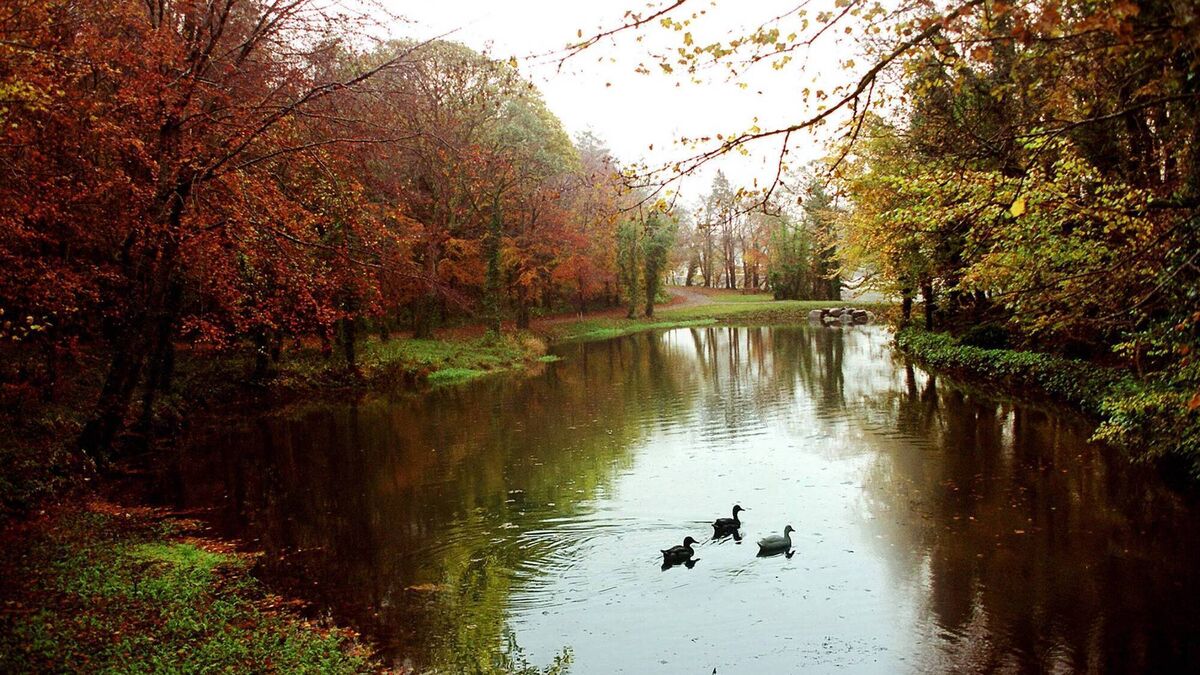
An autumnal scene at The Pond, Belleek Woods, Ballina. Picture: David Farrell Photography
As I write these words, the tree shedding its leaves outside my window reminds me that November is here. Despite the inevitable shifting of so many of the parameters that make up our lives, Nature has insisted on working its way through the promise of Spring, the high-point of Summer, the gathering of Autumn and has now ‘packed its bags’ with the deadening feel of Winter.
The commercial juggernaut that, after almost taking in its path the crazed invention that in simpler days we remember as Halloween, has now turned its corrosive tentacles on the precious season of hallowed remembering of our beloved dead that is November as Christmas insists on edging its way earlier and earlier in the year.
Once in November the leaves scattered under out feet were not just an anthem for the decline of another year but a whole month of leave-taking when we remembered the leave-taking of our beloved dead: in my own case my brother, Seamus, nine years ago; my mother Ellen 27 years ago; my father, Pat, all of 47 years ago; and a litany of cherished friends who have gone to God – parishioners, priest-colleagues and close friends reflected in progressively browning mortuary cards on the mantle-piece as time takes its toll on memory.
Because November is the month to remembering. Memory has a way of sweeping up the scattered leaves of time and we sift through them to choose the memories that satisfy us or trouble us: the places, the events and especially the people who have shaped and formed us and who, insistently and inexorably, drift into our consciousness at this time of the year.
Of course, memory can deceive. Retrospect can camouflage reality. For memory is a sieve that can disallow some bits of reality to come through. The truth, the novelist, Anthony Burgess once wrote, is fabled by the daughters of memory and the words with which we sometimes disguise the past can also disguise the truth. Yes, we remember but when memory fails we imagine too.
But, truth to tell, no matter how we camouflage or even bury the past, it sometimes insists on forcing itself into our consciousness. Walking along the road or driving a car or pottering around the house and suddenly the leaves of yesteryear blow into a heap in front of us and memory takes over.
Yes, it’s natural to remember and it’s part of our nature to remember the dead because the dead are part of the essential narrative of our days. We are who we are because of what they have been and memory has its own way of forcing us to pay attention.
As a child I remember the visits to St Bridget’s Church in Ballycastle on All Souls’ Day ‘for the souls in Purgatory’. We notched the indulgences up as a form of ransom and we passed each other out, running into and out of the Church to free as many souls as we possibly could in the limited time we had available to us.
We visited the cemetery for the same purpose and with the same intensity, as we were continually reprimanded for the pace of our reluctant piety and the emphasis we placed on the score we were effortlessly keeping.
Now in calmer, more tranquil November days, we facilitate the past as we turn over key events of the past in (hopefully) more discerning minds. November is that time of year that allows us the luxury of quietly remembering those who have gone to God, searching time and again to reawaken faces in the mind’s eye, dredging the memory to keep the focus on people and times fading into the distance.
Our thoughts turn inevitably to our own departed loved ones and the discomfiting approach of our own deaths and we do this not just to echo the message that Nature sends us in winter days but also to put a shape on life – to remember, lest we forget.
There’s something about a cemetery in November. It’s not just that the fullness of Summer’s life has gone ragged or that the graves are easier to tidy. Walking through the graves, reading the headstones, allowing the memories to surface somehow we feel reassured about who we are and what we believe. Nowhere are we closer to our own roots than walking in our own cemetery. To avoid the experience is to stunt the memories. To forget them is to lose track of an important part of ourselves.
The lines of the poet, Pádraig J. Daly, in his poem, , will continue to haunt every son of every father:
Part of the traditional Catholic religious experience of November is writing the names of our beloved dead in the November parish listing. The very act of writing thus both recalls their memory and reminds us that where they have gone one day we hope to follow. Some day, a loved one will pray at our graves; some day someone will write our names in their list of the November dead.
John O’Donohue wrote shortly before his death about the need for us ‘to befriend death’. It seems a strange. almost unnecessarily morbid thought but for O’Donohue it was a natural extension of living. From the moment we are born, he wrote, death walks beside us and we need to befriend it so that we ‘will have no need to fear when your time comes to leave’. His point was that an awareness of the presence of death, as it were, calls our life, to attention and helps us ‘to live the life we would love to look back on from your deathbed’.
So in November we remember our dead. For all of us this November, the leaves of time will be swept into the small and large heaps that help to give birth to our remembering. let us remember, lest we forget, because the precious past, as the novelist, William Faulkner, once wrote, ’is not dead. It is not even past.'