Priests must make away for a lay-led Church
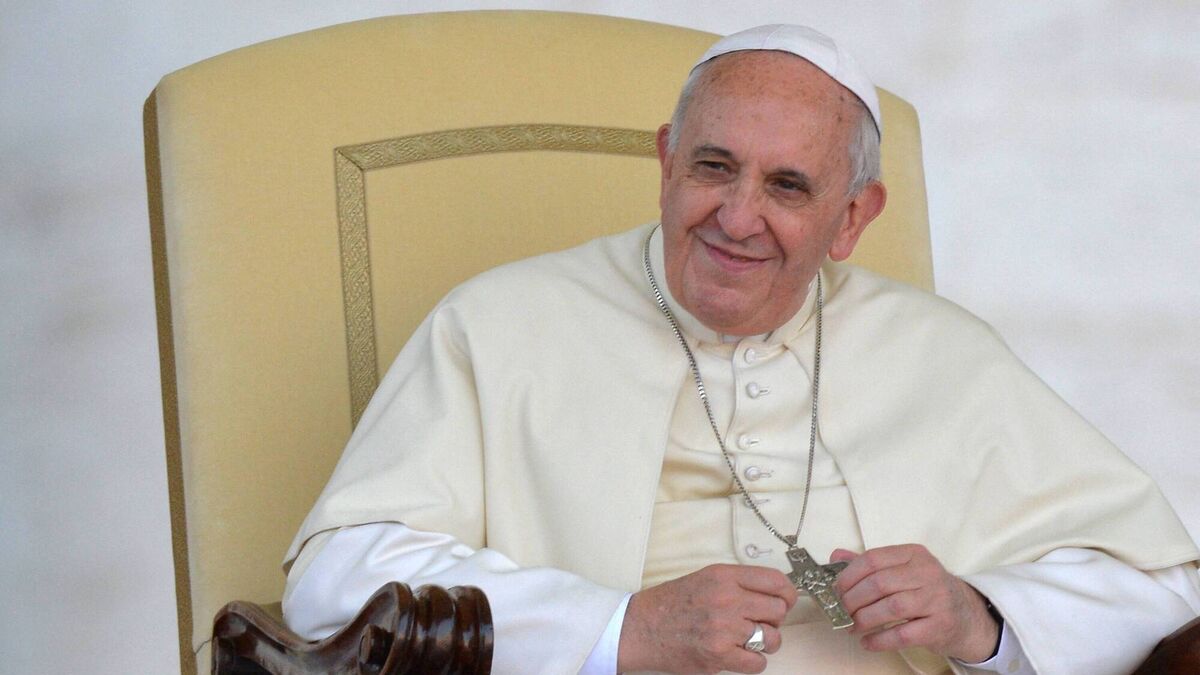
Not so long ago there were huge expectations that Pope Francis would decide that becoming a deacon would be extended to women. Picture: Andreas Solaro/AFP via Getty Images
There’s an interesting letter in a recent issue of . It’s from Fr Jim Caffrey, a Dublin parish priest who, incidentally, has family connections with Easkey, Co Sligo.
Jim was reacting to a series of articles on the diaconate in . Not so long ago there were huge expectations that Pope Francis would decide that becoming a deacon - ordination to the diaconate - would be extended to women. But it was not to be.
Jim had felt uneasy about Francis’ decision, not least (as he put it) ‘because it (male deacons) was another ordination excluding women’. He was disappointed when Francis had said ‘No’ to women deacons and he took to wondering why Francis had arrived at that decision. Jim eventually concluded that Francis was taking the longer view, that Francis was ‘being his usual prophetic self’.
Francis had blocked the women’s diaconate (which involved ordination) but he had given greater status to the lay ministries of Acolyte and Reader (which didn’t involve ordination). By doing that, Francis (Jim decided) was in effect ensuring that ‘the next generation of Church leaders need not necessarily be clerics or men'.
Jim quoted from a list of roles that deacons are able to exercise: baptism, witnessing weddings, preaching and leading funerals, running parishes, serving the poor, visiting the sick and the homeless. He then pointed out that acolytes and readers, male and female, once they are officially commissioned, will be able to perform every one of those ministries. Ordination as a deacon is not necessary for any of them. The conclusion Jim arrived at is that there is no point in opting for ordination as a deacon, in his words ‘opting for re-clericalisation when an old one is dying’.
In the letter Jim mentions that he was confident that the late Fr Peter Lemass, who was his first PP and clearly a trusted mentor, would be happy ‘about the new Church being born, albeit very slowly and he was happy too that Peter Lemass would have approved of another layer of clericalism’ being avoided. The bottom line is that neither the Church nor women (or men) need the diaconate to serve the Church.
So we just need to get on with it! The Catholic Church in Ireland is now facing a crucial question: as many parishes become priestless what structure is now needed to spread the gospel message of Jesus Christ? There is only one answer to that question - lay people, women and men, from parish communities in the near future will have the task of running parishes and two consequences follow: lay people will have to learn to take responsibility for parishes and priests will have to facilitate the transition.
For the first time in centuries in Ireland there will be no other framework to support the telling of the Story of God’s love for his people. And we’ve only a short time to put that structure in place - because we’re now experiencing what for decades has been obvious, that we’re on the cusp of a time when we’ll be literally counting down and out the last priests in Ireland. Unless a competent and resourced lay structure can be put in place, unless lay women and men come forward to take leadership roles in parishes and unless priests now facilitate that process we simply won’t be able to respond in the future to the challenges ahead.
Unfortunately, it is now clear that the institutional church, given its present mindset, is not at the races. Everyone or almost everyone saw or should have seen this coming. But riven with fear, immobilised by the continuing haemorrhaging of its members, traumatised by its inability to respond, in denial about the imminent explosion about to happen, we appear in the words of one clerical poker-player, ‘a busted flush’. The ground has shifted, President Barack Obama told his doubters at his inauguration, ‘the world has changed and we can change with it’. Yes, we can, he added helpfully.
But can we introduce the necessary change? My fear is that we (meaning bishops and priests) have refused to recognise where we are, that we don’t seem to have the courage to engage the difficult truths that need attention and despite a veritable Armageddon staring us in the face, we seem to be content to free-wheel into an ever-diminishing future. Disconcertingly there seems to be a nonchalant lack of seriousness about our predicament without even a pretence that there’s a Plan B.
My fear is that as a body of priests, we are too old, too tired, too disaffected, too content to free-wheel towards retirement, too ready to say ‘it will do me in my time’. That may be the case – it may do the priests. But will it do the people in the many priestless parishes that they will be left to deal with?
My worry is that most priests, increasingly harassed and beleaguered, haven’t the vision or the courage or the capacity or the will to facilitate a lay-led future for our Church and many are resisting making space for lay people to take over. Because unless priests accept and own their responsibility to facilitate lay leadership then we are effectively condemning future generations of our parishioners to religion-less and faithless parishes and subsequent generations won’t thank us for it. And it’s hard to blame them.
In the letter to I mentioned above, Fr Jim Caffrey mentioned that Fr Peter Lemass, his first PP, once said to him: ‘The Irish (Catholic) Church is being strangled - we have too many priests and too many Masses.'
Perhaps we might find a way of saying as gently but as directly as possible that, despite the decline in priest numbers in Ireland, it is time for priests to step aside in order for a lay-led Church to become established so as to breathe new life into our parishes and to allow the Story of God’s love for his people to be told to upcoming generations. It has been said in jest, but it may well be literally both true and necessary, that a vital strategy for the future of our parishes is to communicate a clear and obvious truth that priests, to facilitate that future, need to get ourselves out of the way.