Neutrality is a luxury we can no longer afford
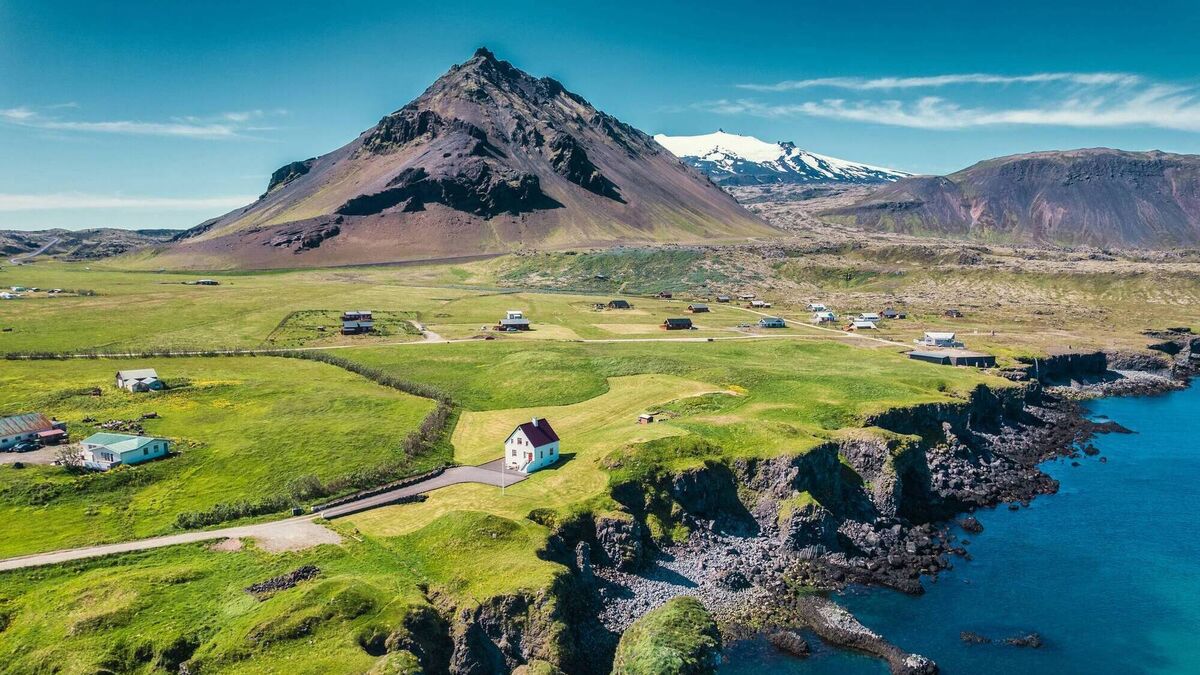
A fishing village on the coast of Iceland, a country that shares many of our own characteristics but has always gone its own way until now.
I’ve spent most of my adult life being quietly smug about being Irish, small, and out of the way. It seemed like cleverness, let the big countries have their wars and their summits and their men with nuclear footballs; we’ll be over here, neutral, making television about our feelings. Keep the head down. Let the big lads sort it out among themselves. Stay small, stay unaligned, stay out of it. But in these last weeks, that smugness developed a slow puncture.
So I’ve been watching Iceland this month with the queasy fascination of a man recognising himself in a shop window and not entirely liking the cut of his coat.
Because Iceland, 400,000 souls clinging to a volcanic skillet in the middle of the north Atlantic, a country whose entire population would rattle around in Cork with room to spare, is seriously, soberly debating whether to go knocking on Brussels’ door. There’s talk of a referendum as soon as this summer. Nobody in Reykjavik has fallen suddenly in love with the European Union; they’re frightened. Specifically, they’re frightened by the large, orange, unignorable fact of Donald Trump deciding that Greenland, Iceland’s nearest neighbour and near enough to wave at, would look rather well with an American flag on it.
When the man in the White House starts musing about which bits of your neighbourhood he fancies “getting”, the philosophy of keeping the head down stops feeling like wisdom and starts feeling like a death wish.
I’ll admit I had to look up where exactly Iceland sat in relation to Greenland, which tells you everything about the careless ignorance with which most of us treat the far north. We picture it, if we picture it at all, as a sort of frozen novelty, geysers, that volcano that grounded our planes in 2010 and gave half the country an unexpected week in the sun, a football team that did a clap of thunder at a World Cup and charmed us all senseless. We don’t picture it as a place that lies awake at night counting the odds on its own survival. But that’s the thing about being small. The novelty is for everyone else. The fear is yours alone, and you do it in the dark.
But here’s what gets me, through all the ups and downs. For the last forty years, the entire respectable consensus in this country told us, in that tone reserved for explaining things to unsuspecting children, that a small Atlantic nation couldn’t possibly stand on its own two feet. We were too small and too far out on the edge of the Atlantic, too poor in everything but rain and grievance. We needed Europe the way a man on a ledge needs a rope. And there was truth in it, God knows. The cheques cleared. The motorways got built. The country I grew up in, all emigration and the boat to Holyhead, became somewhere people actually arrived in.
Alas, along the well-funded way, the rope morphed into a large, cosy comfort blanket, and we stopped asking what we stood for as a nation. We preferred to outsource the big questions to Brussels and the even bigger ones to Washington and told ourselves that neutrality was a brave principle, when most weeks it looked more like a very good excuse not to have an opinion that might actually cost us anything.
And let’s be honest about neutrality, because it’s the sacred cow we’re least willing to poke. Ours was never quite the lofty Swiss article, self-armed to the teeth, mountains full of secrets, every citizen a reservist. Ours was something more Irish: a neutrality of convenience as well as of memory, born partly of de Valera’s stubbornness in the Emergency and partly of a deep, understandable reluctance to ever again take orders from London on matters of war. Fair enough. It made sense in 1939. It even made a kind of sense through the Cold War, when the worst we had to fear was being a footnote in somebody else’s apocalypse. But a principle you’ve never once had to pay for is only a preference in better clothes. And the bill, I suspect, is finally being totted up at the far end of the bar.
And now here’s plucky little Iceland, considerably smaller than us, and even further out, even much colder, looking at the same Atlantic we look at, doing the actual arithmetic of survival, and concluding that sovereignty isn’t a thing you possess. It’s a thing you can only afford in company.
That should sting you a bit, as it stings me. There’s a proud and ardent nationalist I know, and I’ll not name him, as he’d only deny it, who spent the Celtic Tiger years insisting Ireland didn’t need Europe anymore. We’d grown up so that we could stand alone now like a teenager who’s discovered a credit card. Then 2008 happened, the Troika arrived with their clipboards and their austere little smiles, and the same man was suddenly very grateful indeed for the family we’d been so keen to leave. I think of him whenever I hear the word sovereignty used as a boast rather than a responsibility. Independence is gorgeous right up until the weather turns.
Because we love to retell ourselves the story of our brave and plucky little nation. It’s practically the national religion - the David who wouldn’t kneel, the island that punched above its weight, the country that gave the world saints and scholars and, more recently, a suspicious number of A-list actors. We adore being small the way some men adore being underestimated; it lets us claim every win as a miracle and every loss as a conspiracy. But Iceland’s quiet panic is an indication that we dressed a vulnerability up as a virtue, because the alternative was admitting we were frightened.
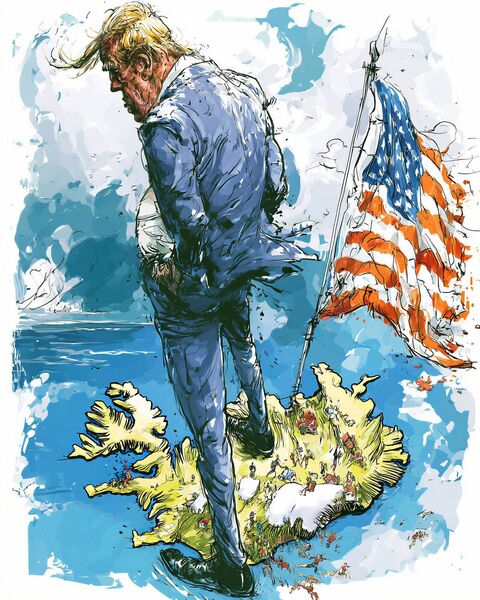
I’m not pretending I know what the right answer is. I’m a man who talks to the bewildered dog when alone and forgets where he left his glasses while they're perched on his head; nobody’s putting me in charge of the defence of the kingdom. Maybe Iceland holds its nerve and stays out. Maybe the referendum fails, and they decide the devil they know is better than the bureaucracy they don’t. There’s an honourable case for staying small and unaligned, but it's near impossible to escape the realisation that the argument gets a good deal harder to make when the superpower next door has started eyeing the furniture.
What I do know is that the comfortable Irish posture, proudly neutral, peripheral, vaguely above it all, was always a luxury good. It was affordable in a time when the big democracies broadly agreed on the rules and someone else paid for the army that enforced them. That world is packing up its tent. The rules are now whatever the strongest man in the room says they are this morning, subject to change after lunch. And in that world, “we’d rather not get involved” isn’t a moral stance. It’s a request to be ignored until the moment you’re not.
So I keep prodding at that puncture, listening to the slow hiss of it. For forty years, we told ourselves smallness was a kind of genius and that staying out of it was the same as being above it. Iceland has looked at the identical horizon and concluded that “above it all” was only ever a story you can afford while somebody bigger stands guard at the door.
They’re doing the sums in daylight now, on a rock not unlike ours, underneath a sky not unlike ours.
And I’d hate for us to be the last ones at the bar insisting we’re far too clever to need anybody, stubbornly proud, deflating and alone, right up until the morning we go looking for the family we were so keen to leave, and find they’ve quietly changed the locks.