Irish voters are risk averse in general elections
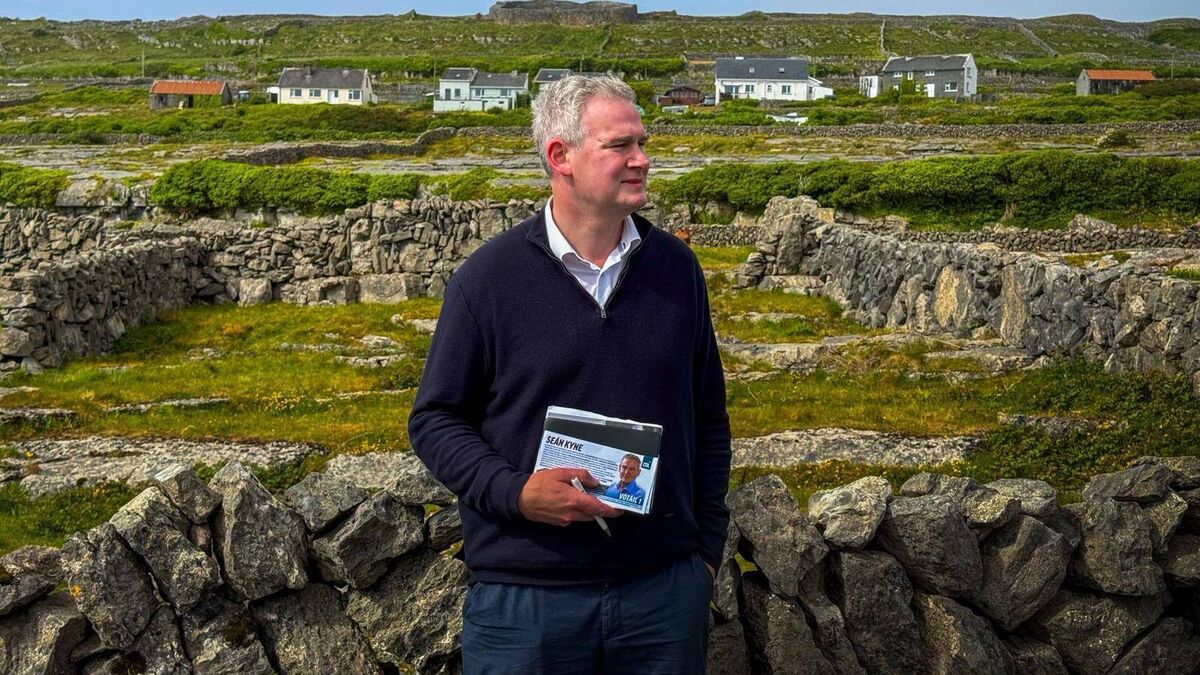
Fine Gael candidate Seán Kyne on the campaign trail in Inis Meáin, the largest of the Aran Islands, which are part of the Galway-West constituency. Kyne won the by-election despite a strong showing from Independent Ireland.
I know! But even that pearl of wisdom forever glistening in the background of this column is insufficient to deflect me from inflicting on my loyal readers some thoughts on the recent by-elections in Galway West and Dublin Central.
Even though a number of worthy practitioners – for whom political commentary is their ‘bread and butter’– are (regardless) expected every few days to trot out a few hundred words on matters political, no such demand has been placed on me. You’d imagine that there are sufficient alternative subjects to exercise this column. But there it is… fools rush in and all that.
The recent by-elections caught my attention. First, Independent Ireland, a party that has emerged as if from nowhere, with most of whose members apparently refugees from Fianna Fáil. At present Independent Ireland has four TDs and 24 councillors and a former television personality, Ciaran Mullooly, keeping warm a secure seat in the European Parliament - a handy base on which to harvest a few more seats, if the cute history of the (now defunct) Progressive Democrats inspired them to pick up a few handy cabinet seats after the next general election.
The word is that Independent Ireland is on the move and their candidate in Galway West, Noel Thomas (a genuine FF refugee) went within a whisker or two, of taking the seat, doubling the percentage of the vote he had won at the last general election. He’s been marked down as a cert for a seat next time out.
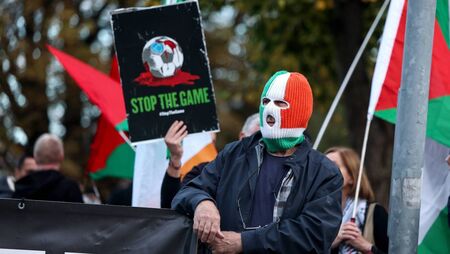
The word too is that Independent Ireland is making all the right sounds to attract attention. It was to the fore in supporting the recent blockade around the fuel protests and has flirted with the edges of the toxic migration issue. A few years ago Thomas – when an effort was being made to convert a hotel into asylum accommodation – suggested that Ireland should not accept any more refugees. ‘The inn is full’, he declared in an impressive reference to St Luke’s (Chapter 2: verse 7), and though he accurately represented the housing situation in Bethlehem in the year dot he was spectacularly inaccurate about present-day Ireland. (Note: before the Great Famine, 1845-52, Ireland’s population was around eight million!) But, in the matter of the Galway West election, while a pre-election poll for and TG4 registered that only two per cent of the electorate placed a focus on the migration issue, no doubt Independent Ireland in the moments after the election were working out whether two per cent more would have been sufficient for Thomas to snatch the seat.
Another possible application of the celebrated ‘narrow margins’ phenomenon – a phrase first invented to help excuse Mayo falling short in a series All Ireland finals.
In Dublin Central, the anti-migration issue was (appropriately) more central with Pat Leahy, the political correspondent of explaining that two right-wing populist candidates – Malachy Steenson and Gerry Hutch – won 20% of the vote between them, enough to win a seat in the next election. This despite the fact that Mr Hutch, a former criminal, has suggested, a la Trump, that migrants should be interned and deported! However, Leahy pointed out that while a tough policy on migration will win a candidate votes, it will lose them votes when it comes to transfers.
Another fascinating aspect of the recent by-elections is the failure of Sinn Féin to make progress towards its goal of being accepted as the inevitable lead-party when the spoils are shared out after the next general election. More accurately it was a case not so much of not moving forward as sliding backwards at a time when party politics is fragmenting.
For Sinn Féin a policy of patient waiting for a presumed anointing is counter-intuitive. But then Sinn Féin can seem reluctant to accept what seems obvious to most parties and to most people and seem remarkably content to live in a strange bubble of their own making. Like, for example, the way they casually dismiss the memories of the horrors of the Troubles by attempting to pull the wool of the historic fight for Irish freedom over the eyes of the broken and anguished relatives as a way of imagining that such horror can lightly be forgotten.
As if the toxic legacy of the Troubles and the appalling memories it inevitably surfaces can be turned off at will and not forever continue to reverberate from the past, as with the present focus on searching for the grave of yet another one of ‘the Disappeared’, Seamus Maguire.
A third fascinating aspect of Irish politics at present is that Fianna Fáil (FF) and Fine Gael (FG) – the present government’s main partners – will need to re-invent themselves if they are to neutralise the jaded prospect of yet another ‘coalition of the inevitable’. It will take an imaginative and spectacular makeover to refresh the present brand of coalition as part of its appeal is that the FF/FG brand is by nature unexciting if not clunky and predictable and a version of which seems to have been in government since 1932.
But the FF/FG trump card is that in general elections, what people look for is consistency and reliability. It really doesn’t matter what party has the most county councillors or who were elected to Seanad Éireann or even who’s the President of Ireland. Even at their worst they can do very little damage.
But general elections are different. Our focus is on trust and responsibility. In Ireland, Dáil Éireann is where serious politics begins and ends. Because serious authority can only be invested in serious people. As the present experience of the United States of America has amply demonstrated, we have to be very careful about whom we entrust with genuine power and responsibility. If even in America, cowboys are going out of favour, is it any wonder that the Irish electorate seems particularly allergic to them?