Gone are the days of eating bread with bread
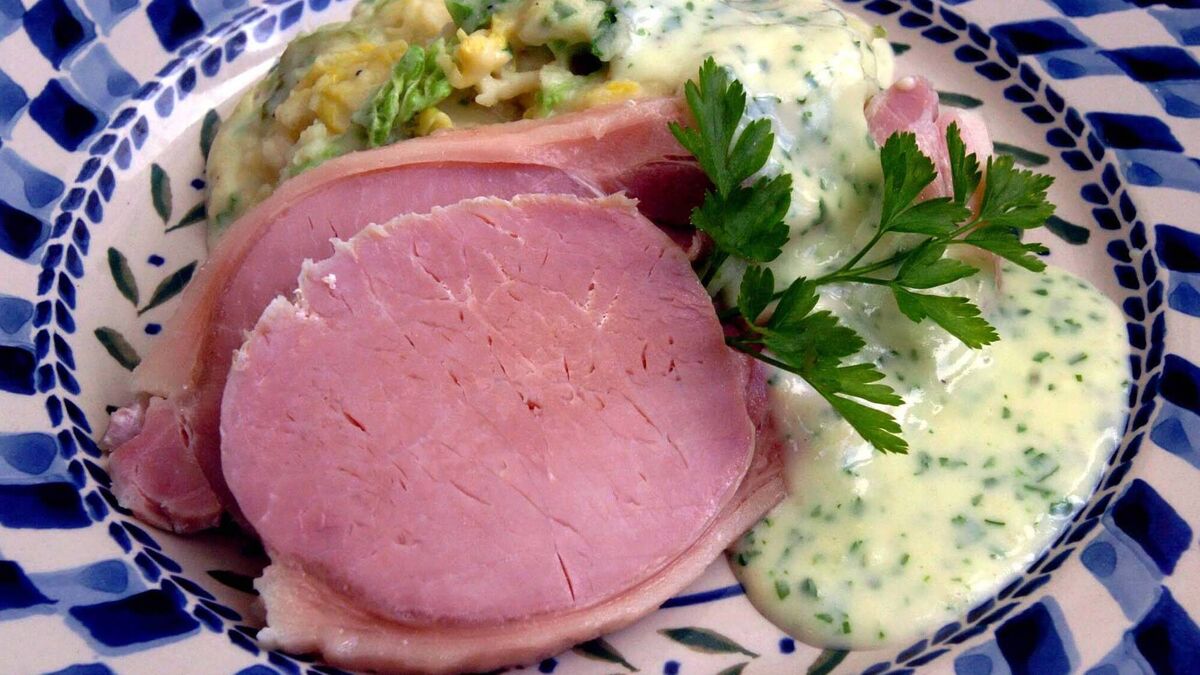
These days I like to eat food our grandparents would still recognise sitting at the kitchen table.
Food was never something I thought very deeply about growing up. In our house, food was simply there to fill you before the next farming task, the next journey or after a day’s work or football game. While attending Gortnor Abbey in Crossmolina all those years ago, the school bus used to collect us around eight o’clock each morning, but long before that I would already be sitting at the kitchen table working my way through a full Irish breakfast.
While others might have had cereal or toast before school, I would usually have rashers, sausages, eggs, pudding and enough toast to feed a small parish. If there happened to be stew left over from the night before, I would happily throw that on the plate as well. My sisters bore the smell with murderous patience, as the oily fry clung to their school uniform, eliciting comments of “who smelled like an Irish breakfast?” from fellow students.
Bread, in particular, was central to my existence. White bread especially. I ate it with everything. By the time I reached college, the running joke among friends was that I would have bread with my bread. Looking back now, I suspect half my daily calorie intake probably involved white flour in some form.
At the time, I thought nothing of it. Yet I also spent years walking around permanently bloated and uncomfortable, with headaches and bad acne, without ever questioning why. After meals I would often feel sluggish, sore and full of indigestion, but because that feeling had always existed, I assumed that was simply how life worked. It was only years later, after casually mentioning this to friends, that I realised most people did not spend half their lives recovering from lunch. But it took a surgeon’s warning about my inflamed intestines, after he removed my appendix, for me to start taking my diet seriously.
I went to a dietitian who suggested I start removing certain foods from my diet to see what effect it had. Slowly but surely I realised bread, or more specifically gluten, seemed to be the culprit. Once I reduced it dramatically, I felt noticeably better. Whether it was specifically gluten or simply the fact that I stopped eating enough bread to supply a well-attended wake, or both, I still do not entirely know. But I do know I felt healthier afterwards.
Mind you, I was hardly what you would call sophisticated when it came to food.
Many years ago, when I briefly operated a security business in Ballina, I remember entertaining a very polished salesman from one of the large Dublin wholesalers who had travelled down to discuss alarms and CCTV systems. Eager to appear professional and worldly, I put on the suit, shook hands seriously and attempted to conduct myself like a proper businessman. I even polished my shoes.
At lunchtime we went into the Merry Monk bar and restaurant for food. Despite the fact that he was the one trying to sell to me, I insisted on paying for the lunch. Standing at the counter, I scanned the menu quickly and noticed 'brie' listed among the dishes. For reasons I still cannot properly explain, I somehow decided brie was a fish.
Trying to sound confident and sophisticated, I announced that I would have the brie with mashed potato, vegetables and white sauce.
The chef looked at me carefully.
“Are you sure?” he squinted.
Now, at this point, a sensible person might have reconsidered. Instead, feeling slightly embarrassed in front of this well-dressed Dublin businessman, I immediately doubled down.
“Of course I’m sure,” I replied firmly, “and don’t forget the white sauce."
The chef looked at me again in a manner that should really have served as a warning and muttered something under his breath. He grinned uncomfortably.
A few minutes later, the food arrived. My companion received a perfectly normal lunch while in front of me was placed a mountain of mashed potato and vegetables with an enormous block of half-melted brie cheese sitting proudly in the middle like some kind of dairy monument, while dribbling down the sides was the unforgettable white sauce.
The simultaneous realisations that brie was not a fish and that everyone was now looking hit me like a Kilfian corner back, but I spent the next half hour trying to politely force down what felt like an entire wheelbarrow of molten cheese while pretending to listen attentively to a conversation about security equipment that I could no longer mentally process. To this day I still remember the absolute mortification of it. I am sure the kitchen staff are still laughing.
Years later when I moved to Los Angeles I revisited my brie nightmare. One of my earliest introductions to California food culture came courtesy of my friend Abi Titmus, a talented British actress whom I met not long after arriving in America. After impressing her with my healthy-eating claims, she brought me to a fashionable restaurant somewhere around West Hollywood which, from memory, appeared to specialise almost entirely in leaves. In shock, I realised my mouth had over-reached my belly again.
Everything was green. Green plants hung from the ceiling. Green bushes decorated the walls. The green menu itself looked as though it had been assembled by someone who was trying to hide the identity of each dish behind as many adjectives and metaphors about shrubs as possible. There were more calories in the words than in the dishes they supposedly described.
There was no meat, no dairy, no grains and very little that resembled an actual meal. I vaguely remember discussions around the silent screams of wheat stalks during harvesting, and being convinced that somewhere in California there probably existed a movement campaigning for the emotional wellbeing of lettuce.
Abi happily chatted away about her new life in America while I nodded politely, desperately trying to conceal the fact that I was absolutely starving. Much like my unfortunate encounter years earlier with the block of cheese in Ballina, I did not want to appear culturally unsophisticated. So I smiled, picked at what I can only describe as decorative foliage on a plate, and pretended I was perfectly satisfied.
The moment we finished, and said our goodbyes however, I practically sprinted across the road and bought a sloppy burger and fries in a fast-food outlet that surely only existed there to taunt its neighbour across the street. I have no regrets for how fast I inhaled that meal, but maybe a few regrets for eating on the sidewalk from a paper bag as Abi drove past.
Both restaurants epitomise the strange irony of Los Angeles food: for all its obsession with wellness, organic living and dietary purity, I often found it harder there to find simple healthy food than I ever did at home in Ireland.
Even in Mayo today you can get excellent gluten-free products almost anywhere. McCambridge’s gluten-free soda bread is genuinely excellent. Dunnes Stores soups are gorgeous, Tesco has great granola options and all supermarkets stock products with straightforward ingredients that still resemble actual food. But in America, particularly California, healthy eating often seems divided between two extremes. On one side sits fast-food and super-processed labels laden with sugars, gums and/or unfamiliar ingredients. On the other is an expensive wellness culture where a loaf of 'holistic' bread or 'authentic' juice comes with a reflexology course and practically requires a mortgage application.
Even supposedly healthy foods often contain ingredient lists that more resemble chemistry experiments. Plain Greek yogurt costs more than flavoured versions packed with additives. Simple foods somehow became luxury products while ultra-processed alternatives became cheaper and more common. How is it that items with less ingredients are often far more expensive?
The nearest store I found to normal was probably Trader Joe’s in Glendale. While having a reduced selection, the prices are relatively reasonable, the atmosphere relaxed and the staff actually seem happy. You can hear them chatting and laughing with one another in a way that reminds me a little more of home. By contrast, places like Whole Foods feel beautiful but strangely exhausting and expensive. And we shall not speak of the ugliness of Erewhon, which exists to lampoon consumerism by inflating prices to mortgage-levels of price-profanity, elevating wellness to a status symbol.
These days my own eating habits have become remarkably simple compared to the old fry-and-bread years. Breakfast is usually oatmeal, fruit, granola and coffee. Dinner is generally meat or fish, potatoes and vegetables. Nothing glamorous. Nothing fashionable. Nothing that would impress the social media influencers of West Hollywood.
Just real food.
And perhaps that is ultimately what I learned after years of barely thinking about food, followed by living somewhere that seemed to think about it obsessively. The best diet is neither complete ignorance nor fashionable extremism.
More often than not, it is simply food our grandparents would still recognise sitting on a kitchen table.
I still can’t eat brie though.