Brexit re-run may be Labour's best hope
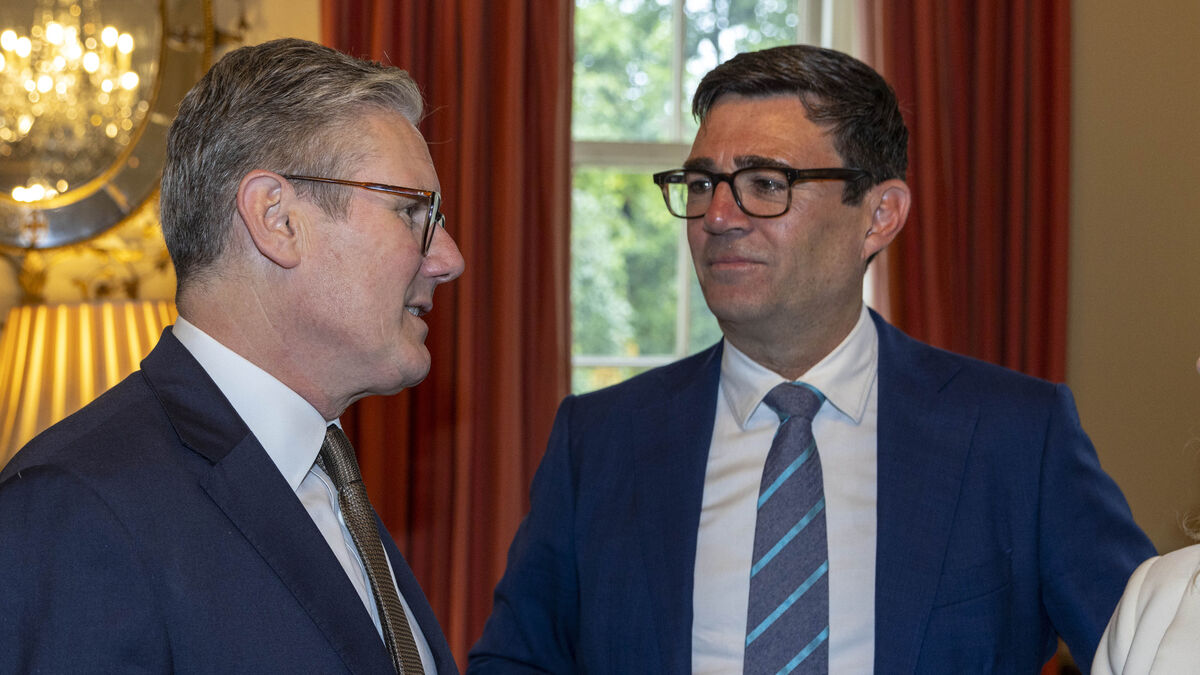
Prime Minister Sir Keir Starmer (left) and Mayor of Greater Manchester Andy Burnham last year. Burnham is now looking to win a seat in parliament and launch a leadership bid against Starmer.
The British Labour Party is riven, and especially at the top. They lost on both sides in their recent local elections. Reform beat them all ends up. The Greens took votes off them among the young and the urban middle classes.
Labour has a huge majority in parliament but very little support in the country. Because of that, they have the feel - as was once said of a Tory government - ‘of being in office but not in power’.
The Prime Minister is just about holding onto his job. Notwithstanding all his government’s difficulties, he wants to keep that job, but many others want it too. One of those, Andy Burnham, is trying to get elected as an MP, in the expectation that he would then challenge Keir Starmer for the Prime Ministership.
Another of the PM’s rivals, Wes Streeting, has resigned from the cabinet. He has also thrown the cat among the pigeons by saying that if he became Prime Minister he would argue that Britain should rejoin the EU. Andy Burnham did not thank him for the suggestion.
But it does raise the question: Could they? Would they? Would Britain rejoin the EU? Is it a realistic possibility?
Most everyone - including many who campaigned for it - will tell you that Brexit hasn’t been a success, economically or politically. If people voted for Brexit to reduce immigration, immigration has risen. If people voted for it in protest against a decline in their living standards, they have declined further, and faster. If people voted in favour of it because they just didn’t like the system, it seems that all Brexit has done is make them like it even less.
In simple terms, the country is unhappier now than it was in 2016, their economy is stagnant and none of the questions which Brexit was supposed to answer have been resolved.
So, not an unqualified success. But rejoin? Wes Streeting says they should and the majority of Labour Party members agree with him. The current Prime Minister, Keir Starmer, doesn’t explicitly say that, but he does keep making speeches saying he wants Britain to be at the heart of Europe. That means closer alignment to the EU at the minimum.
They all think Brexit has been a failure. And public opinion polls tend to agree with them. Polls on rejoining consistently suggest that a comfortable majority would vote in favour. It would seem that the only time in history when a majority was in favour of Brexit was on the day of the referendum in 2016. As each year passes, more older people - who voted for Brexit in bigger numbers - pass away and more younger people - who hate Brexit - get on the electoral register. So it would seem likely that it would inevitably happen, right?
Andy Burnham doesn’t agree, and the reason he doesn’t will tell you a lot about the dynamics. Burnham is running in a constituency called Makerfield. It’s in his back yard near Manchester - he’s a pretty popular Mayor of that city - and it’s a Labour seat so that should give him a great chance. But it is a constituency that voted heavily to leave the European Union. Reform polled really strongly there in the local elections.
Burnham calculates that if his party suggested rejoining the EU - or even suggested a vote to consider it - he would lose Makerfield. He is almost certainly right. So between now and his upcoming by-election, he will continue to pour cold water on any suggestion that Labour might commit to rejoin.
That’s the local dynamic in this particular by-election, but the wider context is important here.
To get a new referendum vote you would have to have legitimate grounds to call one. After the first Brexit vote in 2016, many wanted a second vote to try and overturn it, and as many if not more thought it was simply outrageous to suggest that they could re-run the vote - and that wasn’t just among those that had voted to Leave.
Those people felt it was quite wrong to suggest re-running the referendum immediately, just because some people didn’t like the result. Behind that point of view was the argument made during the Brexit campaign that this was a decision not for a day but at least a generation. But 10 years on, can you say a generation has passed and now the question can be asked again? Perhaps, but something more would still need to happen to create the conditions for legitimacy. That would likely be a party in power whose electoral manifesto had committed to a new referendum, yet the Labour government was elected in a general election not long ago and they did not promise a new referendum on EU membership. In fact they said the opposite.
As you might have noticed, the British Labour government already look a long way off winning another election. Burnham - and Starmer too - have calculated that running on a manifesto commitment to hold a rejoin referendum would make that even less likely, because a whole bunch of Labour MPs across northern England would lose their - Brexit supporting - seats.
And so you would think that if Burnham beats Reform and wins that by-election and then becomes PM, there will be no Labour promise to hold another referendum, as a way of trying to secure those northern seats.
But not everyone in Labour agrees with this analysis. Many would argue that those northern seats are lost to Reform and Labour is not getting them back - whatever they do or don’t say about rejoining the EU. They would argue that the wiser course for Labour is instead to try and win back to their cause the young and the middle classes in other parts of the country, by promising a referendum to rejoin.
The ironic potential of this situation is fascinating. If Burnham continues to downplay the possibility of rejoining the EU, but loses to Reform anyway, those voices in the Labour Party who think differently to him may well win the argument through his defeat. Reform could win the by-election battle - but the price of that victory might just be a Labour commitment to a referendum to rejoin the EU.