A provocateur who ploughed a brave furrow
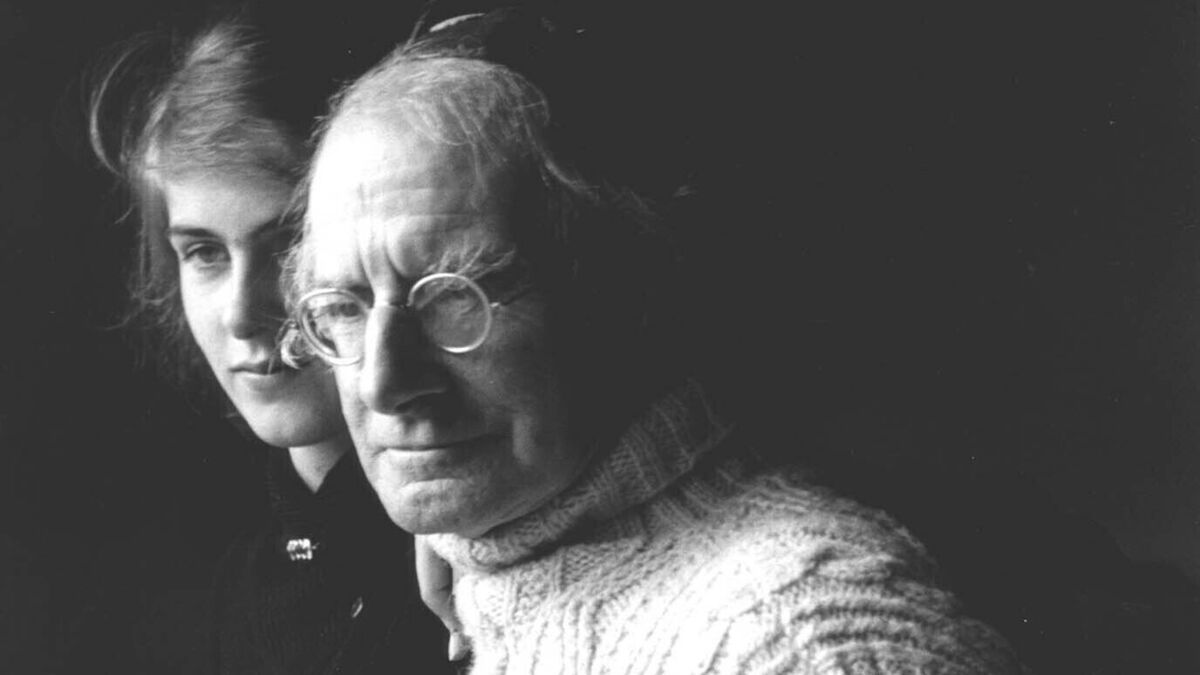
The late playwright Sean O'Casey pictured with his daughter Shivaun, In his play O'Casey focused on the tension between socialism and nationalism.
When was first performed 100 years ago, it caused great controversy. For some performances, there was as much shouting and roaring in the stalls as there was on the stage.
That was because the play, the story of a group of characters in a Dublin tenement in the lead up to, and during, Easter 1916, touched a nerve in early post-independence Ireland. It got right under the skin of those with a romantic idea of how the struggle for independence had played out. In doing that, it managed to unite those who ended up on either side of the Treaty. It was, one might say, a bonfire of their pieties.
To mark the centenary of its first production, the play has been back on the Abbey stage in recent weeks. It might not be causing controversy in 2026 Ireland, but there are plenty of today’s pieties challenged by it. That is a change from when I was a young man, and that contrast interested me when I went to see it last week. It proves that every staging of the play must be assessed in its own context.
If Synge was a great playwright of rural Ireland, Sean O’Casey is the definitive playwright of working class Dublin. Both writers annoyed those – particularly cultural nationalists – who had definite views of how the Irish should be seen. In the language of our times, many sought to cancel the two playwrights because they did not sufficiently advance ‘the national cause’.
O’Casey challenged the settled view in multiple ways. The story of Ireland has long been told as that of an ancient rural people fighting back – and often losing out – against an alien oppressor. That is the west of Ireland story we have all been reared on.
O’Casey had a different story to tell, of an urban people in a port city, shaped and formed by many influences, oppressed as much by a native capitalist class as they were by outsiders. William Martin Murphy – of 1913 Lockout ill fame – was many things, but he was no Englishman.
Much of the literature of that period focused on the fabled past. O’Casey in contrast was a socialist writer. His depiction of those who lived in Dublin tenements at the beginning of the 20th century was therefore realistic and not romantic. His underlying premise was to show what poverty does to people, and much of that is ugly. He didn’t shy away from depicting it because he wanted to highlight it, wanted to change it.
The centrality of his female characters certainly went against the current of his times, highlighting how women bear the greatest burdens. His heroes were not fantastical mythical characters from Ireland’s imagined past. He makes his point by showing how amid the most abject poverty, true nobility – the type that doesn’t come from titles or money or ancient fame – can still shine through. In their response to disaster, it is the women who are the heroes. In the hero is a Protestant and orange working class woman – Bessie Burgess – whose son had volunteered for the British army. I am not sure if her character would make it into the plays of 2026.
O’Casey’s great work is set in the period from 1916-23. is the last of his trilogy of plays about those revolutionary times in Ireland. The first, , was set during the War of Independence. The second, , was set during the Civil War.
O’Casey was initially a nationalist and a great Gaelic Leaguer, but as time went on he saw the tension between socialism and nationalism. Socialism to him was a project to emancipate the poor. Nationalism was about flag waving and – as those speeches of Pearse made quite clear – fundamentally bloodthirsty. He disagreed with James Connolly’s decision to focus on national independence over socialist struggle. When it came to the choice, O’Casey’s banner was the flag of the working people, the plough and the stars.
Why all the controversy when ‘The Plough’ was first staged? By 1926 the new state had sanctified Easter 1916 as the great foundation story – a straightforward tale of heroism and sacrifice. The play jarred with this glorious myth.
One scene in particular drove many wild. While various characters in the play are in the pub, a voice seemingly from outside the window delivers segments of the speeches of Pearse. For the words of Pearse to be presented in a pub, in the midst of drunken debauchery, was too much for the nationalist pieties of 1926. The scene was made much worse – to 1926 eyes – because one of the characters in the pub was a prostitute.
The perceived offensiveness of the scene triggered many of the protests, but the challenge in the play to the audiences of 1926 went much deeper.
The play highlighted what the reality of Easter 1916 and all that followed meant for the people most directly impacted by it. It is hard to imagine how brave that was in 1926. It shows in all its brutality what ‘dying for Ireland’ really meant. And it showed that through all the fine talk of ‘Ireland’ and her ancient heroes, the poor die of tuberculosis and of neglect, and the women must pick up the pieces. The play is a full frontal attack on the idea that dying for a nationalist flag ever did anything for those in most need – for real people, not mythical ones. In fact by co-opting those to its cause who would gain least from it, it made their lives worse. No wonder it made those audiences in 1926 uncomfortable.
What struck me as interesting though was how the play’s impact has changed so much in my lifetime. Had I gone to see 25 years ago, the ideas in it would have seemed obvious to me and many others. That obsessively focusing on nationalism to the detriment of all else is a dangerous idea. That ‘dying for Ireland’ and resorting to violence to achieve political ends is something to be absolutely avoided rather than lauded or worse, celebrated. That trying to gain virtue by wrapping the green flag around you should generate alarm not applause. That, as John Hume would have put it, you can’t eat a flag. That would all have gone along with an appreciation of how O’Casey managed to make all those points while not taking away from the reality of what it meant for Ireland to be unjustly controlled by the British.
25 years ago it was completely uncontroversial to point out all those things out. The play’s arguments seemed obvious then, in a context when it was plain that the Troubles had been a sectarian bloodbath, and not, as so many seem to think now, a valiant anti-imperial struggle.
There are – and should be – many sides to every story. But just right now, in 2026 Ireland, in a context where nationalist feeling once again runs rampant, the challenge that T presents to our pieties feels timely again.