Ireland and UK now on very different paths
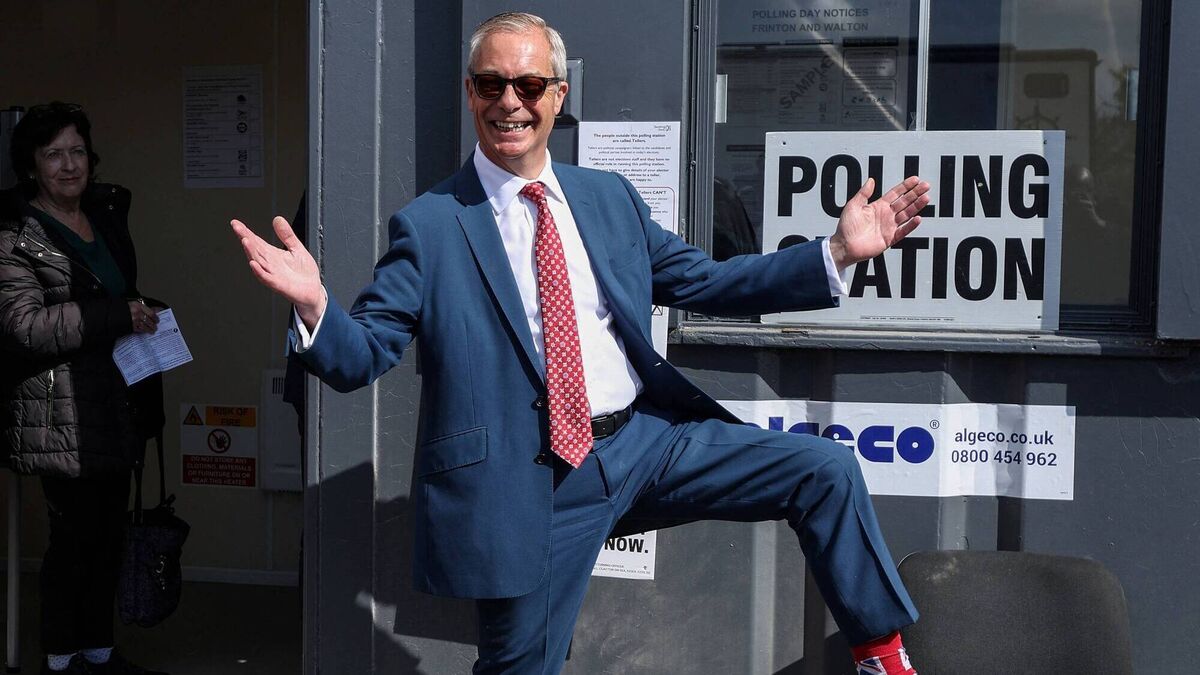
Having spearheaded the disastrous Brexit experiment, Nigel Farage is now offering the UK electorate another blind alley way in his efforts to become Prime Minister. Picture: Chris Radburn/AFP via Getty Images
The richest countries in the world can be measured in different ways but the most common metric is GDP (Gross Domestic product ) which reflects average wealth per person. Based on recent global data of the richest countries in the world – courtesy of the IMF (International Monetary Fund) and the World Bank – Luxemburg is now in first place and the Republic of Ireland in second.
In the last few years, I’ve devoted an inordinate portion of my time to researching the Great Irish Famine (1845-52) and pondering the perennial debate about whether the worst disaster in Irish history in which over one million people died from either starvation or from fever, and one million more emigrated was (a) a natural disaster (b) a preventable catastrophe or (c) a form of colonial genocide. As a result I should (I suggest) be forgiven for being stunned by the extraordinary transformation in our national circumstances. Truly, in a period of less than two centuries the change has been miraculous.
My thoughts turn to our near neighbour, the United Kingdom, whose prosperity until recent times was much envied and often resented this side of the Irish Sea and who now languish progressively out of sight in the economic doldrums. Though clinging to the remnants of a faded grandeur including the loss of a great empire and the antics of a problematic royal family, in a desperate attempt to recover their economy and their dignity, the UK is seeking an eighth prime minister in 17 years in the apparent belief that taking another similar rabbit out of another similar hat will eventually produce an unexpected dividend.
In the matter of jettisoning the present incumbent, Sir Keith Starmer, a decent upright man with a steady moral compass, the intention is to embrace one Andy Burnham, ‘a romantic rebel’ in the eyes of that old owl, Trevor Phillips, whose greatest achievement to date has been as Mayor of Greater Manchester. Or, a possible other alternative, the undistinguished former minister, Wes Streeting. It is an unimpressive scenario to contemplate, particularly as the almost universal acceptance is that Nigel Farage, a right-wing populist, and his Reform UK party are more or less a shoe-in as Prime Minister and government in the next general election.
So what’s gone wrong? Why is Ireland moving confidently forward from a very low economic base and the UK - more recently at the height of its prosperity - falling apart at the seams? Could the present anarchic rush of the UK conservatives be God’s gift to Ireland as some kind of balancing recompense for Charles Trevelyan of unhappy memory (and others including Protestant evangelicals) who once concluded that the Irish Famine was God’s way of putting manners on Irish Catholics.
What is it that explains the opposite trajectories in recent times of the UK and Irish economies? The answer seems obvious enough and has to do with different responses to what we roughly describe as ‘populism’. In the UK in recent years Nigel Farage offered Brexit and other associated daft ‘goodies’ to an electorate that imagined that ‘leaving Europe’ would automatically confer significant economic and other advantages to the UK - even though the opposite was obviously the case, as economists explained and circumstances eventually proved. Now Farage is offering the UK electorate another blind alley way in his efforts to become Prime Minister and the surveys are suggesting that his populist grip on the electorate is firming up.
On the other hand the Irish electorate, dare I say it, is more careful, even more sophisticated in its response than their UK counterparts, and have at important elections consistently spurned populist distraction. Thus, since the foundation of the state the Irish electorate has been careful and conservative in whom we place our electoral trust, which is why Fianna Fáil and Fine Gael have effectively been in power since then and who in an increasingly fragmented political landscape are consistently trusted and elected. Instinctively Irish voters at important elections know that those who promise everyone everything will end up as part of the problem rather than part of the solution.
At present the Public Expenditure Minister Jack Chambers is attempting to reign in the growing practice of allowing overspend in government departments, notably in health and education. At a time of generous tax receipts, his efforts to control spending are not earning him any brownie points from cabinet members. But Chambers will earn significant support and respect now and more so at the next general election because we’ve learned from our own experience that controlling spending makes sense at every level and lashing money around inevitably ends badly - for everyone.
In our economy most Irish people don’t want a swashbuckling Minister of Finance like Charlie McCreevy who once pronounced with almost demented delight ‘If I have money, I’ll spend it’ and most people would prefer a moderate Minister for Finance like Paschal Donohue who commended the importance of ‘a rainy day fund’ for unexpected fiscal developments. Our natural conservativism in political matters was copper fastened a few short years ago when embarrassingly the men in black suits had to come from Brussels to put manners on us and to sort out our economy, which is why Minister Jack Chambers’ strategy has much more support than the braying members of the opposition imagine.
The difference between the Irish economy and the UK economy is the difference between fiscal responsibility and irresponsibility. And Nigel Farage seems intent on following the populist trail that Donald Trump blazed in America, even though the legacy of Trump’s madness is there for all to see. It will be a hard road for the UK with further difficult lessons to be learned, not least that the Republic of Ireland can now generously care for our old age pensioners (myself included) in ways that UK pensioners can only envy.