'The real victims are the children' - Margaret Loftus on nationwide walk calling for family court reform
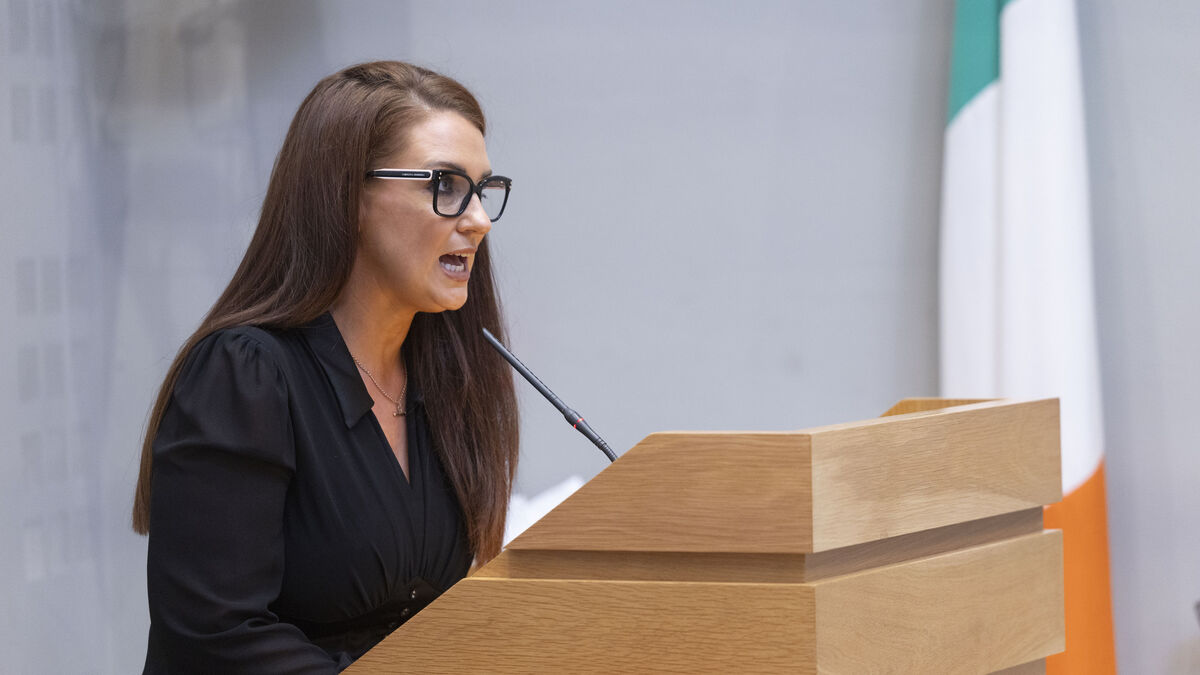
Margaret Loftus is the Mayo co-ordinator for Walk in Our Shoes. Photo: Sam Boal/Collins Photo
A peaceful one-mile solidarity walk calling for reform of Ireland's family law court system will take place across 26 counties at 11am this Sunday, September 27.
The grassroots, volunteer-led campaign is advocating for a family law system that is more transparent, trauma-informed trustworthy and accountable.
In Mayo, participants will gather at the Tusla offices on Mill Lane, Castlebar, before walking to Castlebar Courthouse.
Organisers are asking participants to wear black and carry a pair of children's shoes, which will be left on the courthouse steps at the end of the walk.
Mayo co-ordinator Margaret Loftus said the shoes symbolise that the real victims of the current family law court system are the children.
A survivor of domestic abuse, Margaret waived her right to anonymity and began campaigning to highlight systemic failures in Ireland's response to domestic and gender-based violence, particularly in relation to accountability within An Garda Síochána.
“I am a woman, speaking from a female perspective, but this event is not just for women. It's for men, women and children, because the family law court system doesn’t distinguish between sexes or age. The walk is for everyone affected by the family law court system,” she told the .
“At the moment the family law court system in Ireland does not recognise domestic abuse within proceedings, and they predominantly don’t recognise the children as being secondary victims of domestic abuse,” she said.
Margaret said she believes the in-camera rule should be abolished, arguing that doing so would bring greater transparency and accountability to the family law system.
While she acknowledged the rule was originally introduced to protect the privacy of family units and the children within them, she believes it is no longer serving its intended purpose.
“I’d imagine it was introduced with the best intentions," she said. "But at the moment it is not effective and not fit for purpose. The only way that can be changed is through public pressure."
“Because the family law court system is bound by the in camera rule, everything in the family law courts is done in secrecy. Nothing is up for challenge, it’s really difficult to get proper information, [and] there is no accountability whatsoever with regard to decisions made."
Summing up the campaign's message, Margaret said: "The very least the children of Ireland deserve is a transparent, trauma-informed, trustworthy family law court system that makes decisions in their best interests because they are not old enough to make them themselves."
Drawing on her own experiences, Maragret said that reforms are needed to recognise domestic abuse within family law proceedings and better protect victims.
“From my own experience in family law courts and from the thousands of people who have reached out to me since, the current system that is in place is causing more damage to victims than it is good.”
“The court system in Ireland is a separate entity from Government, the only way change can happen within the judicial court system is through public pressure,” she said.
“Speaking from a female victim perspective, it’s very difficult to go into the family law court and have to sit beside the perpetrator. To have to go into the court, and for a judge to tell you that if they had jurisdiction they’d throw out every single one of the charges that have been brought before a perpetrator in a criminal court."
“In one court a perpetrator can be getting charged with criminal offences relating to a domestic abuse situation, but in the family law court it's not even acknowledged. You’re not allowed to talk about it, and it is not brought into proceedings, or the impact of it in regard to custody or access of the children,” she explained.
“It’s perfectly designed to protect the perpetrators.”
The campaign is also advocating for a more trauma-informed family law system.
Reflecting on her own experience navigating the justice system, Margaret said one of the most important reforms would be mandatory and ongoing training on coercive control, domestic abuse and post-separation abuse for those working within the legal system.
“You can have a case of a victim of domestic abuse and coercion come before the family law courts, the perpetrator can present themselves as really articulate, well organised, and put up a good case. The victim could be emotional and not able to articulate themselves properly, and that is because of trauma.”
She said professionals need to recognise the effects of trauma and respond accordingly to ensure fair outcomes, adding that greater transparency and accountability within the family law system would help build public confidence.
“By removing the in camera rule and allowing more accountability, I’d imagine that will lead to the system being more trustworthy,” she said.
Sunday's walk will take place in silence, with organisers asking participants to respect the privacy of those taking part. Margaret said no official photographs will be taken during the event.
A national Walk in Our Shoes event will take place three days later, on September 30, with participants gathering outside the Four Courts in Dublin at 11.30am before walking to Leinster House.