Meadowsweet, that special scent of summer
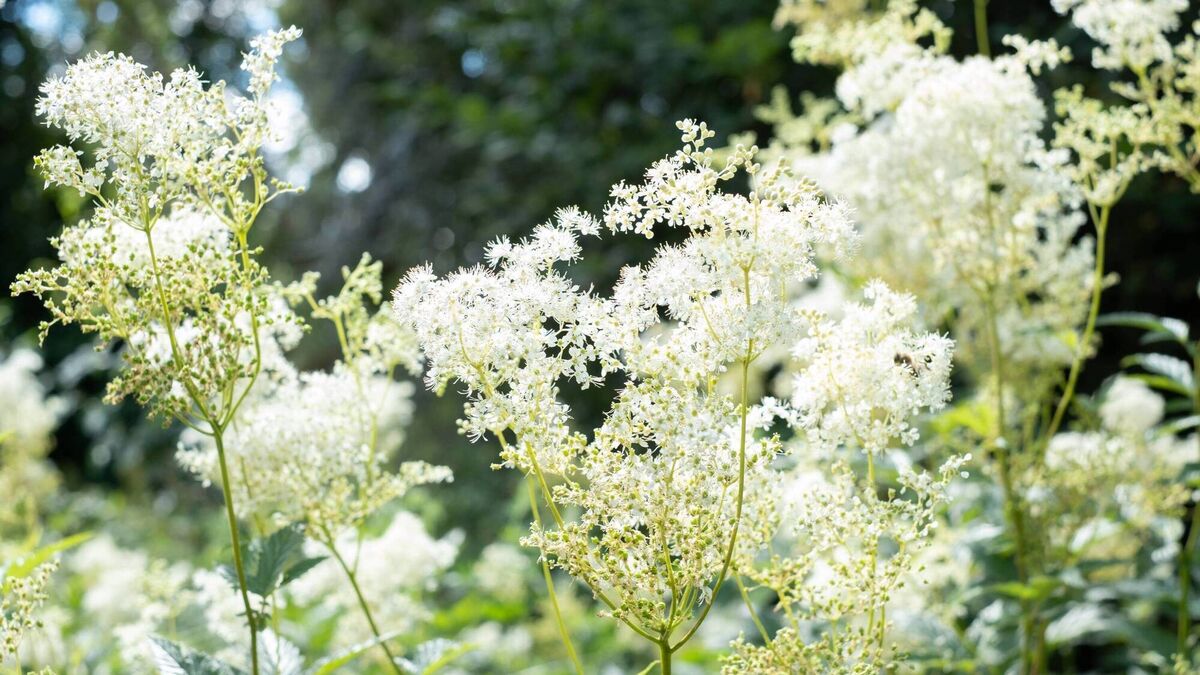
A peculiarity of this flower is that the scent of the leaves is quite different from that of the flowers.
The traditional time of hay meadows was always July and August. In the marginal ground of the Ox Mountains, the unhindered growth of the previous weeks allowed grasses to mature and eventually provide the animal fodder required for the following winter. This period also allowed for the growth of wild flowers along the margins and headlands of small fields and the flower that stood the fairest in this display was meadowsweet, Queen of the Meadow.
This year, the towering sunshine of July, brought forth a powerful display of meadowsweet but the prolonged drought has also hurried the maturing process for most plants. As a result, as we enter the last weeks of August, we have to bid an early goodbye to our annual crop of meadowsweet, and with it will depart that most distinctive fragrance of summer.
In , meadowsweet is poetically described as a “creamy perennial of damp waysides, meadows, marshes and woods".
A peculiarity of this flower is that the scent of the leaves is quite different from that of the flowers, the leaves having a heavy almond-like aroma whereas the flowers have a strong sweet smell. Meadowsweet's herbal uses had a base in scientific fact, in common with many other folk and herbal remedies. Interestingly, in 1897, a scientist, Felix Hoffmann, used compounds from the meadowsweet plant (Spiraea ulmaria) to create synthetic acetylsalicylic acid. The brand name 'Aspirin' was coined by combining 'a' (for acetyl) and 'spirin' from Spiraea.
has more information on this subject.
The name meadowsweet originally meant 'mead-sweetener' because people used its sweet-scented flowers to flavour mead, beer, and wine. Traces of the plant found in ancient burial cairns suggest it played some role in accompanying souls to the afterlife.
People scattered the sweet-smelling leaves and flowers across castle and cottage floors to mask bad odours and freshen the air. Known in some parts as bridewort, the delicate cream blossoms were sometimes used as wedding decorations and bridal bouquets, invoking the blessings of joy, peace, and love.
Meadowsweet holds a sacred place in Celtic lore and mythology where it was celebrated as a powerful healing, divining, and creative herb. Ancient druids held meadowsweet as one of their most sacred herbs, using it in various rituals and ceremonies. In Irish legend, the great hero, Cú Chulainn, bathed in meadowsweet to cool his “terrifying battle-frenzy and fevers”, earning the plant the old Irish name Crios Cú Chulainn (Cú Chulainn's Belt).
Folklore from Munster suggests the summer solstice goddess Áine was responsible for giving meadowsweet its rich, sweet, almond-like fragrance. Dropping the flowers in water on St John’s Eve (Midsummer) was believed to help identify thieves - floating if a woman, sinking if a man. Traditional belief held that inhaling the sweet, heady scent of meadowsweet could grant second sight and help a person converse with the fairies.
Nearer to home, but no less magical, my father loved meadowsweet and there was plenty of it on our farm, especially in the marginal hayfields that bordered the nearby bog. Returning home for the dinner, he would often pick a bunch of meadowsweet, tie it neatly with a tráithnín and present it to my mother. I always admired him for that; she liked the fragrance in the house and no doubt she also enjoyed the gesture. In the middle of setting out the dinner, she would retread to the back kitchen to retrieve and wash a jampot, thus contouring up a makeshift vase. The jampot and its flowers were placed on the window beside the table, where the aroma of the meadowsweet blended with the steam rising from a platter of freshly boiled potatoes.
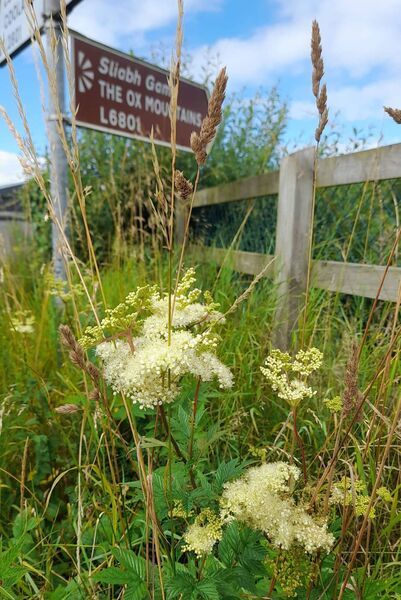
At one time in my past, during a home wine-making phase, I had the idea that meadowsweet would make a good basis for a country wine. I had previous success with rhubarb and figured a variation of a tried and trusted elder blossom recipe would give me the result I desired. It is actually possible, allowing the requisite three weeks fermentation, to make a dry white wine with nothing more than water, sugar and yeast.
The first step in my experiment was to blanch the meadowsweet flowers with boiling water. This action is necessary to extract the magical aroma and when strained, the resultant liquid provides the base for the future wine. I should have known that trouble lay ahead when the beautiful, bouncy blossoms from the bog field were reduced to a soupy sludge as soon as they met the boiling water. The sought-after fragrance remained around the bucket but it contents resembled a stemmy and fibrous dinner specially stewed for a vegetarian dog. But, like Brennan on the Moor, bold, brave and undaunted, I ignored the aesthetics, drained the wilted mess and committed it to my demijohn.
The fermentation ran its course in the expected way and eventually I was presented with a deep yellow wine. Not wishing to hurry the process further, or rush that first taste, I waited a few months to allow for further maturity – in the wine, that is, not in myself. When I could delay my gratification no longer, I opened the first bottle, my very own Cloonacool Chablis. To my disappointment, the aroma of meadowsweet had completely vanished, only to be replaced with a definite tone of damp clothes. The taste, unlike a fine Chablis, was more akin to diluted silage effluent and its deep yellow colour reminded me, not of Pinot Grigio, but of that other ‘P’. I used the remaining five bottles to good effect as a form of organic weedkiller and resolved never to repeat such a misguided exercise again. Maturity, sometimes slow in coming, eventually forces itself upon us in varied and interesting ways.
The moral of my story is to be careful what you wish for; sometimes that flower with the sweetest smell has a bitter bite, the most endearing kitten has the sharpest claws. It seems that meadowsweet is best admired along the margins of an Ox Mountain laneway, in the headland of a boggy hayfield or as a neatly tied bouquet in a two-pound jampot and placed with love on a kitchen windowsill.