Fuel costs are pushing local firms to the brink
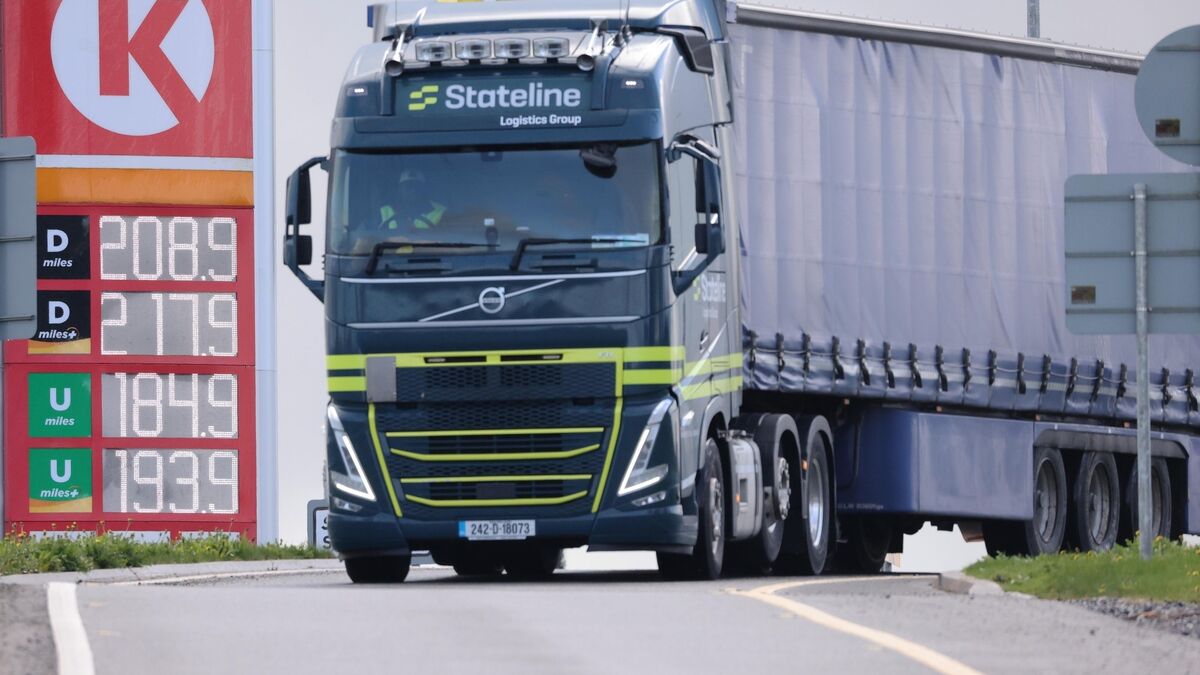
Covid and Brexit wouldn’t hold a candle to the current fuel crisis, according to one local haulage firm. Picture: Eamonn Farrell/Rollingnews.ie
A leading Mayo haulage firm has warned of potential business closures due to higher transport costs. The scale and impact of price increases have been punishing for Charlestown-based East West Express who have called on government to increase rebates and subsidies and force more transparency on the timing of fuel price increases by fuel companies.
“We’re going through 10,000 litres of diesel a week,” explained company director of finance Katherine Marren. She has seen the per litre price of diesel rise to €1.75 plus VAT, which compares to €1.25 a couple of months ago.
All of this means higher costs for customers. “We’ve had no choice but to increase the rate. We already increased it in February and March when the fuel price rose, but [the fuel price] is back up above that now.”
Higher transport costs will be too much for some companies to bear, Katherine Marren predicts. “Some businesses will go to the wall, they won’t be able to take the rise in costs.”
Assistance from government schemes announced earlier this year have had minimal impact, said Ms Marren. “We only got one subsidy: it’s so much per lorry on your license, you get a once off lump sum of €1,800 per lorry. But it wouldn’t even take the shine off it. It’s the same with the diesel rebate, 12 cents a litre. But it went up 50 cents a litre, that puts it into perspective. And we are absorbing increases in other costs.” The volatility of fuel prices this year has made budgeting extremely difficult.
“Bigger customers seek the price to be set. They fix for three to six months but it’s so volatile at the moment. It’s very hard to forward plan anything… we have to sustain a certain amount, we can’t keep going back to the customer.” The challenge of budgeting for higher fuel costs is multiplied on East West’s multi-drop business, with some trucks carrying deliveries for multiple clients.
“When a truck leaves here to Ballina, maybe there are 20 drops for various clients.” Katherine Marren would like to see the Government focus their interventions on fuel companies’ timing of price hikes. “When there is an increase in world prices we are hit straight away but the fuel is already in the country. There is always three months’ supply in the country.” Katherine would also like to see an increase in diesel rebate and an increase in subsidies. The excise duty on fuel may already be at rock bottom and it’s not clear that it can legally go lower.
The current fuel price crisis is “definitely” the worst challenge faced by Amigo International Transport since it was established in 2017.
“Covid and Brexit wouldn’t hold a candle to it,” said Mark Finneran, director of the company which operates a fleet of trucks hauling goods to continental Europe from its base in Ballinlough, eight kilometres from Ballyhaunis.
The government’s fuel rebate to logistics companies is paid every quarter, meaning transport firms have to finance the cost of the fuel in full until the rebate is paid. While he’d like to see more timely rebate payments, ultimately Finneran wants to see fuel prices comparable to other parts of the EU.
“I don’t want a rebate, I want fuel sold at a reasonable price,” said Finneran. He points to diesel selling at €1.29 per litre in Malta "and in Ireland it’s €2.20."
The current per-litre price of fuel is generally lower in Spain and parts of Eastern Europe but higher than Ireland in major economies like France and Germany, though those countries, in the centre of Europe, don’t have to contend with long haulage trips and ferry costs.
Ferry operators have “significantly increased” their rates for trucks in recent months, said Finneran, to pay for their higher fuel bills.
Finneran fears the current situation will have an impact on business in general as the cost of moving goods lifts the cost of economic activity. “It will stop companies from wanting to expand or progress.” Transporters like him are in a dilemma, forced to absorb higher fuel costs while also trying to maintain operations and hold onto clientele.
“You can’t extract any more from the customer. The customer has to pass it on to the end consumer which is you and me so ultimately, we [truck operators] are hit twice.” According to John Horan, operations manager at Castlebar-based Brian Cunningham Transport, “Whatever mechanism the government chooses has to be as fair as possible to all sectors.” That could possibly focus on the reduction of a barrel of oil as it enters Irish refineries, explained Horan.
Approximately 40 percent of Ireland’s diesel, petrol and kerosene needs are meet by the country’s single oil refinery at Whitegate in Cork. As fuel prices rise, freight volumes have so far remained at normal levels, said Horan, though he has seen a slow-down in some container traffic coming into the country’s ports.
Aside from oil supplies, global shipping has been impacted by conflict at the Strait of Hormuz and the Suez canal, a key artery for trade from Asia entering Europe which has been targeted by Iran-back Houthi fighters.
“While volumes of necessities remain strong, there has been a drop off in containers of non-essential items coming in,” said Horan.
Meanwhile, a Ballina-based haulier said the current situation is creating immense stress for local businesses forced to pay higher transport costs.
“It’s a killer. Customers are not accepting, they’re not getting any extra either. Right now you’re carrying it and you’re just doing it hoping that things will change.” Will truckers stop delivering loads?
“Eventually that is going to happen,” said the haulier who didn’t want to be named as he didn’t wish to be seen as involved on either side of the protests.
“We are working on extremely tight margins. I don’t know until the end of the month what the diesel bill is and then I’ll see if we made a loss. Transport is a funny business, you can have a bad month with breakdowns and testing, a lot of things can go wrong, but if we add this, life gets very difficult.” Katherine Marren at East West Express believes the fuel crisis for truck drivers is existential for the economy. “Look, we live on an island, the only way to move things is by truck. The wheels of the trucks have to keep moving.”