Looking back on the year that was 1974
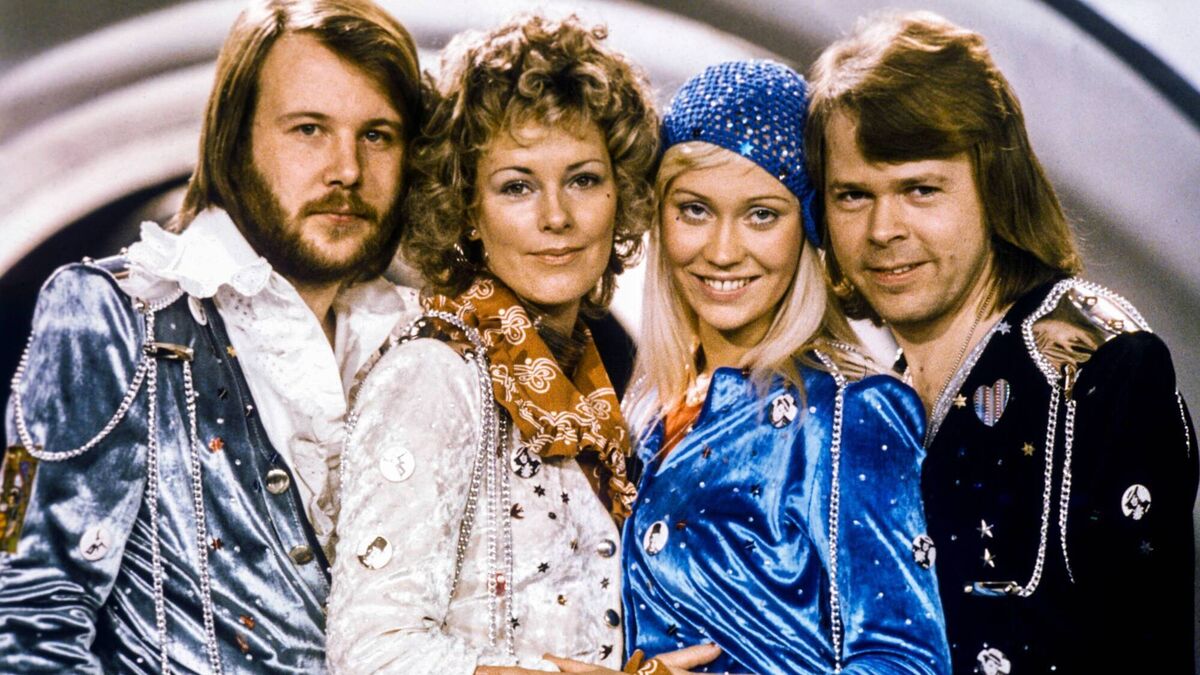
ABBA won the Eurovision in 1974 with their unforgettable hit song Waterloo. Picture: Olle Lindeborg/TT News Agency/AFP via Getty Images
I am not sure that everyone has that special year that stands out for them but I have – and it is 1974. In my Ox Mountain childhood, this year contained so many elements of my coming of age that it remains a year apart.
While I was the youngest of seven, in 1974 I felt like an only child. My siblings had all either got jobs, got married or were in boarding school. At home it was just me and my parents. My influences were few and far between but I was beginning to pick up signals from a wide and wonderful world.
Glam Rock was in its heyday in 1974. I had a small blue transistor radio that was able to pick up Radio Luxemburg and BBC Radio 1 - I’m not so sure modern devices can even do that today. The hits poured out each night and each day I sang them back to myself, and anyone else that would listen.
I felt I was the first person in my family to discover this musical genre - actually, I’m sure I was - and it gave me my very own corner on the market. No more Michael Coleman or John McCormack for me. The top three songs in the charts in February 1974 were by Cozy Powell, by The Sweet and at number 1… by Mud. There was never a better Top 3.
When I heard ABBA in the Eurovision Song Contest that year, I just knew they were going to win. The Irish entry, , written by Paul Lyttle, and performed by Tina, never stood a chance. was such a tune; a crisp Rock 'n' Roll sound ploughed into a bland Eurovision tradition. While I didn’t fully understand the lyrics, it sounded amazing - a particular type of music that had never been heard before. I had no idea at that time that ABBA would become such a global phenonium, a phenonium that continues to this day.
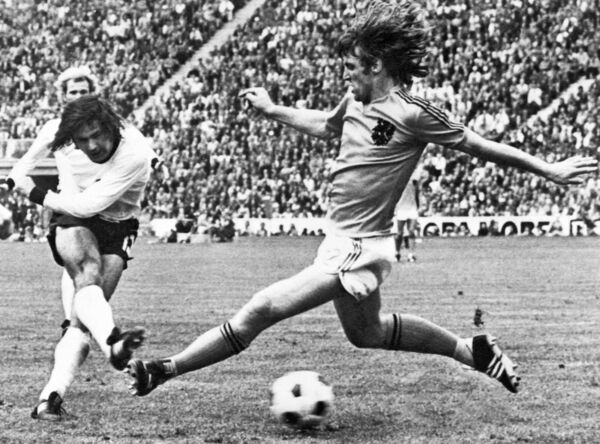
1974 was a World Cup year, and I was ready for it. A rented black and white television set coupled with colourful stories of the great Brazil side of four years earlier had whetted my appetite for my first soccer extravaganza. This World Cup announced a famous Dutch team, nicknamed 'Clockwork Orange'. They were a revolutionary squad led by Johan Cruyff, famous for their 'Total Football' style of play. The side, featuring players like Neeskens, Rep, and Krol, came from nowhere to reach the final, taking on the hosts, West Germany.
German legend Gerd Müller secured his legacy by scoring the winning goal in that final, leading West Germany to victory by the odd goal in three. Nicknamed 'Der Bomber', Müller, already a football icon, scored the decisive goal, showcasing his knack for scoring crucial goals when they were most needed. I left that World Cup behind me inspired by two great footballing heroes, Cruyff and Müller. One a footballing genius, the other having scored a World Cup winner.
1974 was my happiest year in National School. I was attending my third school - the other two had closed in a succession of amalgamations - and I had found new friends and a teacher I could trust. For the first time, I was also enjoying the benefits of free transport and the Yellow School Bus.
That summer I discovered the Community Games. I knew I could run fast but now I had a forum to really test myself. The U-14 100m was my race. After winning at community level, I found myself decked out in a light blue t-shirt and white shorts and heading to the County Finals. After that, I was on my way, attired this time in the black and white of Sligo, to the All-Ireland finals in Mosney, Co Meath.
Butlin’s Holiday Camp was transformed into ready-made games village and sporting arena for Community Games participants from all over the country. The games themselves took place on the last weekend in August. I didn’t win anything, not even my heat, but it was one hell of an experience for a 13-year-old boy at the time.
I went to secondary school that September. My mother wanted me to go to one school but I had my heart set on another. One had been an all-girls school that had just begun taking in boys and had no record in sporting achievement. The other had less girls attending but was a hotbed of footballing heroics. I got my way and despite warnings of awaiting bullies and harder homework, off I went.
I left that school five years later with a Leaving Cert that more resembled an old biscuit tin filled with the debris of dyslexia than a treasure chest of academic achievements but, I also left with two Connacht College medals and a girlfriend who later became my wife. In the end, I felt I was quite satisfied with my choice of secondary school in 1974.
The 1974 All-Ireland football final was contested by Galway and Dublin. Dublin, as a footballing force, had not been heard of for years but in 1974 they reemerged with renewed vigour. The ’74 final was the first of thirteen consecutive All-Ireland SFC finals to be contested by either Dublin or Kerry.
This Dublin side was managed by Kevin Heffernan, a former player with the county and now, an innovative leader. His motley crew, including a young gangly Brian Mullins and crafty old Jimmy Keavney, proved a winning combination, against a Galway team that was on a downward curve at the time.
I never liked that Dublin side, any Dublin side really. Maybe it was beating the Connacht representatives in that final that set me against them? However, Heffernan’s contribution to Gaelic football was immense at that time and in 1974, he became the only non-player to be honoured as the Texaco Footballer of the Year, a highly prestigious award.
That year also, the Ladies' Gaelic Football Association (LGFA) was founded in July, with Tipperary winning the inaugural final later that year. Internationally, another significant event in 1974 included the resignation of US President Richard Nixon, following the Watergate scandal.
Then, on October 30, one of the most amazing contests in world heavyweight boxing history, The Rumble in the Jungle, took place between Muhammad Ali and George Foreman in Kinshasa, Zaire (today’s Democratic Republic of the Congo). Foreman was young and undefeated; Ali was getting old and making his latest comeback. The fight was watched on television by one billion people worldwide. Ali, the underdog, won after a titanic battle... and I saw it all in black and white on our rented telly.
When I look back on 1974 and the content of this article, I see common themes; winning and losing, heroes and villains. Is this what impacts most on the heart and mind of a fledgling teenager? Possibly? Definitely! We like our memories to be populated by achievement, small victories, and a sense of belonging. We can tolerate failure as a sauce but not as a main course... and the contrast, it seems, makes for a memorable meal.