The greatest singer Ireland ever produced
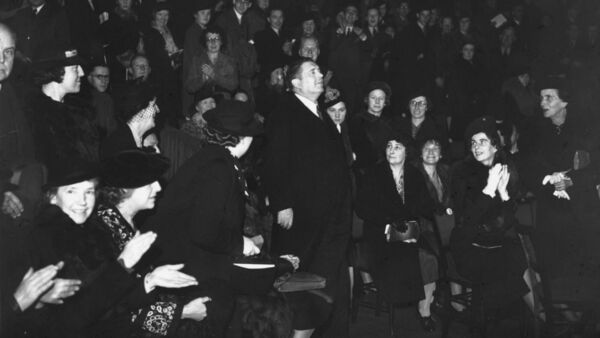
John McCormack takes the applause at one of his final performances at the Royal Albert Hall in London in 1939. Picture: London Express/Getty Images
I am conscious in writing that some readers may not know all that much about John McCormack. This extract from one of his biographies, by Gordon Ledbetter, might help to set the scene.
As Christmas approaches, and in the aftermath of reading Ledbetter’s biography, I am repeatedly reminded of my father; his gramophone, his beloved record collection, and his own singing of the evocative McCormack classic, .
My father had a life-long admiration for John McCormack. He could not abide the popular music genre that followed McCormack’s passing. My father liked a tuneful melody, meaningful lyrics, and a sweet voice. He was gifted all of these while listening to McCormack.
John McCormack’s father Andrew was born in Scotland and in fact, his paternal grandfather Peter, came from Sligo. As a young man, Andrew travelled to Ireland with his wife Hannah, first to Lisburn and then to Athlone, working as a labourer in the woollen mill industry. They suffered from health issues but became parents to 11 children, six of whom survived to adulthood. John Francis, their fourth child, was born on June 14, 1884.
The family lived in a simple terrace house in Athlone. There were two great influences in that home: hard work and a love of singing. John McCormack recalled in later life that he never remembered a day in his childhood home without song. His father once told a young John, because of his love of singing, that he would never amount to anything but, ironically, when an older John became rich and famous, his father would say that he himself had the best voice of the two!
Despite family rivalry, all indications suggests that John McCormack had a happy childhood and that he was an above average scholar. This theory is borne out by the fact that he received a scholarship to attend boarding school in Summerhill College in Sligo. McCormack continued his time in Sligo by receiving subsequent scholarships. This provided the young student ample opportunity to express and develop his talents as a singer.
An interesting story from his time in Summerhill College is told in relation to a performance at a school concert. A maid, who worked at the school, come to him afterwards to congratulate him on his fine singing voice but expressed disappointment that he had sung in a foreign language. He had, in fact, sung in English. The incident had such an impact on McCormack that it spurred him to work on his diction and he did this to such good effect that it was later described as his greatest attribute.
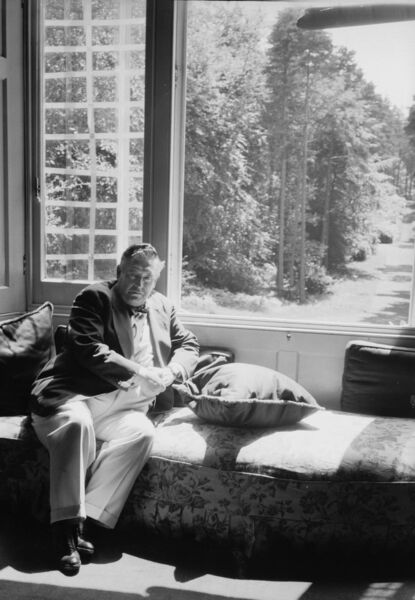
McCormack’s first achievement of note as a singer, was winning a gold medal at the Feis Ceoil in Dublin in 1903. Shortly afterwards, he was invited to sing at the World Fair in St Louis in 1904. Lily Foley was also asked to sing at that same exhibition and it was while there that the young couple fell in love.
Despite their young age and the concern of their parents, John and Lily married in Dublin in July 1906. The couple later went on to have two children, Cyril and Gwen.
McCormack’s ambition to become a successful singer moved in a positive direction when he was accepted to have his voice trained by an Italian master, Sabatini. Sabatani was also well placed to put McCormack forward for operatic roles that would provide the budding tenor with opportunity and income. This time in Italy proved very successful for the young tenor, where he performed many operatic roles under the stage name, Giovanni Foli (John in its Italian form and Lily’s surname spelt to appear Italian).
Opera is a complex form of entertainment, blending dramatic storytelling with song, orchestral scores, and visual arts such as set design and costumes, to create an immersive, emotional experience. In Britain, the Royal Opera at Covent Garden was the centre of this world from the mid-19th century onwards. It should be mentioned here that while opera singers are masters of song, they generally make poor actors and McCormack was no exception.
McCormack returned to London with the ambition to play leading roles with the Royal Opera. After a series of bit-parts in travelling seasonal shows, and numerous rebuffs from Covent Garden, McCormack eventually got his breakthrough in October 1907, singing the lead role in Mascagni’s . With this, John McCormack became the youngest tenor ever to sing a major role at the Royal Opera. It appeared that the boy from Athlone had realised his life’s ambition in the matter of a few short years. Fate, however, was soon to send McCormack and his singing career in a completely different direction.
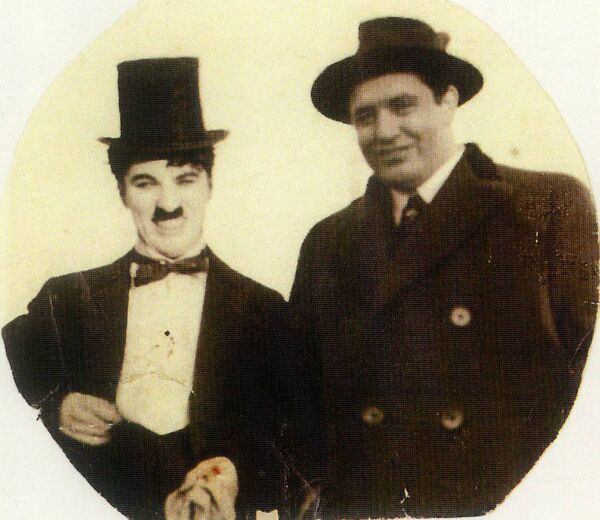
The history of the gramophone began in 1887 when German-American inventor Emile Berliner patented the device for recording and playing back sound using flat discs. Berliner founded the Victor Talking Machine Company with Eldridge Johnson in 1901, and in doing so, established the gramophone as a dominant medium for recorded music until the rise of digital media in the late 1980s.
Ever the opportunist, John McCormack took a great interest in the recording industry at an early stage. It played into his boyish curiosity, his interest in all forms of music and, of course, his ambition. His earliest recordings featured predominantly Irish ballads; a key early recording was his incredibly successful 1908 recording of, .
While McCormack was seen by some as a true son of Ireland, this was somewhat at odds with the fact that he was also firmly established in Royal Opera circles - the two simply did not mix well. Despite this conflict, or maybe because of it, McCormack managed to steer his way out of stormy waters when he found safe haven in America. He debuted at the Metropolitan Opera in New York in 1910 and was a principal singer there for several years. He also sang at other venues in New York, such as Oscar Hammerstein's Manhattan Opera House, before settling in the city in 1914.
Eventually, McCormack became one of the world's first radio megastars and recorded Irish ballads alongside his opera repertoire. His recordings of Irish songs such as were extremely popular with audiences in both America and Ireland. Through his live performances and studio recordings, McCormack introduced many people to Irish folk songs and nationalist tunes. His rendition of , about the 1798 rebellion, was particularly impactful. He was also associated with the popular songs of Thomas Moore.
Late in life, my father was amused to hear that certain high-end dairy farmers were playing music to their cows at milking time. This was done in an attempt to relax cows, helping them to let down their milk more easily. Funnily enough, my father was aware of this soothing technique all his life. He sang when he was happy and he was happiest while sitting on a stool milking a cow. McCormack classics such as , and were performed each morning and evening in a cowhouse whose rafters heard more music in their time than the rafters of Carnagie Hall.
As a young man, and at a time when John McCormack was at his peak, my father was his greatest fan. For a man not giving to spending hard-earned shillings easily, my father had a gramophone and a box of records when most men of his age were saving for their first bicycle. Those old ‘78’ records were not cheap, at two shillings apiece, and they often took weeks to be delivered to Ferguson’s shop in Tubbercurry. Many of his records, still to the good to this day, had my father’s name written on the sleeve, labelled and left aside until he arrived to pick them up.
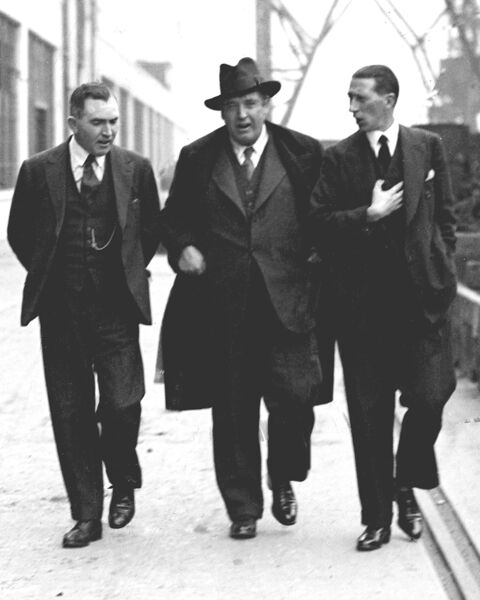
In later life, McCormack bought a house in Booterstown, Co. Dublin. After experiencing increasing bouts of illness, McCormack died at his Dublin home on September 16, 1945. He was only 61 years of age.
His poor health at such an early age stemmed from two sources, hard work and his love of song, ironically the two values he took from his childhood. At the time of his death, said of John McCormack that he was not only one of Ireland's first music stars, he was one of the first megastars of any nationality.
McCormack achieved legendary status in his own lifetime. He had estimated record sales of 200 million and a career that spanned the world's greatest opera houses and concert halls. Despite a relentless work schedule and an opulent lifestyle, he remained a faithful husband and a committed Catholic throughout his live. McCormack was bestowed the title of Papal Count by Pope Pious XI in 1928 and he is reputed to have said that the greatest occasion of his life was when he sang at the Eucharistic Congress in Dublin in 1932.
My father had a nice tenor voice himself and was regularly called upon at family occasions and house parties. At his funeral mass, one of his nephews performed a rendition of , the beautiful song by Thomas Moore made famous by McCormack. This reminder of the great tenor and my father’s love of song, as well as the haunting lyrics, provided a stirring tribute on that sixth day of Christmas in 2008.
- If you want to read more articles like this, pick up the , available in all local newsagents.