Flying the flag for Ireland
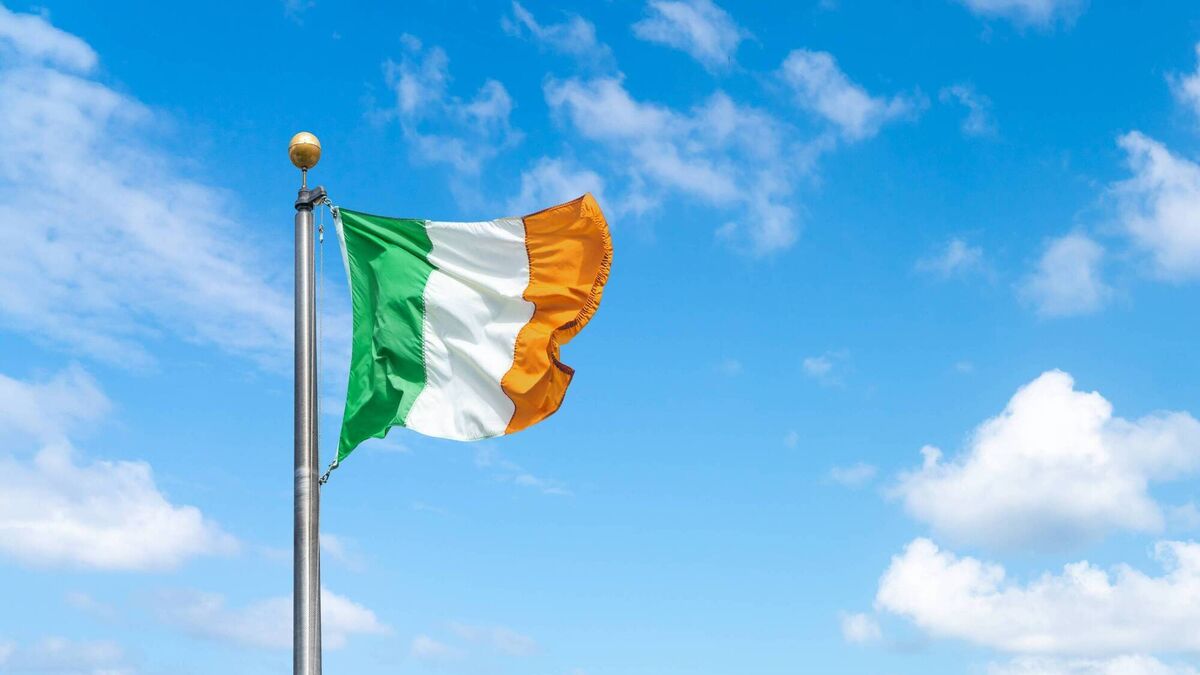
The flag created by Thomas Francis Meagher originated from a place of division, and yet, it aspires to a peaceful future.
There are few things that reflect belonging, enthusiasm and support better than a flag. How easy it is to spot a particular flag - county or country - when away from home and feel moved immediately to establish the connection. For all of these reasons, I love the idea of flags; I love the respect they engender, the sense of belonging they create and the welcome they provide.
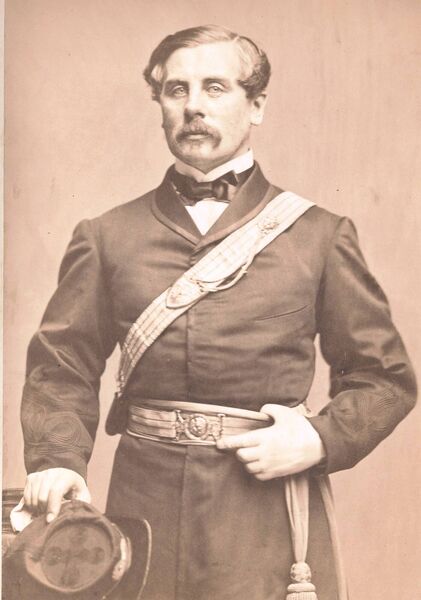
The Irish flag that we are familiar with today was first flown publicly by Waterford man, Thomas Francis Meagher, in his native city at the Wolf Tone Confederate Club at 33 The Mall, on March 7, 1848. A week later, Meagher presented a version of the Tricolour made from the finest French silk to the citizens of Ireland saying...
“I trust that the old country will not refuse this symbol of a new life from one of her youngest children. I need not explain its meaning. The quick and passionate intellect of the generation now springing into arms will catch it at a glance. The white in the centre signifies a lasting truce between the “orange” and the “green” and I trust that beneath its folds, the hands of the Irish Protestant and the Irish Catholic may be clasped in generous and heroic brotherhood.”
The Irish Tricolour has inspired generations of Irish people since 1848. Although the flag didn’t see the light of day again until it was raised above the GPO in 1916, so effective was its symbolism that its message was still relevant to this day. The green, white and orange was eventually recognised as Ireland’s national flag in 1937.
While the origin of flags is difficult to pin down, flag-like symbols have been described as far back as the 11th century BC in China and later in other ancient civilisations such as Egypt and Rome. During the Medieval period, silk from China allowed communities, such as the Arabs and the Norse, to create flags which flew from poles. Later, developments in the fashion of heraldry led to the creation of personal heraldic banners for rulers and important families throughout Europe.
Flags began to be regularly used on board ships for identification and communication in the Age of Sail. From the 18th century, a rising tide of nationalism around the world meant that common people began to identify themselves with new nations and their symbols, including flags. In modern times, every nation on Earth flies a flag as a symbol of formation and belonging.
Widespread use of flags began with the rise of the concept of the Nation State at the end of the 18th century, the Age of Revolution. Revolutions such as those in France and America called for people to see themselves as citizens as opposed to subjects. Flags began to represent the people of a nation rather than the rulers of a nation. With nationalism increasingly common across Europe in the decades that followed, more and more countries acquired a national flag.
There is a general etiquette pertaining to flying our national flag, and like the origin of the flag itself, the details are interesting. Flags should be raised and lowered between the hours of dawn and dusk or, if flying the flag at night, it must be illuminated. The flag should be on a taller flagpole when used with other flags. When flying the Irish flag with other national flags the Irish flag can be at the same height but must then be on the very left-hand side as you approach. When flying the national flag outside of Ireland, it should be aligned alphabetically in order. Finally, never, never, never fly a frayed or filthy flag. Flying a damaged or dishevelled flag is akin to a man wearing a dirty or torn shirt to his daughter’s wedding.
The ‘laws’ attaching to national flag come in two categories: those that are legally binding and those that treat flag guidelines as respectful traditions. In recent history, in Northern Ireland, the use and misuse of flags gave rise to particular regulations being established and enforced. While there is no single list of "illegal" flags or banners, regulations rely on a complex matrix of public order laws and policing protocols. Up to date information tells us that bunting and flags can be lawfully removed by the PSNI if they incite hatred, are displayed for sectarian purposes, cause a breach of the peace, or are used as a tool for intimidation.
Public Order (Northern Ireland) Order 1987, grants police the authority to act if flags or banners are being used to arouse fear, incite violence, or promote sectarian hatred. The flying of flags on public property (such as the Union Flag on state buildings) is strictly dictated by the Flags Regulations (Northern Ireland) 2000, which require specific flags to be flown on designated days only. Recent expansions to policing and crime legislation have granted stronger enforcement measures specifically designed to empower the PSNI to remove paramilitary-linked flags, banners, and emblems that create intimidation in local communities.
I ran a small B&B business for a number years here in the Ox Mountains. My children had all left home and I was left with a house large enough to accommodate such a venture. It was a fun time – after I got over the initial fear that nobody would turn up. Thanks to the help of the worldwide web, as it was then known, guests did begin to appear and steadily I began to believe in and enjoy the project. I found that my out-of-the-way location was actually a plus, with guests finding the Ox Mountains both a place of beauty and haven of tranquillity.
Having always been impressed with the flutter of flags, I had the idea of displaying our national flag at the entrance to the B&B. This served two purposes; it decorated the entrance and provided a sense of occasion. Later, I began to build a collection of flags of the nationalities who appeared most regularly at my door. Among the ever-growing collection were the flags of Belgium, France, Germany, Spain and Switzerland, as well as those of America, Australia and Canada.
I eventually had three flag pole at my entrance, one for each guest room. On any given evening, especially during the months of summer, my entrance displayed the national flags of those arriving. While I had intended this to be an acknowledgement of their arrival, I had no idea it would mean so much to so many. I was often asked on the doorstep by guests why a particular national flag was flying and when I replied that it was being flown specially for them, they were enchanted. I mention this not to praise my own efforts but to illustrate how much the sight of one’s national flag means, especially when away from home.
It is fair to say that the flag created by Thomas Francis Meagher originated from a place of division, and yet, it aspires to a peaceful future. It acknowledges past differences and shared heritage, while at the same time, encouraging unity and the ability to coexist. Given the ideals symbolised in so many national flags, it seems a shame that some are commandeered for purposes of division and intimidation.
Our national flag, and all it symbolises, reflects an ideal to be honoured and respected. Fly the flag, enjoy it, take pride in it, celebrate with it. Use it, but please don’t misuse it.