Ox Mountains were an inspiration for Yeats
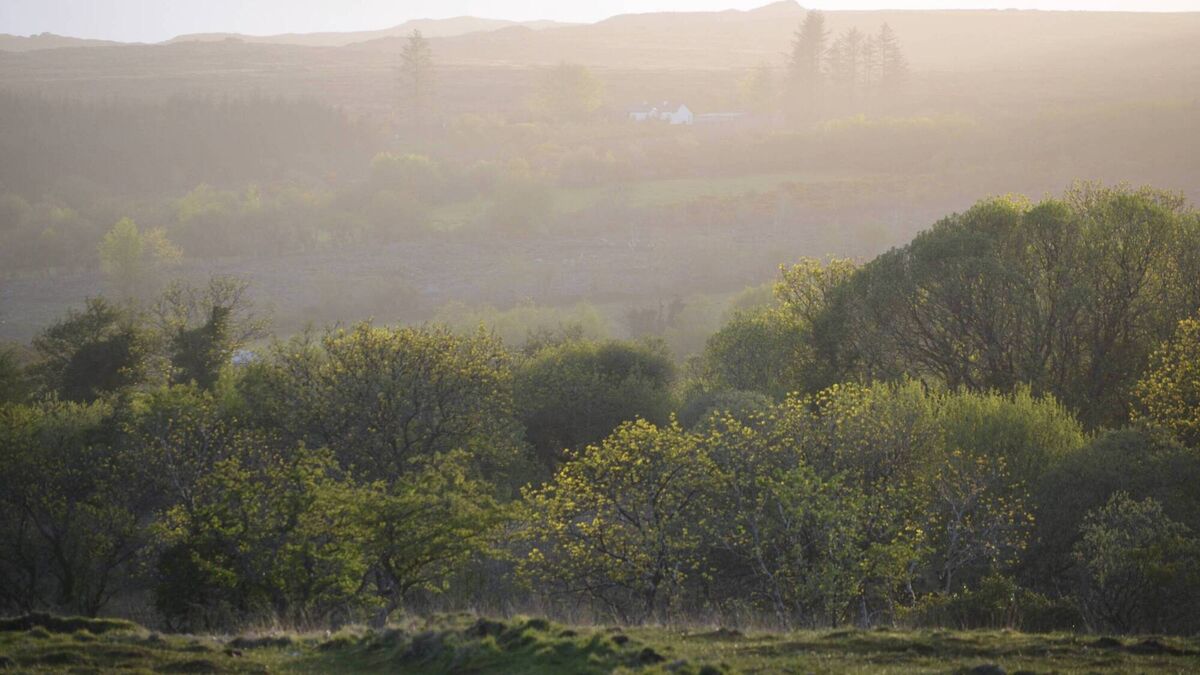
The fairy stories of the Ox Mountains served as n inspiration for W.B. Yeats. Picture: Pat McCarrick
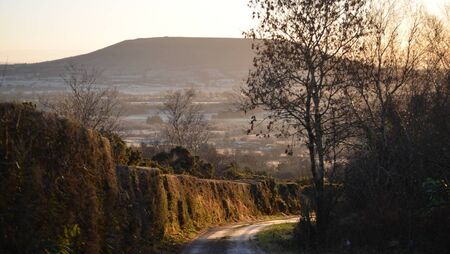
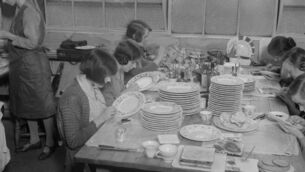
It’s nice to imagine that a famous personality might once have visited a local place or stood on a patch of ground that one is familiar with. The renowned photographer, Fr Francis Browne, visited Cloonacool in 1932 and at that time added many exceptional images to his famous collection. Another famous name to spend time in the Ox Mountains was one W.B. Yeats. The misty hills, hidden valleys and fairy lore of the region was of particular interest to the man who has become inextricably linked with County Sligo.
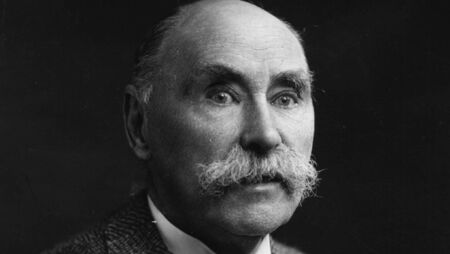
The funny thing about W.B. Yeats (1865–1939) is that he wasn’t from Sligo at all. His mother was however, and that is what created his link with the county that now has incorporated his name as its tagline, The Yeats County.
Yeats was a driving force behind the Irish Literary Revival. Alongside Lady Gregory, he co-founded the Abbey Theatre. His literary career evolved over a lengthy period but his early works such as and were dreamlike and steeped in Irish folklore. Yeats won the Nobel Prize for Literature in 1923.
W.B. Yeats died in France in 1939, but in accordance with his wishes, he was reburied in 1948 beneath the shadow of Ben Bulben in Drumcliff, County Sligo. His simple headstone bares the inscription 'Cast a cold eye on life, on death. Horseman pass by'. These lines conclude his final poem, , and they seem to encourage the living to look at mortality with an unemotional eye and to acknowledge death simply before moving on with life.
I am not sure when the phrase 'away with the fairies' was first coined but it could well have been with reference to W.B. Yeats. As well as being a poet, W.B. was a lifelong mystic and was deeply influenced by Irish folklore and the occult. For him, poetry was an active process, a way to connect the physical world with the magical and the mysterious. Yeats was a vital figure in preserving Ireland's oral fairy traditions, recognising the need to preserve such stories and traditions for future generations. To this end, he compiled anthologies such as .
These tales were not mere children's stories to Yeats; he treated them as true, mystical phenomena deeply embedded in the rural landscape. The influence of these fairy and folk tales found its way into poems such as , where Yeats contrasts the joyful possibilities of the fairy world against the sorrows of the human world.
It is quite certain that Yeats was enraptured by such places as the Fairy Glen on the slopes of Knocknarea and well as the fairy hill of Knocknashee. In these places, Yeats found a landscape and a culture that piqued his curiosity and inspired his creative genius in equal measure – quite literally, in these places, he was away with the fairies.
In Yeats’ 1916 play, , an old man has spent his whole life by the magical well, waiting for the brief and sudden rush of water that will make him immortal. Each time the splash comes, the guardian spirit of the well distracts him, and he misses his chance. Tullaghan Well, the well that inspired this play, is situated near Coolaney at the northern end of the Ox Mountains. Here, hawks used to come whirling and screaming from their watchtower on Hawk’s Rock close by.
The well is situated on the rocky outcrop of Tullaghan hill, which offers a wide view of the surrounding landscape. This region boasts a number of prehistoric ring-forts, one of which encloses most of the summit. This, added to local legends, would indicate a pre-Christian origin for rites at the well, which were, by tradition, celebrated on Garland Sunday, or Lughnasa. Elizabeth Healy, in her book about Ireland’s holy wells, refers in particular to W.B. Yeats’ connection with this particular well.
The ancient landscape of the Ox Mountains didn't just inspire W.B., it also inspired his brother, the renowned painter Jack B. Yeats, who immortalised the region in his 1944 painting, . The painting is now permanently housed at the Pallant House Gallery in Chichester in the United Kingdom, which describes it in the following tones:
I had the pleasure of directing a production of once, in the company of the Cloonacool Players. I chose the play because of its local setting; the 1894 play is set in a cottage in County Sligo. The play follows restless newlywed Maire Bruin as she abandons her human family to join the fairy clan, exchanging her mortality for eternal youth. The play features a conniving fairy child which, at the time, was played by my teenage daughter. I still remember, with goosebumps, her award-winning otherworldly singing. While it is fair to say that none of us really understood the workings of Yeats’ creative mind, our Ox Mountain troop definitely understood the setting and the fairy tradition that the piece recalled.
I grew up hearing local fairy stories, not fairy tales but fairy stories. More than most places, the locality of my childhood retained the tradition of the fairies. This was due to the fact that my home was in shadow of Knocknashee, the Hill of the Fairies. The hill itself is imposing enough, crowned as it is with two prehistoric cairns, but the region all around its base is dotted with wells, coves, ring forts and giant’s graves. Most of these features are accompanied with their own set of tales; the dos and don’ts of managing your way around the secret world of the ‘little people’. Common to all of these tales, was a healthy respect for the fairies.
When W.B. Yeats visited the Ox Mountain region in search of fairy lore, in his own way, he maintained the same respect for the fairy world. He valued the old tradition, immersed himself in it, and used it to colour his writings. Well done, Willie B, and all hail the fairy people of Knocknashee and the Ox Mountains – they haven’t gone away, you know!