The dreaded chore of picking a field of stones
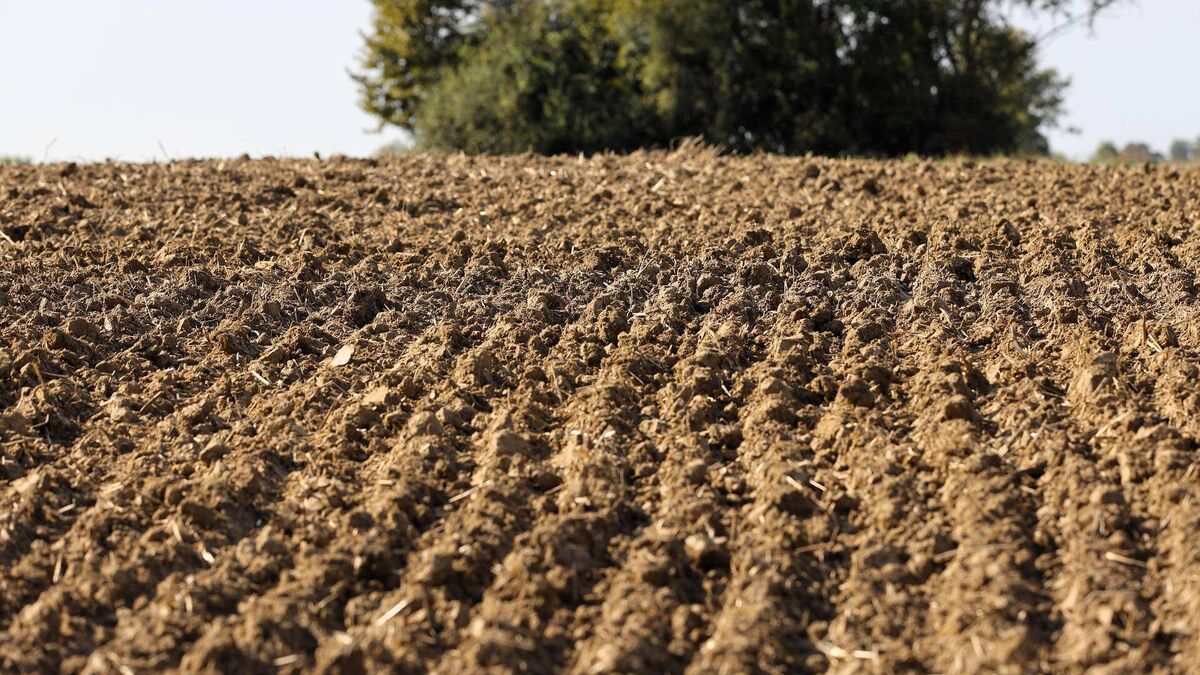
A freshly ploughed field containing lots of stones for picking.
When children who were reared on small Ox Mountain farms meet, whether in Ballina or Birmingham or Boston, their conversation frequently returns to home. They chat about the highs and lows of a rural upbringing; the joys of endless summer days and the horrors of picking stones.
I met a man while on a trip to New York one time who had achieved great success in the construction industry in and around the Big Apple. He came originally from Dromore West in Sligo. We chatted about our native county and our common origins and about having being reared on small farms. Despite his success, he mentioned in particular his hatred of having to pick stones in his father’s fields.
For those who have picked stones, no further explanation is required but for the uninitiated, a short explanation may be necessary. Tilled fields, fields that have been ploughed and harrowed for crop planting, frequently present with a coating of small stones. These stones, particularly in mountain regions like our own, tend to be too large to be rolled back into the soil after the crop in sown. They can range in size from that of a man’s fist to the size of a small football – many of them large enough to build surrounding stone walls. There was only one way to get these stone off the ground and that was to pick them by hand, one by one, into a bucket and haul them to the nearest ditch for disposal. It was a back-breaking task.
Stone-picking is a universal chore, as American writer, Gina Loehr, of describes:
“For those who may be wondering, stone picking is a field chore that must be done every spring. Every single spring. In the same fields as last year. Same fields, new stones. It really is the job that never ends.”
The 2024 book, is an ode to rural life, charting traditions of the past, how they were lost and why we need to reconnect. The author, Robert Ashton, explores how our relationship with everyday items has evolved over the last two centuries, providing a unique insight into how life continues to change in rural settings. Ashton, in his writings, refers at one point to the picking of stones.
On larger farms and on the landed estates, the task was more structured but wasn’t any easier. According to Ashton, however, it could, at the end of harvest, be a little more worthwhile.
is a recently published memoir by South Sligo man, Dennis McIntyre. McIntyre writes about his early life on a small farm in Tullavilla near Cloonacool, and recalls the many charms of that time. However, chapter five of McIntyre’s book features a top ten of the most hateful farm tasks he remembers from childhood.
In a memoir, that is amusing and reflective in equal measure, McIntyre says that some jobs on the farm often tested his very sanity. He often felt like Sisyphus of Greek mythological fame, whose task was to roll a huge rock up a steep hill, and every time he reached the top, the rock rolled back down again. McIntyre says that the daily chores of cleaning out a cow house or a pigsty were not the revolting job you might think. Needless to say, high on his list of objectionable tasks was... picking stones.
Another one of the farm tasks that was frequently left to children was picking buachaláns. The buachalán, or ragwort, was a noxious weed and if found growing in hay, had to be removed. I thought my lot in this regard was the worst, picking buachaláns from freshly cut hay swarths, but a good friend, who had a similar upbringing to my own, suffered a much worse fate. Not only did she have to pick the yellow boyos from the swarth, but when she took them to the headland for disposal, her father set them alight. This was probably some vengeful, primeval ritual visited upon the poisonous ragwort but, if the wind was coming from the wrong direction, it inadvertently gave rise to the most dreadful summer smog that overhung the hayfield as work continued.
Picking thistles, or ‘trishels’, from hay swarths was another curse which farm children had to endure. While the buachalán was poisonous to cattle, it was easily handled but ‘trishels’... they were a bouquet of thorns. This was long before the days of long-armed gardening gloves and sunblock. Little hands picked and little arms carried, row after row, hour after hour and frequently, as happened in my case, when the swarths were turned for further drying the following day, they revealed just as many weeds as had lain on the other side the day before.
These sticky, thorny, sunburned farm tasks of childhood were unpleasant and they created among my vintage a cohort who disliked farmwork and hated their summertime fathers. Having said all that, I am sure this is why my contemporaries are such rounded people; their characters were formed on the stony ground and in the weedy hayfields of the Ox Mountains.