Michael Davitt: Humanitarian and reformer
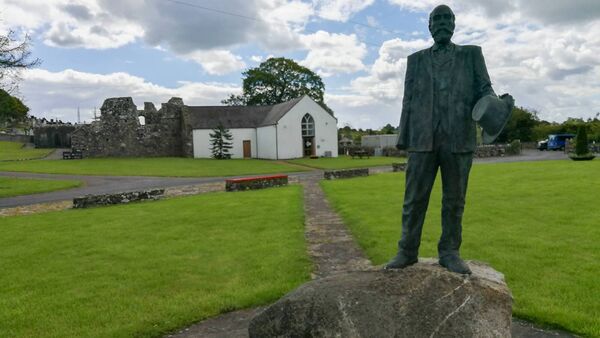
The Michael Davitt Museum in Straide
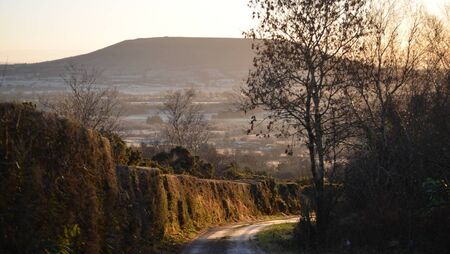
Michael Davitt may not be a son of the Ox Mountains but he is a son of the River Moy. He was born in a simple cottage on the banks of the river in Straide on March 25, 1846, at the height of the Great Famine. He was the eldest child of Martin Davitt and Catherine Kielty.
Michael faced challenges from the very start of his life and the story of how he overcame these challenges is quite amazing. Worthwhile movies have been made about lesser mortals and why Davitt hasn’t yet featured in such a portrayal is a mystery to me.
The Davitt family survived the Great Famine reasonably well, and over the next four years, Catherine gave birth to three more children. The family were however running out of time - and their ability to pay the rent - and finally, they were evicted from their small holding. This displacement sent them towards the local workhouse at Swinford. Here they faced the prospect of further hardship and the their family being broken up.
By all accounts, the Davitt parents were no ordinary people and, in every crisis, they showed resilience and a will to survive against the odds. In one final effort to keep her family together, Catherine made the decision to walk her family to Dublin in the hope they might catch a boat to England. The family survived the trek and did eventually make their way to England, settling in Haslingden in Lancashire.
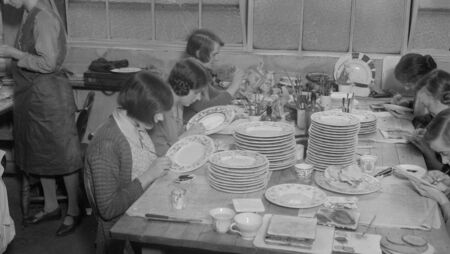
In Haslingden, the family were able to get work and humble accommodation. In Lancashire, the Industrial Revolution was in full swing and, while badly paid in poor conditions, work was plentiful. Michael got the opportunity to attend school locally and showed considerable promise. However, at the age of nine, he was asked to leave school and start work in an effort to help the family to make ends meet. By comparison, Davitt starting work at this age would be akin to a 3rd class pupil of today starting their working life.
At the age of 12, Michael lost an arm in an accident at the factory where he worked. To another, this would have presented a life-long infirmity but not to Michael, who seemed to possess his parent’s ability to survive in a crisis. He ended up returning to school, under the patronage of a Methodist, John Dean. He eventually left school at the age of 15 and was able to take up a good job in the Post Office. With an appetite for work and further education, Michael continued to build his skill set and his ambitions.
By the time Michael Davitt left Straide, he had seen enough hardship to impact him for the rest of his life. He was particularly moved by the plight of poor Irish tenant farmers and the injustices of landlordism. In industrialised England, he found a similar situation; poor workers and wealthy factory owners. Merging his education and his growing political influences, Michael was poised to make a positive and lasting impact on land ownership in Ireland.
In 1865, aged 19, Davitt joined the Irish Republican Brotherhood (IRB). He quickly became a key member of the organisation, building support in both England and Scotland. Australian historian, Noel McLachlan, highlights Davitt’s activities through the following years.
Davitt spent six and a half years at Dartmoor Prison. Breaking stones and labouring in the outdoors in winter severely damaged his health - and remember, he only had one arm. On December 18, 1877, he was released and was hailed as national hero when he reached Dublin in January 1878. McLachlan continues:
The Land League
While Davitt helped to organise the Irishtown meeting, he could not attend in person as he was still under licence after his release from prison. Nonetheless, the meeting drew thousands of people who gathered to call for fair rents and an end to forced evictions. The meeting had a major impact as it led to eviction notices being withdrawn and rent reductions of up to 25%. The success of Irishtown marked a turning point in Irish social history, proving that a public demonstrations could bring about real and lasting change for ordinary people.
After the success of the Irishtown meeting, further land reform gatherings proved inspirational and just a short while later, in October 1879, the National Land League of Ireland was established in Dublin. The League’s central aims were based on the “Three F’s”: fixity of tenure, fair rent, and free sale of land.
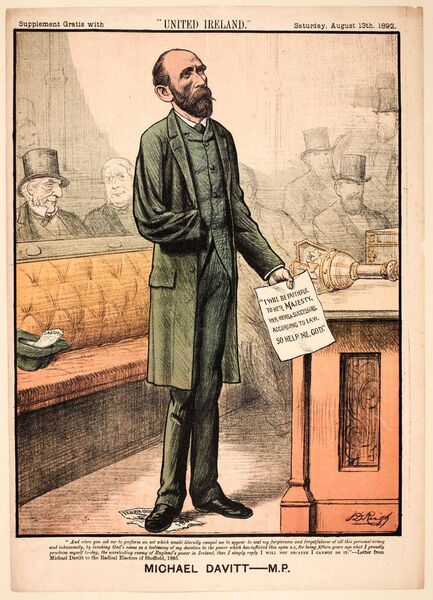
At the comparatively young age of 35, it seemed that Michael Davitt’s work was done. However, he continued his political activities and was elected as a Member of Parliament on three separate occasions between 1892 and 1895 - a testament to his perseverance and the respect he earned among the Irish public.
Davitt was also a strong advocate for workers’ rights and his lifelong commitment to social justice earned him recognition as a humanitarian and a reformer. He was one of the founding patrons of the GAA and was also a patron of Glasgow Celtic Football Club, which was established to support Irish immigrants living in Glasgow. It is widely believed that he suggested the club’s name, 'Celtic'.
Davitt was also an early subscriber to the when it was founded in Ballina in 1883.
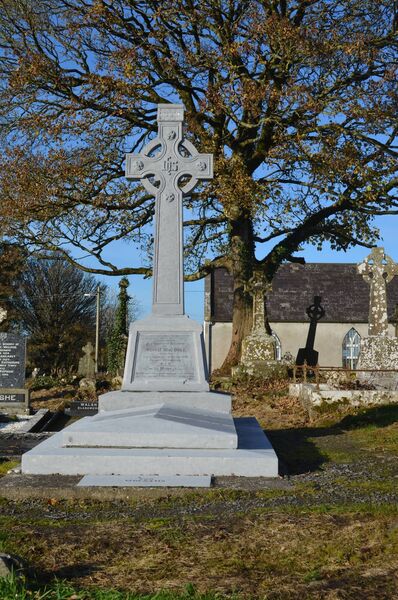
Michael Davitt passed away in Dublin on May 30, 1906, he was only 60 years of age. At his own request, his funeral was intended to be private but despite this, thousands of people came to pay their respects. Davitt was later laid to rest in the grounds of Straide Friary on the banks of the River Moy.
Some of the information included here was provided by the Michael Davitt Museum. Nestled in the picturesque village of Straide, the museum offers an enchanting experience for visitors of all ages. Please include it on your list of things to do this summer.