Split-season model remains the way to go
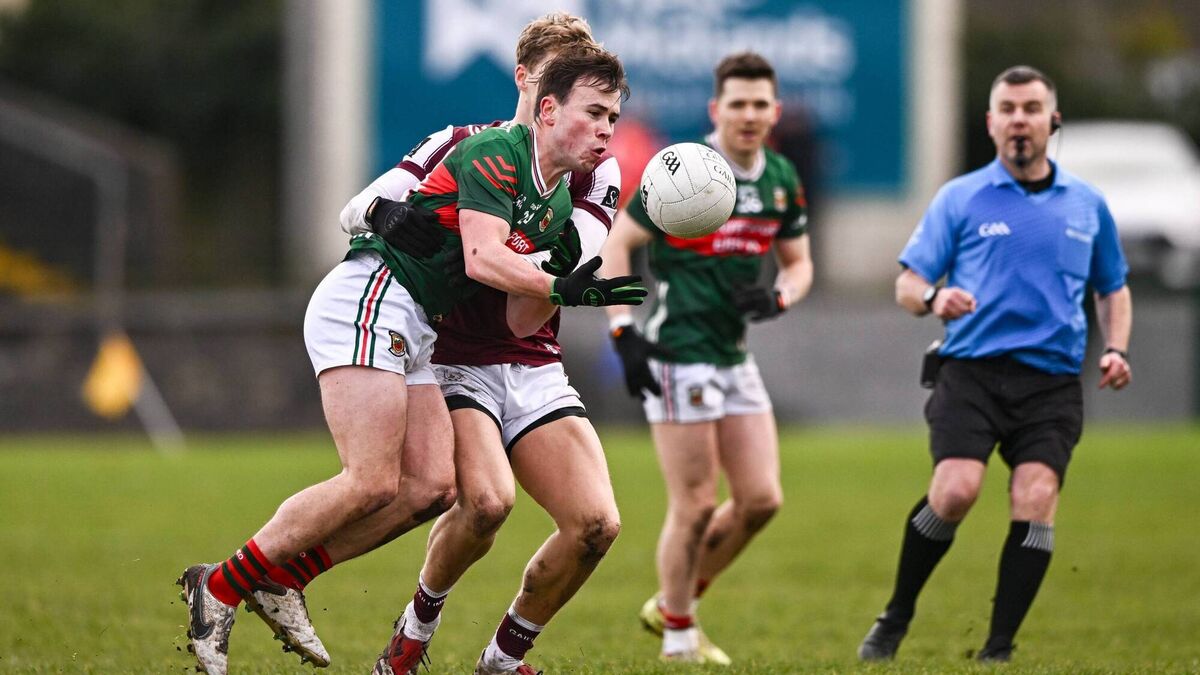
Mayo's Paul Towey of Mayo in action against Galway's Cian Hernonduring the FBD Connacht League final match earlier this season. Pre-season competitions like the FBD League are more eagerly awaited with the split season model. Picture: Ben McShane/Sportsfile
The GAA is a curious organisation in many ways, not least in the way that debate around the structure of the season absorbs such a large chunk of time and energy.
Opinions are strong on how things should play out over the course of the year and positions have only become even more entrenched in recent years with the advent of the split season.
Last weekend's GAA Congress at Croke Park saw discussion around a proposal to extend the inter-county season slightly, meaning the All-Ireland football final would take place in mid-August and it’s hurling equivalent at the end of July.
The motion was well-intentioned and the idea of having a little more breathing room for the marquee fixtures in the year makes sense on many levels.
The motion failed to grasp two things, however: how well the split season is working in the eyes of many stakeholders and the value many stakeholders now place on pre-season competitions.
For those reasons, and others, it didn’t even make the floor for a vote given the lack of support and, for that reason, the constant chatter about changes to the calendar should be put to bed for the foreseeable future.
Moving the All-Ireland finals to a July date off the back of the Covid pandemic was a major move for an association that had a real sentimental connection to the month of September which staged those big games over many decades.
Because of their presence in that part of the calendar for so long, they became a staple of not just the sporting schedule but were a significant date in wider Irish life. Familiarity with that is difficult to break, but the need to address the imbalance towards the clubs around the country justified the change.
Like any major alteration, it is taking a while to get used to.
The two finals taking place within the space of a week at the end of July is not perfect by any stretch, but it’s not like these games are any less important because of when they take place.
Similarly, there is no evidence to suggest that there are negative financial consequences; in fact, as pointed out by Colm Keys in the Irish independent recently, the GAA took record gate receipts from the championships in 2025.
One argument that is put forward is the lack of promotion for the games, given there isn’t the breathing room there once was to build-up to an All-Ireland final.
It’s true that there isn’t as much time, but it’s also true that there is much, much more promotion of those games and indeed Gaelic Games in general than there was in the past.
Compare today’s media landscape to even 20 years ago: online coverage has exploded, social media is a huge driver of engagement with young and old, there are dozens of GAA podcasts each week available to listen to and traditional media, such as TV, radio and newspapers, continue to do their bit. There has never been more coverage of the sport and, for those interested, there has never been more to consume.
Others advance the notion that not having the finals in September removes the GAA-school link, particularly for the county that wins the All-Ireland and can travel around to schools with the Sam Maguire or Liam McCarthy over the following weeks. In my opinion, the benefit of this is overstated and, in any case, only two counties a year get to experience that winning feeling.
Of more benefit to schools is the rollout of coaching programmes, such as the CDO programme Connacht GAA has introduced in recent years.
This initiative has the potential to have a powerful impact on clubs all over the province. In conjunction with Connacht GAA, clubs can engage the services of someone for a relatively modest fee to carry out coaching in schools within their parish area on a weekly basis.
In getting someone in to do that, it helps foster a stronger school-club link and develops players for underage and nursery teams. Clubs have started to notice the benefit of such programmes and, to that end, it was no surprise to see so many CDOs signed up for the coming months to go to schools and clubs all around the province.
Of course, initiatives like that need to be financed and one avenue through which the provincial councils can raise revenue is the holding of competitions, such as the FBD League and other pre-season tournaments.
To be fair, those campaigning for their removal make a lot of sense with their arguments. They do put something of a load on one group of players in particular: those playing with their colleges in Sigerson, Fitzgibbon and other third level competitions.
It is a particularly frantic time of the year, with the national leagues now starting in the last week of January too. So the demands on players are huge at that time of the year in particular.
However, the reality is that even if the pre-season competitions were removed, counties would still play challenge matches in their place.
Why not, in that case, give players a chance to play in front of a decent crowd and test themselves in the inter-county arena in a semi-competitive fixture?
The fact that the fixtures are barely above challenge match level also means that those players with a heavy load don’t necessarily need to be slogging it out week after week in December and January. Management teams can work together to ensure a player’s load is managed effectively - and in many cases that is already happening.
It also gives a boost to county and provincial coffers, gets the juices flowing for supporters and players alike and removes a logistical headache for county management teams in organising challenge matches.
The GAA calendar will never be perfect but, to me, the current structure does the best job in ensuring existing competitions retain a place in the calendar and clubs get adequate oxygen to enjoy the business end of their seasons as summer turns to autumn.
With the discussion having taken place over recent weeks among delegates across the country, the matter should be at an end for now.
Now, let’s talk about the action on the field!