Carne is no longer golf’s best kept secret
Golf Digest's latest ranking of the World's 100 Greatest Golf Courses placed Carne Golf Linksat 63 in what is the debut appearance of the Belmullet course on the list.
If you keep driving west through Mayo, eventually the road runs out and the Atlantic takes over. And somewhere near that handover, among the towering dunes and the restless edge of Europe, sits one of the world's greatest golf courses. As of late last month, that is no longer merely the opinion of golfers who have made the pilgrimage to Belmullet. Golf Digest's latest ranking of the World's 100 Greatest Golf Courses placed Carne Golf Links at 63 on its debut appearance on the list.
Most courses spend years climbing these lists. They arrive tentatively, establish a reputation and gradually edge their way upwards through successive editions. Carne appears to have skipped the apprenticeship altogether.
For years, the North Mayo course has occupied a curious place in Irish golf. It was famous among those who had played it and largely unknown among those who hadn't. Every golfer who made the journey seemed to return home sounding less like a customer and more like an evangelist.
And while the ranking has not transformed Carne, it has informed the rest of the world what a relatively small congregation of believers have been saying for years.
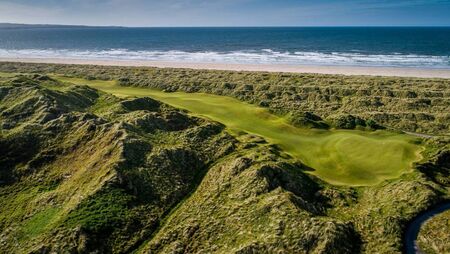
When the renowned architect, Eddie Hackett, arrived on the Mullet Peninsula in the early 1990s, he encountered a landscape so extraordinary that the temptation to improve upon it would have bordered on vandalism. So rather than unleash fleets of machinery upon the dunes, he employed local farmers armed with little more than shovels and rakes. The objective was not to conquer nature but to uncover the golf hidden within it. Hackett had recognised a truth that only the best architects discover: sometimes the wisest intervention is restraint. He had figured out that the dunes themselves were the masterpiece.
A year later, American architect Jim Engh recognised the same potential in the vast stretches of untouched dunes that remained. The additional holes he routed through the landscape, later completed and refined by Ally McIntosh, helped create the Wild Atlantic Dunes course that now draws visitors from across the globe. Yet the philosophy remained unchanged. The landscape always came first.
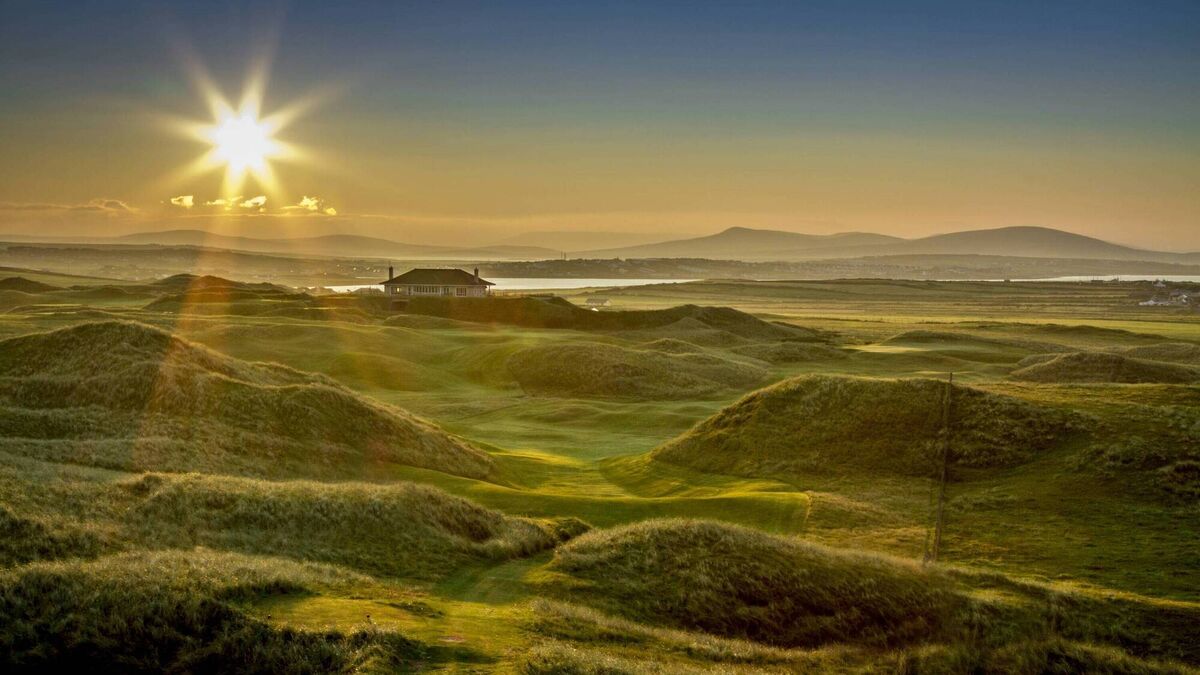
Fairways disappear into valleys before re-emerging on distant ridges. Greens seem less constructed than discovered. Standing on certain tees, it feels less like a golf course than a geological hallucination. The course did not suddenly become one of the world's finest links when Golf Digest published its rankings.
It was one all along.
If Carne was always this good, the obvious question is why it took so long for the world to notice.
The answer may have less to do with golf than geography.
Ireland's most celebrated links courses tend to cluster together in packs. Along the southwest coast, golfers can bounce from Ballybunion to Lahinch, from Waterville to Old Head, collecting world-class experiences the way children collect shells on a beach. Further north, Royal County Down, Royal Portrush and Portstewart form another triumvirate of golfing royalty.
Carne belongs to neither conversation.
It sits on the Mullet Peninsula, beyond the established routes and beyond the well-trodden itineraries. Belmullet is not somewhere golfers pass through on the way to somewhere else. Belmullet is the destination.
Reaching the first tee at Carne requires a certain degree of commitment. The road to Belmullet feels endless at times, winding through stretches of bogland that seem entirely at odds with the modern world's obsession with speed and convenience.
And golf tourists, particularly those visiting Ireland for the first time, tend to be creatures of practicality. When a week-long trip can comfortably accommodate Ballybunion, Lahinch, Waterville and Tralee, there is an understandable temptation to stay within that celebrated corridor. The same logic applies in the North and the east coast.
Carne has had to build its reputation the old-fashioned way – one golfer at a time.
No amount of marketing can replicate the power of a recommendation delivered by someone who has stood atop those dunes and struggled to find adequate words for what they have seen. Carne’s reputation spread through conversations, clubhouse bars and golf societies. It travelled by word of mouth long before it travelled through rankings.
And perhaps that is why its arrival in Golf Digest’s rankings feels so satisfying. The golfing world simply kept hearing the same story from too many people for too many years.
Eventually, it had to go and look for itself.
Recognition has a habit of changing the conversation. The pertinent question now is what comes next.
The obvious obstacles have not disappeared. Belmullet remains gloriously remote. Hotel capacity is finite. We won't see dual carriageways built in North Mayo anytime soon. Big tournaments require infrastructure every bit as much as they require spectacular landscapes.
Nobody is suggesting The Irish Open is about to pitch up on the Mullet Peninsula next summer.
But for years, similar conversations surrounded Portmarnock. The course possessed the pedigree. The setting was beyond dispute. Yet discussions inevitably drifted towards logistics and infrastructure. Now it finds itself spoken about as a potential future Open venue. The conversation changed because people stopped asking why it couldn't happen and started asking what would be required to make it happen.
There is a lesson in that.
Great sporting venues rarely attract major events because every condition is already perfect. More often than not, the conditions are cultivated because somebody decides the opportunity is worth pursuing.
Perhaps Carne has reached that point.
An Irish Open in Belmullet may still feel like a distant dream. The practical challenges are real and substantial. But the opportunity still cannot be ignored.
For four days a global audience would watch golf. But long after the final putt drops, they would remember the backdrop.
Perhaps that day never comes. Perhaps Carne's greatest strength will always be its relative isolation, its freedom from the crowds and commerce that often follow global recognition. There is merit in that approach, too.
But there is also something appealing about the area daring to think bigger. For decades, Carne's remoteness was viewed as an obstacle. Increasingly, it looks like its greatest asset.
Golf Digest's rankings is not a finishing line. It is an invitation – an invitation to think bigger, to plan further ahead, to imagine television pictures of the Atlantic crashing beyond those dunes and millions of viewers asking where this extraordinary place might be.
Carne has spent decades proving it belongs on the world stage.
Perhaps now the stage itself needs to come to Mayo.