Where is this generation's safety net?
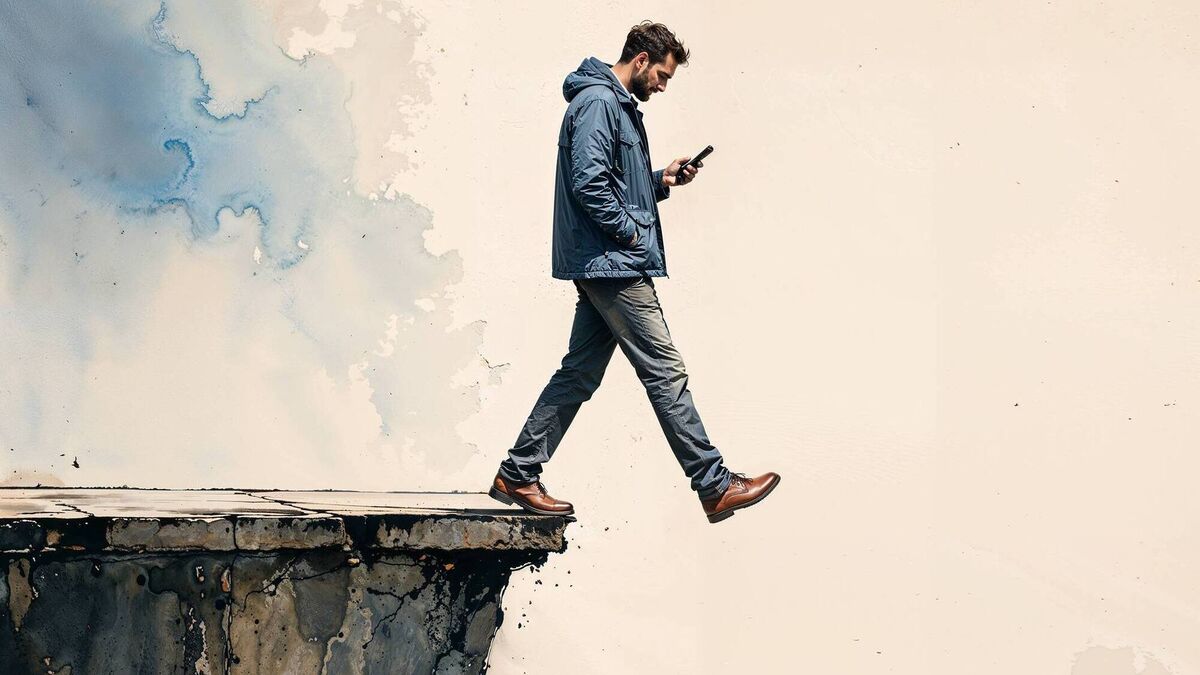
Every generation shapes its emotional life around the size of the net beneath it. Illustration: Conor McGuire
My grandmother bought homemade country butter. Not because she was excessively fond of it, but because there’d been a time, in not so ancient history, in her living memory, when you couldn’t get it - Post-Independence and then Emergency Ireland, the 1940s, when the country ran on ration books, and barely concealed anguish, and a pound of butter was something you planned your week around. She never quite stopped treating it as precious, an indicator of plenty. Even in the 1970s, when the supermarket shelves were already groaning, she’d send my Aunt Mona, only recently deceased, past Enniscrone into the Yeatsian fields of Skreen, for a supply, one for immediate use and one to put away. Just in case. I thought it was endearing, if not a little eccentric. Now I think it represented a wound that never properly healed.
There’s a pattern I’ve been turning over lately, the kind of thought that starts as a vague unease in the back of the mind and ends up following you around the house. It seems to me that every generation shapes its emotional life around the size of the net beneath it, not the net it was promised. The net it actually felt. The net that was there on the day the thing went wrong. And right now, for the generation coming up behind us, that net is getting very small indeed - even as another online net, vast and sparkling and essentially weightless, pretends otherwise.
Start at the beginning. The Emergency generation - the people who ran this country through the 1940s and into the 1950s - didn’t just live through scarcity. They were made by it. Rationing wasn’t a wartime inconvenience over here; it was a wholesale reorganisation of how you understood the world. Tea was rationed. Bread was rationed. Petrol vanished. The cattle went to Britain, and we made do with what was left, which wasn’t much. A generation came of age believing, at some cellular level, that plenty was temporary and want was the default. That the good stretch never lasted. That you saved because, of course, you saved, because what kind of fool wouldn’t?
We used to call that sensibility thrift, good husbandry, as if it were a personality trait they’d consciously nurtured, almost like a hobby. But it wasn’t a choice. It was a scar.
After came the generation that rebuilt and reinvented, my parents and others, who sent their children to school and university, who laid and paid for the incremental, unglamorous but solid architecture of modern Ireland. We, the fortunate children of that generation, were more educated than our sacrificing parents, more mobile in employment, and more willing to ask awkward questions. But they were still careful, carrying the knowledge of how quickly a functioning society could buckle under unexpected economic hardship. They left comfortable margins and read the small print while investing in sensible pension plans, and thought anyone who didn’t was a fool or just reckless. They weren’t wrong. They were just carrying a knowledge that their children were lucky enough not to have.
And then arrived the heyday of the 1990s and early 2000s. The children of the relatively comfortable decades, raised in the era of electrification and television and eventually the extraordinary, disorienting lunacy of the Celtic Tiger. The net, by the time we came to test it, seemed not just solid but infinite. We changed careers mid-stream. We took gap years. We moved to cities where jobs lined up, started businesses on overdrafts, bought big houses that, with hindsight, we probably should have thought harder about. But why not? The net was there. It felt like it was there. We assumed - and this is the word that matters, - that something would catch us if we fell.
Some of us fell quite hard and still got caught, more or less. The 2008 crash proved a stark reminder that nets have limits, and that the Celtic Tiger had been partly held together by blinkered optimism, stuffed brown paper envelopes and developer-biased planning laws. But even that sobering episode felt survivable. The state wobbled, bent, took the Troika’s phone calls, and eventually steadied. The assumption - that the floor was still there somewhere - survived, bruised yet intact.
Now look at what’s been handed to the young people coming up behind us.
They arrived into adult life having already lived through two serious spasms before many of them had a steady job or a clear sense of what their future looked like. The 2008 crash changed their parents' lives while they were still in school. Then the pandemic rewrote the rules of work, society, and physical space just as they were trying to establish themselves in it. And climate change, an issue not going away any time soon, means they're the first generation in Irish history to grow up with genuine existential fear baked into the curriculum from primary school onwards.
This observation raises the question about what happens to a society when its young people stop believing the net is there. Not when they take risks and fall, which is normal, survivable, and even, sometimes, productive. When they stop any taking any risks at all. When the adventurousness that we always assumed was just youth, just the natural fearlessness of being 23 and unencumbered, turns out to have been, all along, a product of security rather than its absence.
Because real adventure - civilisation-building adventure - requires a floor. People start companies when they believe failure won't destroy them permanently. They have children when they believe the world is stable enough to raise them in and the state is capable enough to help. They create, dissent, experiment, move, try the thing that might not work - all of that requires something beneath it. Some minimum assurance that the fall won't be fatal.
My grandmother sought out and treasured artisan butter because the post-Civil War era and the Emergency had written something into her nervous system. The 40-plus years of relative plenty couldn't erase this sensibility, and she couldn't help it. The experience of want had got in early and stayed as an indelible scar.
I think about what's being written into this generation's nervous systems. What reflexes will they carry forward? What their children will find endearing and slightly inexplicable about them in 30 years - assuming the conditions improve enough, by then, for children to seem like a reasonable idea.
The people with the power to expand the net again - in government, in planning, in the institutions that shape what ordinary life actually feels like - need to understand what they're really deciding. Not a housing policy. Not a cost-of-living adjustment. The entire interior architecture of a generation. Their capacity for hope. Their appetite for the glorious, necessary, civilisation-advancing risk of trying.
You can't legislate for generational courage, but you can maintain and extend the floor that makes it possible.
We did it once, slowly and imperfectly, out of the wreckage of the Civil War and the Emergency. We could, if we chose to, remember how.