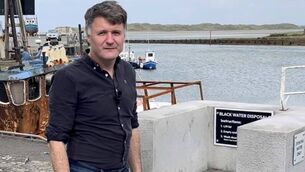
‘Solution to housing crisis is in the West’
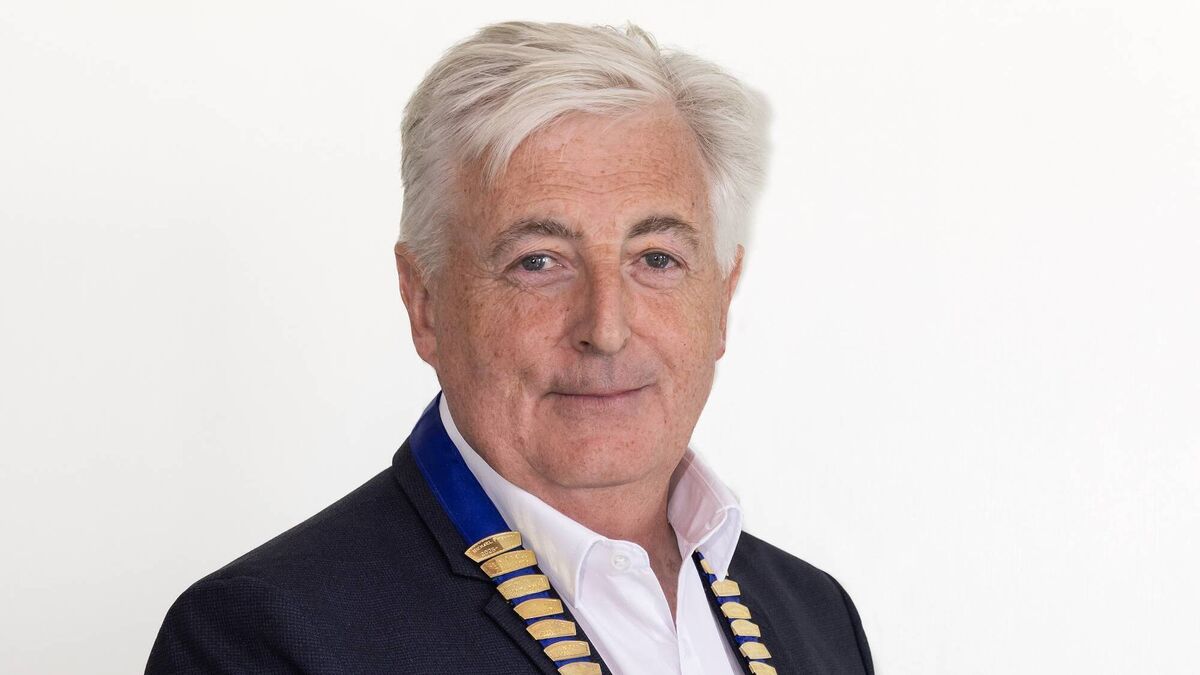
Mayo native Michael Prenty is the chair of the Irish Home Builders' Association.
Ballyglass native and national housing industry leader Michael Prenty believes the key to Mayo’s future lies not merely in housing targets but in jobs, connectivity and long-term investment in the west.
Michael is the chair of the Irish Home Builders' Association and works as the Director of Residential Operations with the Ballymore Group.
Having grown up in Newbrook, Ballyglass, while also witnessing at close quarters the rapid development of the east coast during his career, Michael argues a sea change in Government outlook is needed. He believes the west has long been overlooked in national development policy, with jobs, infrastructure and housing investment concentrated heavily around Dublin and other major urban centres.
“Employment is the key. That’s why everyone is in Dublin. It is not because we’re building homes for them and the jobs follow; it is because the jobs are there and then the housing is needed,” he told the . “The west of Ireland should be kicking down the door of government and the IDA to create more employment here. If politicians will demand it, the solutions are in Mayo."
Michael sees the extension of the Western Rail Corridor from Athenry to Claremorris as a key piece of infrastructure for greater connectivity and believes Claremorris is uniquely positioned to become a transport and employment hub because of its connections to population centres like Galway, Sligo, Athlone and Castlebar.
“The potential connectivity is there. The reopening of the Western Rail Corridor to Claremorris (from Athenry) is a major solution and Claremorris can become a hub. You can connect with Galway, Sligo, Athlone and Castlebar.
“Broadband is largely there. Incentivising the creation of more employment here is what needs to be done.
“To open the Western Rail Corridor will cost a fraction of what is being spent on the Metro in Dublin. At the moment, driving from Claremorris to the centre of Galway City – you’d be in Dublin as quick.
“If Mayo is going to get going, there are a few things they need to do. Broadband and rail are key. The road network isn’t bad but the current Government and TFI (Transport Infrastructure Ireland) don’t seem to want to build roads. Employment is so central.”
Michael pointed to Athlone as an example of the kind of regional development that could transform areas outside Dublin. Ballymore founder Seán Mulryan has outlined ambitions for Athlone to become Ireland's first ‘green’ city by 2040.
“Seán’s thing is that Athlone is central. You have connectivity there and you can have Sligo, Galway and Athlone working together.
“We’ve had a good few meetings with Government and they say it is a great idea but that’s all it is now. We need the Government to back it. There is money in Europe for all of this. Why not have a crack at it,” he said.
Despite spending much of his career in the east of the country, Michael’s connection to Mayo remains strong and he said that the county possesses many of the ingredients required for growth if government investment and employment opportunities can be secured.
He is a believer in the ‘build it and they will come’ philosophy and said it was important to be able to give the IDA plenty to attract potential employers.
“If you have a plan for development, then the IDA have something they can sell. Having seen what has happened in the greater Dublin area and what has and hasn’t worked, you could put together a great plan for the west of Ireland.”
While Michael believes employment is the key to Mayo’s future, he also argues that the Government’s recent loosening of one-off housing rules will not solve the county’s long-term housing challenges. He is not against one-off housing but argues ‘there needs to be a balance’.
He cites the costs of servicing one-off houses with sewerage, water, electricity and roads. Having grown up in rural Mayo, Michael argues that concentrating housing around villages can help sustain local schools and services while bringing new life into rural communities. Rather than dispersing families across large areas, he believes village-centred development can create the critical mass needed to support local amenities.
“If you could have a cluster in smaller towns and villages and where people could buy a serviced site for €30,000 or €40,000.
“I recall a similar approach in Ballymore Eustace and initially there was resistance locally but now it has worked out so well and the new people have brought great energy to the place and also ensured the growth of the community.
“One-off housing for the farmer’s son or daughter is okay where there is a one-off need but I think a cluster of houses in a village that can be serviced, can keep numbers in the local school and bring energy to a place, I’ve seen first-hand how it can work,” he said.
With Ireland’s population projected to increase by one million by 2040, Michael believes counties such as Mayo can accommodate much of that growth if development is planned properly.
However, he argues that housing delivery is already lagging behind what is required and that growth has not yet been distributed around the country in the way envisaged under the National Planning Framework.
He is also critical of lengthy planning processes and says utility providers such as Uisce Éireann and the ESB are under significant pressure, creating further barriers to housing delivery.
“The Government have a massive problem in housing. The national planning framework encourages only half the houses being built to be in the greater Dublin area and the rest in the rest of the country. Relaxing one-off housing might get them to increase the number of houses they are getting in the rest of the country but I am not sure that is the solution either.”