What have the Americans ever done for us?
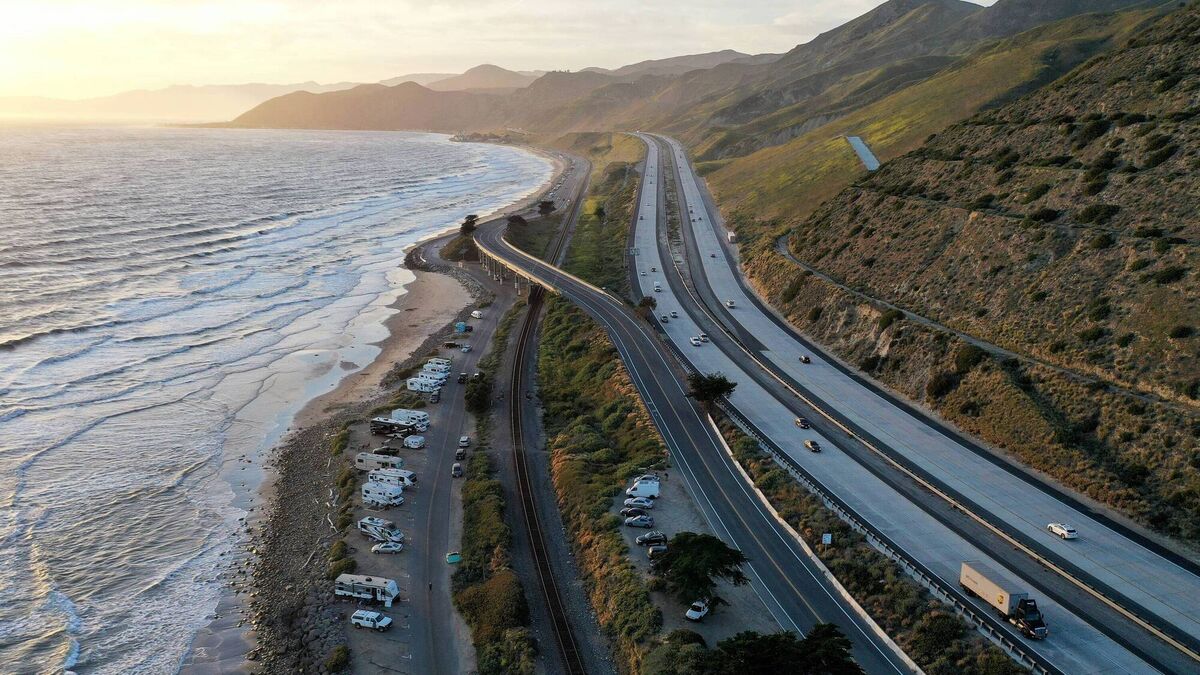
Wedged between ocean, mountains and desert, California must have seemed like paradise to the first Europeans who arrived. The Pacific coast, particularly as you head north, is genuinely spectacular. Picture: Mario Tama/Getty Images
In defence of a country I’ve spent the last year criticising.
There is a famous scene in Monty Python’s iconic film where John Cleese’s character, Reg, convenes a secret meeting of the 'People’s Front of Judea', a group dedicated to overthrowing the Roman occupiers. He opens with a rallying cry:
“Right. What have the Romans ever done for us?”
A pause. Then, reluctantly, someone pipes up: “The aqueduct.”
Reg sighs. “Oh yeah, they did give us that.”
What follows is a slow, comic unravelling of righteous indignation as the group is forced to admit one by one that the Romans also brought roads, sanitation, public order, irrigation, medicine, education and wine. By the end, Reg - exasperated and defeated - shouts:
“Apart from the sanitation, the medicine, education, wine, public order, irrigation, roads, the fresh water system and public health... what have the Romans ever done for us?”
"Brought peace," comes the reply.
Reg glares in defeat: “Oh peace... Shut up!”
Flying home from Los Angeles to Mayo for Christmas with my wife, I found myself thinking about Reg - and about the many messages I received from readers in the past year who felt I have been a little too critical of America at times and of my experience living there. And perhaps they were right.
So, on an Aer Lingus flight, at 35,000 feet over the Atlantic, a modern-day Reg with a Mayo accent asked, what has America done for us?
The first answer is obvious: the weather.
Growing up in the west of Ireland, waking to a blue sky was a novelty. In Los Angeles, it’s the default setting. The psychological impact of that cannot be overstated. Sunlight changes how you wake, how you think, how you move through a day. It lifts people. It softens interactions. It makes life feel, if not easier, then at least lighter.
California’s climate - dry, warm, largely non-humid - lacks the oppressive heaviness of places like Florida. Even when temperatures climb into the thirties (and occasionally beyond), it’s tolerable. And for those who find it too much, escape is built into the culture: mountains, desert, coast, all within reach.
Then there is the scenery. Wedged between ocean, mountains and desert, California must have seemed like paradise to the first Europeans who arrived. The Pacific coast, particularly as you head north, is genuinely spectacular. Fertile land, fruit trees, vast agricultural output - it is no accident that California feeds much of America. It is a place with natural abundance written into its geography.
Then there are the people.
I have been critical - often - of certain behaviours in Los Angeles, particularly around cars, entitlement and social breakdown. But that is not the whole story. When Americans are encountered outside those pressure points - off the road, away from screens and transactions - many are open, kind and curious.
Take somewhere like Trader Joe’s supermarket. These grocery store staff are friendly in a way that feels less forced than the stereotype of American customer service. They chat. They listen. They seem, genuinely, in good humour. And more broadly, when Americans talk, they talk plainly. There is less second-guessing, less coded language, less of the Irish instinct to hedge and soften every opinion for fear of being judged.
That openness extends into professional life. In the film industry especially, I was struck by how unembarrassed people are about saying what they think - about you and about themselves. It can be blunt, even jarring, but it is refreshing. You are rarely left guessing.
And then there is money.
This is perhaps where Irish discomfort is most pronounced. In the west of Ireland, we are often embarrassed about asking to be paid, promoting our services, or stating our worth. Americans, by contrast, have no such scruples. If they provide a service, they expect to be compensated - and they will say so without apology.
There is something to be learned in that. Monetising skills, running courses, charging for expertise - these are not seen as morally suspect acts. And nor should they be. Charity matters, yes, but so does feeding your family. Too often in the Irish arts and entertainment industry we are encouraged - subtly - to do good work for free, “for the CV”, for-profit share and often indefinitely.
Related to this is America’s comfort with self-promotion. Irish people are raised to fear begrudgery, to keep the head down, to avoid “notions”. Americans are taught the opposite: if you don’t say what you’re good at, if you don’t believe in yourself, why should anyone else believe in you?
It can go too far, of course. But the underlying logic is sound. Confidence is not arrogance by default. Sometimes it is simply clarity.
There are also structural things America gets right. Credit scores, for all their flaws, reward good behaviour. Manage your finances responsibly and you benefit through lower interest rates and better opportunities. Rental histories protect good tenants and good landlords alike. Systems exist that remember trustworthiness - something Ireland still largely relies on informal references to do and often leaves Irish landlords and employers guessing or forced to use informal systems of referral which can discriminate against new arrivals or unconnected introverts.
Finally, there is the hardest question of all: democracy. Without the United States the world is likely to be in a worse place, bad and all as it is now.
Yet, America has taken enormous flak in recent years - much of it deserved. Mass shootings. Iraq. Afghanistan. Trump. January 6th. Corruption. The shredding of norms. The hollowing out of institutions. By any reasonable standard, the claim that America is “the greatest democracy in the world” has sounded increasingly hollow.
And yet... Watching from within, something else is visible. Institutions are fraying, but many are holding. Courts, states, even members of Trump’s own Republican party have pushed back. Gerrymandering has been resisted in places it could easily have been abused. The system is under extraordinary strain, but it has not (as yet) collapsed. Mobilisation of citizenry in massive public and peaceful protests is happening without authoritarian clampdowns, such as the ICE or 'No Kings' demonstrations.
History tells us many democracies have failed under far less pressure. If, by the end of this turbulent period, power transfers peacefully once more to Donald Trump’s opponent, it may force a reassessment. America’s democratic ideal, battered though it is, may yet prove more resilient than its critics - and perhaps even its defenders - expect.
Which brings us back to Reg and what have the Americans done for us?
Quite a lot, it turns out. But the more urgent question now may not be what America has done for the world, but what Americans will do for themselves in the coming weeks, months and years.
We wait, like everyone else, to find out.
In the meantime, I wish you my readers a happy and peaceful Christmas and thanks for your attention in the past year.