We need to start caring about the carers
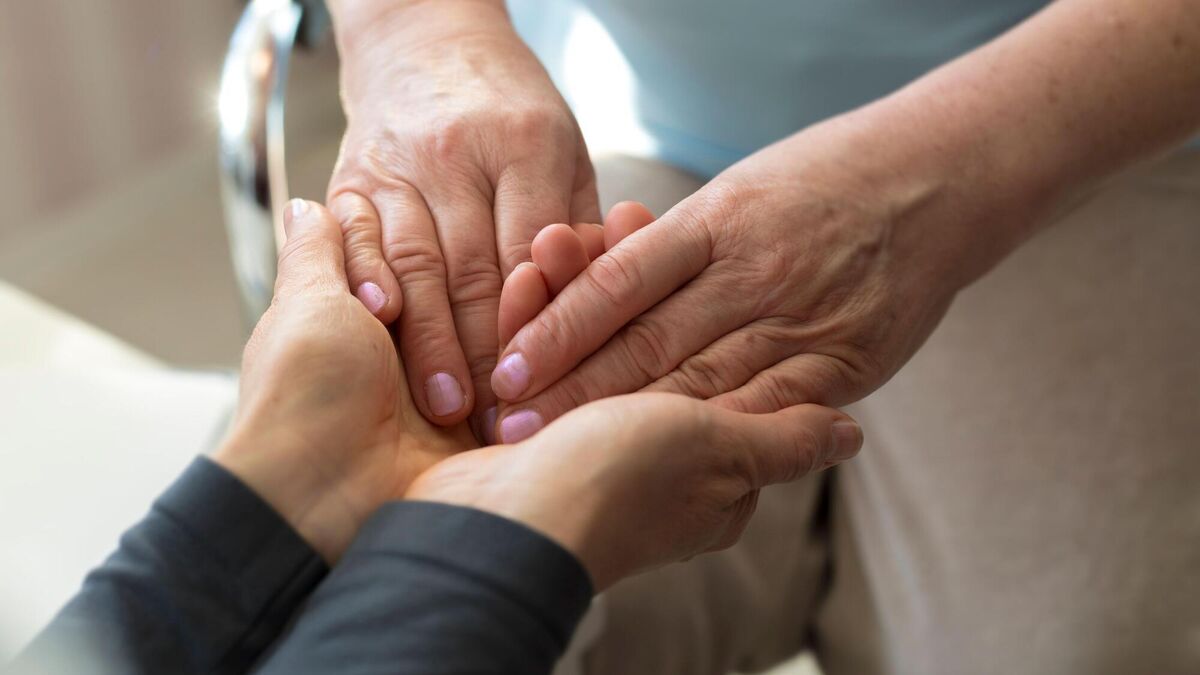
I have a friend, let’s call her Mary, for the sake of anonymity. She hasn't slept properly in two years as her mother has Alzheimer's, and Mary has become an expert at interpreting the particular pitch of noise that means her mom has tried to make tea at 3am again.
"Well, I'm managing," Mary intones thoughtfully, which is what people say when they're at their wits' end, and afraid sympathy will trigger a deluge of tears. She's in her early sixties and has given up her job because she couldn't manage the hours, and she's watching her savings evaporate faster than her mother's mobility is declining.
Such is the unending reality for a legion of family carers in Ireland, and those numbers are steadily climbing, with one in ten adults looking after someone, often for more hours than anyone works in a paying job, and they're expected to do it while the structures supposedly supporting them creak and groan under the strain. Meanwhile, our politicians make sympathetic noises and, while the rest of us look away, because let's face it, thinking about ageing and dependency is about as appealing as checking your pension statement.
The care referendum in 2024 was supposed to be our moment to enshrine the value of care work in the Constitution. It failed, partly because the wording was a mess and partly because we couldn't agree on what we were actually voting for. But the conversation it started matters, because it has to. We've got one of the fastest-ageing populations in Europe, and our preparations for it have been roughly on par with those for the notorious banking crisis.
Three-quarters of family carers report that the people they're caring for don't receive adequate formal support. Nearly three-quarters have never received respite care – not a weekend, not a day, not even an afternoon to catch their breath. Two-thirds find it difficult to make ends meet because caring isn't just emotionally exhausting, it's financially catastrophic. The extra costs run to hundreds of euros a week with specialised equipment, medications, transport, and home adaptations. The Carer's Allowance, even after recent budget increases, pays €260 a week, which barely covers the basics.
The present means test is particularly savage and unforgiving. If your apparently well-heeled household earns more than €73,000, you get absolutely nothing, regardless of whether you're providing 24-hour care for someone with complex needs. These are ordinary middle-class families watching their hard-earned savings evaporate, one wheelchair ramp and adapted bathroom at a time, while also struggling to pay mortgages and finance their own children’s futures.
The home care sector is unevenly regulated, operating in a grey economy where standards vary wildly, and migrant workers, predominantly women from the Philippines, India, Eastern Europe, and Africa, are doing the essential work. They're over-represented in care roles, often underpaid, and frequently working without proper contracts or the requisite legal protection.
Many of these women remain undocumented, existing in a bureaucratic limbo where they're essential but invisible, valued but vulnerable. They're the ones managing the intimate, difficult work of caring, the washing, the feeding, the sitting up through confused nights. They're doing work that Irish society desperately needs but refuses to properly value or efficiently regulate.
In 2009, Ireland bizarrely stopped issuing work permits for domestic care workers, deciding the sector was well-represented, which was optimistic, if not bordering on fantasy. The reality is we need them urgently, but we've created a system that makes their situation precarious.

The government's recent move to allow up to 1,000 work permits for home support workers is certainly welcome, but it's woefully inadequate. We've got an ageing population, a cultural preference for home care over institutional settings, and a chronic shortage of trained workers. The mathematics aren't complicated, as we need significantly more people doing this work, and we need to make it a viable career option rather than something people fall into out of desperation or duty.
But even with migrant workers filling gaps, there simply aren't enough of them. The respite services are patchy, accessible if you know who to call, but difficult to navigate otherwise. It's become an arbitrary lottery where the high stakes are people's sanity, health, and financial survival.
Budget 2025 made some positive moves, increasing the Carer's Allowance income disregard, extending Carer's Benefit to the self-employed, and funding additional home support hours. These are steps forward, but tentative ones when bold action is urgently required. Family Carers Ireland has been calling for the complete abolition of the means test and the introduction of a Participation Income for carers by 2027. This would treat caring as the valuable social contribution it is, rather than as something done by people who lack other options.
There's also the persistent question of who does the caring, as overwhelmingly, it's women. The caring economy runs on unpaid female labour, and we've barely begun to reckon with what that means for women's careers, pensions, and financial security. Women already spend significantly more time on unpaid domestic work than men, and caregiving amplifies that historic disparity. The result is women with broken employment histories, reduced pension contributions, and economic vulnerability disguised as family duty.
What we need is comprehensive reform, with robust regulation of the home care sector, facilitating decent pay and conditions for care workers regardless of nationality; a statutory right to home care that doesn't depend on your county or your connections; and genuine respite provision that's accessible when families need it. We need to recognise care work as skilled labour, deserving of respect and proper compensation, whether performed by family members or paid professionals.
The alternative is what we've got now, where a legion of invisible people quietly burn out, propped up by an informal network of migrant workers, in a system that lurches from crisis to crisis.
Here's the thing that should keep us aged 50+ awake at odd hours. Our generation is next. We're the ones who'll be fumbling with the kettle at 3am, mistaking our children for people from 40 years ago, needing help with buttons and bathroom visits and remembering whether we've taken our pills.
The present elders are showing us exactly what's coming, and it's not encouraging. I'm already finding technology baffling in ways that would have been unthinkable a decade ago. And the system that's failing Mary and her mother? That's the same system that'll be failing us, except it'll be even more overwhelmed by then, even more underfunded, even more reliant on goodwill and invisible labour and people's daughters sacrificing their own lives. It's not comforting. Dying, I can make peace with – it's the spectre of declining competence beforehand that fills me with existential horror.
The thought of being the confused, frustrated person who needs managing, who's become a burden, who no longer recognises the people trying to help, is woefully depressing. Cheerful New Year stuff, I know, but perhaps that's the point. We half-century-olds need to think about this while we still can and possess the political will to actually fix it.
We in Ireland talk ourselves up about community and our prioritising vulnerable people, but our caregiving system reveals how hollow those claims become when they're not backed by practical support. We are asking families to shoulder enormous burdens while simultaneously making it nearly impossible for them to get help. We pride ourselves on being progressive, on punching above our weight, on our social conscience – but apparently not when it requires proper funding or structural change.
Mary's mother doesn't recognise her anymore, but Mary keeps going because the alternative for her is unthinkable. The State isn't coming to help, and the supports are fragmented, insufficient, and deliberately difficult to access. So Mary does what thousands are doing – she manages, she copes, and somehow survives.
The question is how long we expect her, and the invisible army like her, to keep doing it before the whole structure collapses. Because it will collapse, eventually. Systems built on invisible labour and good intentions always do. The only question is whether we'll do something about it before then, or after. Given our track record, I wouldn't bet on it.