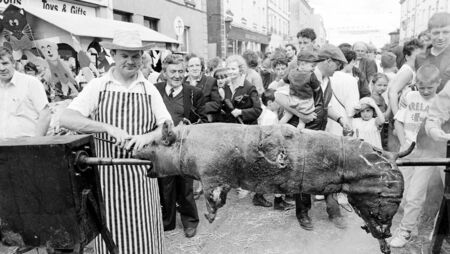
War pensions have always been a tricky issue
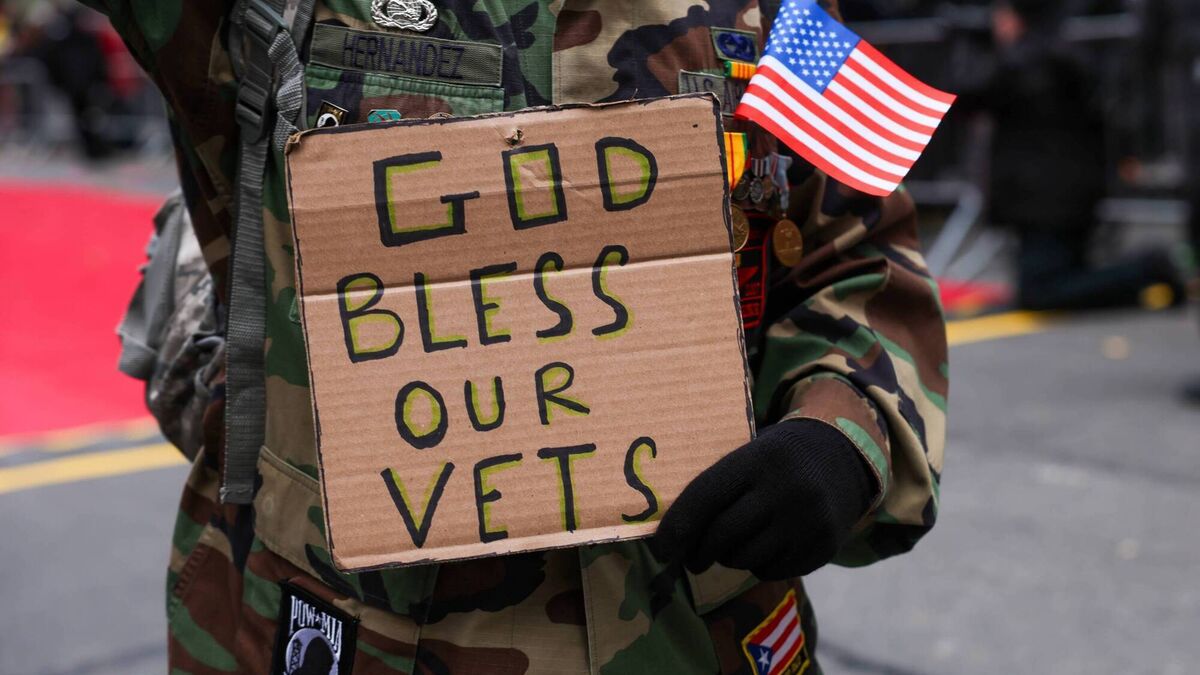
People participate in the 106th annual Veterans Day Parade on November 11, 2025, in New York City. Picture: Spencer Platt/Getty Images
On December 17, 1935, a farmer’s son from Ballycastle sat down to explain to the new Irish state why it owed him something for his patriotism during the Irish War of Independence and Civil War.
IRA veteran, Peter Kelly, filled out his army pension application in the plain, matter-of-fact tone of a man unused to asking anything of anyone. He had joined the Irish Volunteers in 1917, served throughout the struggle against the Crown forces and fought through the darkest years of the Civil War until the ceasefire. He slept on hillsides and in barns while on the run. His health, he said, was now so damaged that he was “not fit for manual labour”.
The personal cost was devastating. His brother was in jail. He was the only boy of the house. With him away, “no crop was made” on the family’s small farm in Muingelly. The cattle had to be sold just to keep food on the table. The infamous ‘Auxiliaries’ and later the National Army had raided his home, smashing everything and terrified his mother so badly “she has never left the house since”.
“I lost all I had," he wrote in a single, wrenching sentence — a whole life’s trauma compressed into five words.
Unusually for IRA veterans in North Mayo, Kelly was awarded a military pension. Most of his comrades were not so fortunate. For many, the gratitude of the State came down to little more than a stiff rejection letter.
That stark moral clarity - sacrifice in exchange for modest recompense - is worth holding in mind as we fast-forward nearly a century, to a very different veterans’ debate playing out, not on a hillside in Ballycastle but in the United States via YouTube and the pages of and .
If you follow my writings, you may know my fascination with the Caleb Hammer Financial Audit Show, a wildly popular YouTube channel in which Americans in financial distress volunteer to have their disastrous finances dissected in front of millions of viewers, in order to get better at budgeting.
Not infrequently, one of Hammer’s guests is a military veteran. And what’s striking is how consistently these veterans are in receipt of disability benefits from the US Department of Veterans Affairs (VA). These are not symbolic pensions - they can run to several thousand dollars a month, tax-free, for life.
Some of these veterans are working full-time. Some openly admit that their “disabilities” - headaches, tinnitus, back pain, sleep apnoea, even acne - don’t prevent them from living normal lives. Several mention being coached by consultants on how best to frame their conditions to maximise their payments. Hammer himself, who supports genuine cases of hardship caused during active duty in the military, has noted how routine these benefits appear to have become.
The impression - or at least the question his show raises - is whether the US disability system has drifted from compensating harm to compensating participation. Not “I was injured,” but “I served, therefore I’m owed something - preferably in dollars.” It is a far cry from Peter Kelly selling the family’s few cattle to survive.
Last October, ran a major investigative series suggesting “rampant exaggeration and fraud” within the VA disability programme. Veterans, it argued, were “swamping” the system with dubious claims.
The backlash was immediate and ferocious.
Veterans’ organisations and legal advocates accused the of misrepresenting the scale of fraud and ignoring the immense physical and psychological toll of two decades of war in Iraq and Afghanistan. predictably published a detailed rebuttal, arguing that the VA system is not lax but labyrinthine, a bureaucratic ordeal rather than an honour system.
Yet the numbers are staggering. The US will spend around $193 billion compensating 6.9 million veterans this year alone - a six-fold increase since 2001. Many conditions being compensated for, from migraines to mood disorders, simply cannot be measured with the certainty of a lost limb or a shrapnel wound. The cost of disability benefits for the Iraq and Afghanistan generation could reach between $1.3tn and $1.5tn by 2050.
The debate is emotionally loaded: challenge the system and you’re accused of attacking veterans. Indeed, in a rare example of bipartisanship nowadays, Republican and Democrat politicians line up behind military experts and the VA who describe the findings as “garbage”.
Ireland, in fact, has already lived through its own version of this moral tangle.
In the 1990s, thousands of Defence Forces members filed personal-injury claims for hearing loss. In earlier decades, they had fired rifles with nothing more than cotton wool or crude earplugs for hearing protection; proper protective earmuffs only arrived in 1994. The harm was real and well-documented even as claimants were subject to public ridicule and criticism.
The State reacted in full-blown panic with politicians predicting a catastrophic £1 billion bill. A whole civil service unit was created solely to process claims.
In the end, the “army deafness crisis” turned out to be modest by today’s standards. Yes, around 16,500 claims were made, but the eventual payout was about £300 million. The soldiers’ injuries were genuine and the claims proportionate. No one was claiming 30 years of tax-free income for tinnitus or having developed fungus on their toenails (yes, that happens).
If anything, the scare highlighted how historically reluctant Ireland has been to award compensation at all. Our instinct is still to think a soldier should “get on with it” unless she’s missing a limb. Whether that’s admirable, foolish or unfair is another debate entirely.
What is emerging in the US today feels culturally different. It is the product of a society where every discomfort has a monetary value, where consultants coach claimants in the “right language” to use in compensation applications and where public money is expected to function as an all-purpose balm for modern life’s difficulties.
Many veterans who appear on Caleb Hammer’s show aren’t claiming fraudulently; they’re claiming opportunistically, because the system - and the culture around it - invites them to. It’s not the villainy of the individual; it’s the logic of the environment. If they are entitled to a disability pension for life, should they not avail of it?
And yet - here is the issue - many veterans did endure hardship. So did Peter Kelly. So did the Irish soldiers deafened on the firing range. The desire for recognition, for recompense, for acknowledgement of going above and beyond what is expected of you is profoundly human. Even two thousand years ago, non-Roman soldiers received citizenship after 25 years of military service.
But how much should those who volunteer for military service, who already receive their pay and entitlements such as free college education, be further entitled to long-term compensation if suffering from the same injury or illness that their civilian peers may incur while just living their lives? Should their normal military pay cover their service irrespective of what befalls them?
Which brings us back to Peter Kelly.
He eventually received his pension and lived, worked, farmed, raised a family and grew old in Muingelly, much to the quiet resentment of some comrades who got nothing despite believing they had done just as much. That bitterness is timeless - you will find it in Ballycastle pubs in 1935 and in YouTube comment sections in 2025.
Nearly a century after Peter Kelly wrote that he had “lost all I had”, the Irish and US military are still wrestling with the same impossible arithmetic: How do we honour those who sacrificed, without turning sacrifice itself into a marketable asset?
And how do we make sure the next veteran - wherever he or she is today - doesn’t have to fight harder for fair compensation for their service than they did for their country?