Waking the dead is a precious Irish ritual
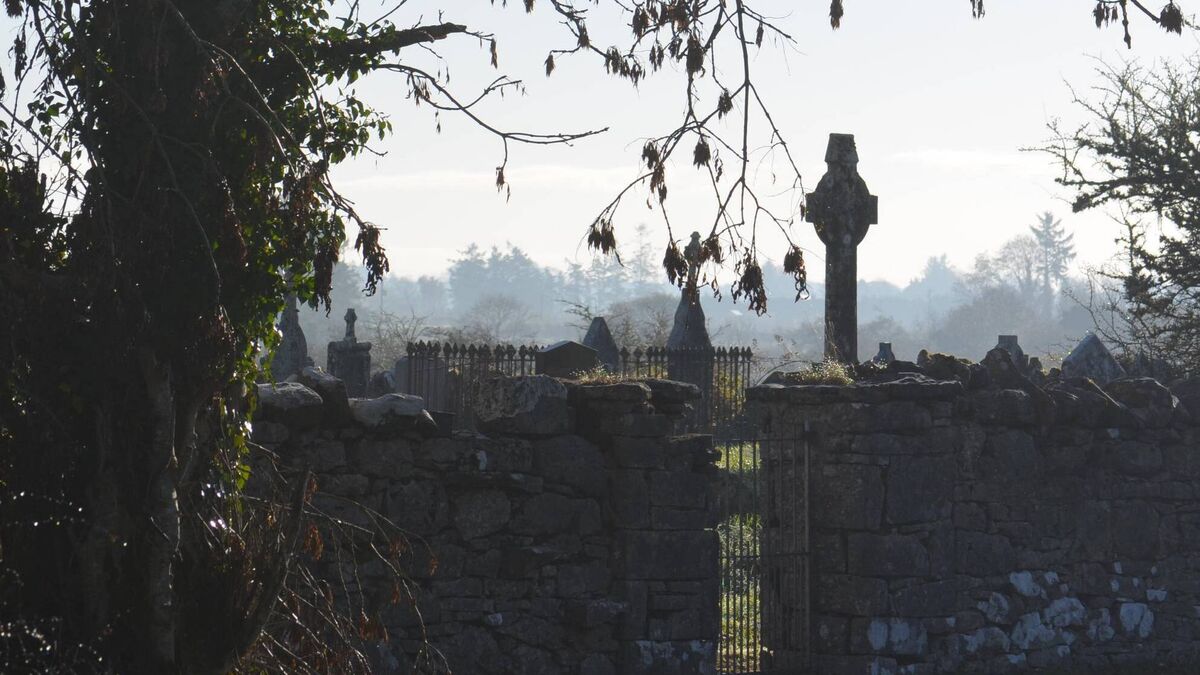
Irish people treat death in a very different way to other nations, taking time to mourn with the bereaved, in homes, churches and at cemeteries. Picture: Pat McCarrick
The Irish wake is a unique ritual held after a death and before a funeral, sometimes lasting a few days, where family and friends gather to mourn and celebrate the life of the deceased, and support the bereaved family.
I attended my first wake, or corpse house, as my father called it, when I was about five years of age. I was on the bar of my father’s bike on our way home from Sunday mass and we stopped off at the home of this local man who had passed away the previous day. The body was laid out on the man’s own bed and while I found the situation strange, I somehow knew it was nothing to be afraid of. My father was at his ease in the situation and that reassured me. To this day, I can clearly see the hands of the corpse, firmly clasped across his chest, his rosary beads intertwined in his fingers.
Wakes were originally a type of vigil to ensure the person was truly dead and to protect the body. Every wake has common elements: shared stories, food, drink, and a sense togetherness that helps with the grieving process.
Historically, the body would be prepared by local women, washed, and dressed in a shroud at the family home. Candles would be lit, mirrors covered, and clocks stopped at the time of death. In the past, ‘keening’, a kind of performative crying, was a common and important part of the ritual. Visitors would bring supplies to wakes, with food and alcohol often served to support the immediate family and facilitate social interaction.
A 2017 book, , by Kevin Toolis, is a fascinating account of his father’s passing. Toolis, a writer and filmmaker, was of Achill Island stock; his father Sonny, was a native islander, who spent much of his working life in Scotland.
was described by Hugo Hamilton as "a profound book on the culture of grief and death, placing the personal alongside the political in a vivid exploration of our ancient ways of coming together around the dead".
In his book, Kevin Toolis does two things; he laments the way some western societies have sanitised death and then contrasts this with the many benefits and blessings contained in an Irish wake. In one paragraph, he describes waiting, waiting not just for the death of his father but also waiting for the rituals that will surround it when it happens.
Toolis describes the sanitisation of death in some countries as the Western Death Machine. He describes how bodies are removed from ritual in an effort to save families from grief, from having to deal with death.
Toolis grew up in a Scottish city where the bereaved had little or no say in what happened to their loved ones after death. Very often such families were disempowered while the bodies of their dearly departed were treated like products that had to be processed through a system.
Toolis lost a brother in the city and had to suffer not just the tragic death of his sibling but also the loss of any ritual surrounding his passing. Having spent much of his life searching for answers, he later found most of them at the time of his father’s death on Achill Island.
He cleverly contrasts his Western Death Machine against our Irish wake. In the following paragraphs he takes his city experience and, with a certain amount of humour, places it alongside the waking ritual we are familiar with here in Ireland.
Toolis even included the phenomenon of death notices being read out on local radio stations as a recent additional ritual around death in Ireland. Indeed, our own Midwest Radio was a pioneer in attaching this new feature to an old ritual.
Toolis’ work put me in mind of my own father’s wake. It was during the days of Christmas in 2008, days that were unusually mild for the time of year. His death was coming for a few days and when it finally arrived, it seemed to be perfectly timed. The day before he died was Christmas Day and most of my siblings had gathered, some of us spending Christmas together for the first time in many years.
That Christmas wasn’t spoiled by my father’s death; it was one of the most memorable ever. My father had reached the age of 97 so there was no deep sense of loss, only a feeling that he had lived a fine long life and had got all his jobs done.
When I look back on those few days, my principal feeling is one of pride. Pride in my father and all the work he had done, pride in the ritual of his wake and all the friends who showed up to pay their respects, pride that he was laid out in his own house, and pride in the way a team of his grandsons carried his coffin to the edge of the townland before it was placed in the waiting hearse, to complete his final journey to his beloved chapel.
I know that not everyone’s experience of death is this wholesome. For most people, however, the healing power of friendship and the security of knowing people care, are central to our ritual of waking our dead. These are the sacred elements in a process that stops us in our tracks for a few days and then, through their healing powers, help us to restart and move on again.