The red squirrel – Making a welcome return
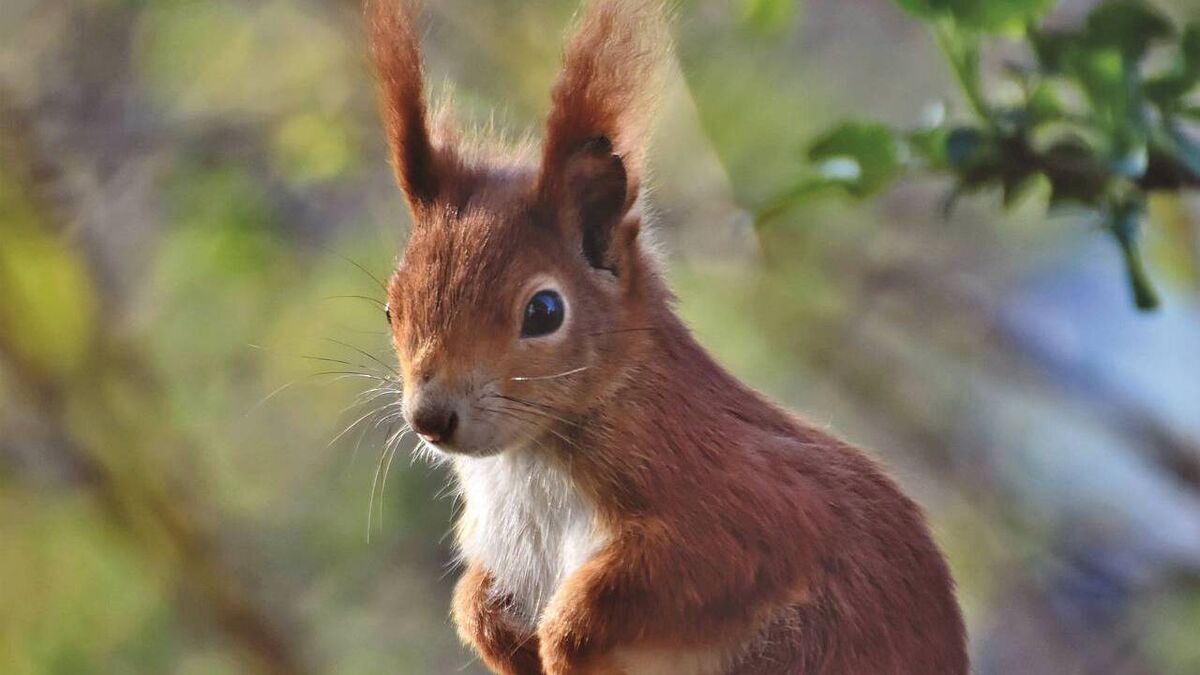
Populations numbers of the red squirrel are on the rise and the West of Ireland remains a stronghold for the red squirrel but it is most frequently seen in counties Cork and Wicklow.
A few times lately, I met people who had seen a red squirrel in their locality. It appears that this endearing little fellow has made a bit of a comeback in and around the Ox Mountains and its presence seems to be giving the people who encounter it a lot of pleasure.
The red squirrel is a native species that is thought to have been present in Ireland since before the last Ice Age. It is dependent on a woodland habitat and has suffered several population declines, including almost complete extinction in the 17th century due to widespread deforestation. The current population mainly derives from reintroductions that took place in several locations during the 19th century.
In general, the red squirrel has one of the broadest natural ranges of any squirrel species, spanning from Ireland to Japan across Europe and Asia. Here in Ireland, the red squirrel population is indeed in recovery. According to the All-Ireland Squirrel and Pine Marten Survey Report of 2019, the species is now recorded in every county, and during the survey the number of sightings increased compared to previous surveys conducted in 2007 and 2012. The West of Ireland remains a stronghold for the red squirrel but it is most frequently seen in counties Cork and Wicklow.
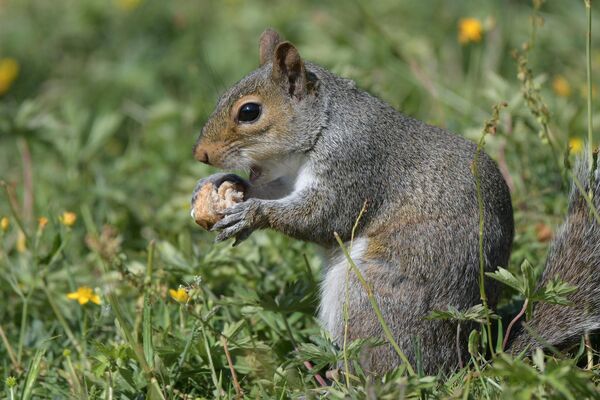
The grey squirrel was introduced to Ireland from North America in 1911, when a small number escaped from a wildlife collection in County Longford. This single introduction gave rise to many negative complications. The species quickly spread across the country, causing significant damage to trees and contributing to the decline of the native red squirrel population.
Frank McNally, writing in (2006), in his column, , gives us more detail on the relationship between these two species of squirrel and the effect they have upon each other.
In both Ireland and Britain, grey squirrels are classified as vermin. In fact, our National Parks and Wildlife Service actively encourage control of their numbers. This operation is often undertaken by experts but a more natural method of depopulating the grey squirrel has also presented itself.
Dr. Emma Sheehy, writing for the Irish Research Council, explains how the native pine marten recovery has reversed the decline of the red squirrel by suppressing grey squirrel populations.
Sheehy found that the impact of exposure to predation is highly asymmetrical. Simply put, the grey squirrel population is impacted by exposure to pine martens. Conversely, having fewer grey squirrels about is increasing red squirrel numbers.
How, you might ask, does the presence of the pine marten restore balance among squirrels? While the two species have coexisted for thousands of years, red squirrels have evolved an instinctive defensive ploy when dealing with the pine marten. When pursued by a hungry pine marten, a threatened red squirrel is light enough to escape to the outer-most tip of a tree branch. If the much heavier marten follows, he will simply fall to the ground. In contrast, the non-native grey squirrel, does not possess this safety strategy. Being heavier than the red, he cannot escape to the outer reaches of tree branches and so is easier prey for the pine marten.
The red squirrel is a rodent. Like other rodents, it has ever-growing incisors that it uses to gnaw and eat. One piece of lore attributed to squirrels is that, like ourselves, they store food. They then return to their stash periodically to feed throughout the winter. Another squirrel snippet suggests that they frequently forget where their food is hidden. Both suggestions contain more than a grain of truth but both make little difference as to how and why a squirrel might survive a harsh winter.
It seems the red squirrel has a very keen sense of smell and can easily detect a stash of nuts. So, even if they cannot find their own nuts, they will find those of a fellow nutter and vice versa. In this way, such stores are seldom lost and every squirrel gets enough.
The red squirrel builds a nest called a drey, typically made of twigs and lined with moss and fur, to stay warm. In winter, their coat gets thicker, and they grow more prominent ear tufts. Red squirrels do not hibernate. Instead, they reduce their energy needs by staying inside their drey for several days at a time when the weather is very cold. They only come out to eat when they need to.
Researchers have also discovered that squirrels are ambidextrous – either right-handed or left-handed. This was detected when discarded pine cones that squirrels had fed on were examined. The angle of attack on each cone pointed out to researchers which of the squirrel’s paws was dominant. A ciotóg squirrel – who would have thought it?
Galway Community Heritage, in a piece on the red squirrel, share the following information with regards to its place in Irish folklore. The group suggests that the red squirrel has a nature-centred place in our folklore.
As winter approaches, let us toast the red squirrel; may his numbers continue to grow and may he always find his store of food. The sight, the deft movements, and the secretive behaviour of our little russet friend, seems to endear him to everyone. Little wonder we are so excited by his re-emergence in the woodlands of the Ox Mountains.