The magical ladybird... God's little cow
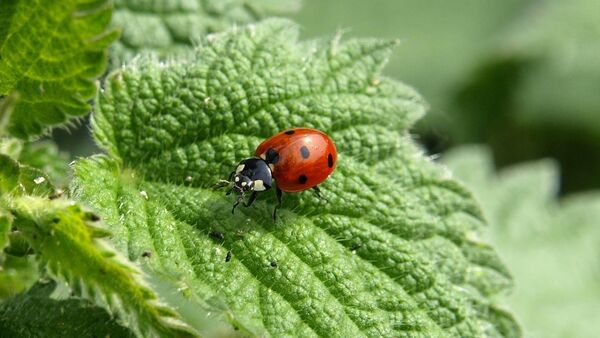
Ladybirds are found globally in grasslands, forests, and gardens.
My first knowledge of a ladybird was at a young age when I encountered the Ladybird series of children’s books. At that time ‘ladybird’ was just a word, a logo on the corner of a book cover.
Of all the insects we had around us, in the meadows and gardens of the Ox Mountains, I never thought the ladybird was one of them. But… we do indeed have ladybirds, and lots of them. They may live hidden lives but encountering one is a magical experience.
These insects are quite small and appear with bright red, orange, or even yellow shells, often marked with black spots. Adults and larvae devour thousands of aphids in their lifetime, making them a friend of gardeners. Ladybirds are found globally in grasslands, forests, and gardens. They hibernate in groups in sheltered alcoves during winter. If you are keen to find one, they can often be found on the underside of timber fence rails. Biodiversity Ireland, in an information piece, Ladybird Atlas 2025, has some up-to-date information.
Ireland hosts around 18 ladybird species, including common ones like the seven-spot, two-spot, 10-spot, and 14-spot. Ladybirds, known for their variable spots and bright warning colours, exist alongside less common ones like the Eyed, Heather, and Orange varieties, with the invasive Harlequin Ladybird also present. Their spots, by the way, are thought to be some kind of warning signal.
In Irish folklore, the ladybird is known as Bóín Dé, meaning "God's little cow" or “God’s coween”. This name reflects its perceived divine connection and beneficial role as a pest-controller. These tiny creatures symbolise good luck, with spot counts predicting fortune or marriage, and they are also linked to the Virgin Mary and general blessings.
There are quite a few beliefs attached to Ladybirds with the following being some examples -
A ladybird landing on you brings good luck. Counting its spots can predict years of good fortune or when a wish will come true. The direction a ladybird flies from your finger reveals the direction your future spouse might come from. The "lady" part of the name often refers to the Virgin Mary, with the spots resembling patterns on cows or the Virgin's red cloak. Ladybirds are also reputed to be a positive sign for good weather and healthy plants.
When I first discovered the title, , I thought it was some peculiar kind of Irish creation. I was later to discover that this was not the case and that this poetic name for the ladybird is to be found, in one form or another, in countless other languages. In Welsh, the word for ladybird is , which means “short red cow”. In Russian, it is , which is literally the same as the Irish, “God’s little cow”.
, in an online article from 2020 entitled, , continues with information on the local names associated with the ladybird. They are very similar to our Irish version, most showing a connection to God, Mary and the cow.
I was an adult before I met these special little creatures for the first time. I was discovering a strange new creature that up to that point had only existed in my imagination. Their spectacular red colour and evenly apportioned spots are truly amazing. The way they might hop on to the back of your hand or run around your fingers and then, in a little burst, simply take off again.
It is easy to imagine how ancient people arrived at a name for this little bug that connected it to Godliness and goodness – and there were few greater influences in the lives of our ancestors than gods and the cows. The magical ladybird was obviously highly regarded by these people.
How these same people discovered that the ladybird could devour thousands of aphids, and that this was beneficial to their farms and gardens, is anybody’s guess. That connection was made however, and the little ladybird came out of it all with a glowing reputation as well as a secure place in world folklore. The commonality of its name, in so many different cultures, is quite remarkable and would seem to indicate some kind of central discovery or universal knowledge, possibly existing from a time before the separation of tribes or the divergence of language.
Looking back to the Ladybird books of childhood, that publishing company traces its origins to 1867 when Henry Wills opened a bookshop in Loughborough, Leicestershire. By August 1914, the company had published their first children's books, under the Ladybird label. From the beginning, the company was identified by a ladybird logo. It seems this was more to do with it being an image that might appeal to children rather than any deep literal symbolism.
In the 1960s and 1970s, the company's Key Words Reading Scheme (launched in 1964), a series of 36 small-format hardback books, was widely used by primary schools, using a reduced vocabulary to help children learn to read.
One of the most famous stories about a ladybird is (Holtzhausen, Evans and Kriel). This book is not from Ladybird books, but it is a story with a very powerful moral - about the ability to accept one’s self, just as we are.
Lara is unique in her community; she has yellow wings. Despite being very popular, she longs to have red wings like all the other ladybirds. So, to make her happy, one day her mother paints her wings red. Next day, Lara is ignored by her neighbours and friends. Upon asking why, she is told that it was her yellow wings that made her stand apart, the thing that made her special.
Maybe, as we face into another year, we can use this little story to embrace who we are? Maybe we can identify what makes us unique and get comfortable with that. It is often the thing we do best, the part of us we are most at ease with and is the thing our friends admire us for the most.