The great word purge
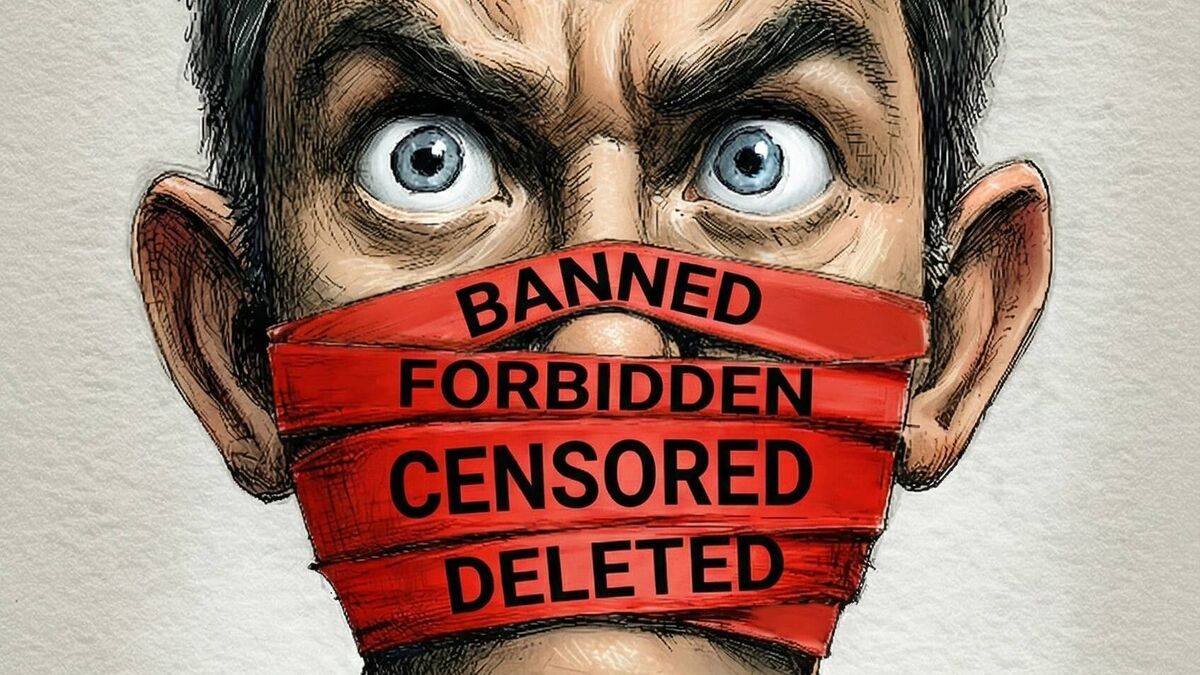
The age-old bureaucratic compulsion to control every syllable, to police every phrase, to imagine offense where none exists is the real and present threat.
Imagine a scene in a beige-carpeted office in Belfast, a civil servant clutches her chest and crumples to the floor. Her colleague rushes over.
"What happened?" he gasps. "Was it the phrase 'good morning guys'?"
Another worker nearby begins hyperventilating into a paper bag as he's just heard someone say "old-school" and might need counseling. In the corner, a clerk pretends to swoon because his line manager used the words "mum and dad" in a memo about parental leave. The trauma, the horror, someone call HR!
The poor and unsuspecting denizens of Northern Ireland are ushered into a timid new world of tolerable verbiage as recommended by an enlightened Northern Ireland Civil Service. Their 26-page Inclusive Language Guide is merrily mapping the way forward for linguistic excellence in the 21st century.
As an inveterate old curmudgeon, I feel compelled to state the obvious. Calling this document anything but a perversion of the English language is like calling the infamous 1950s' McCarthy Inquiry an afternoon discussion group.
Tut, tut, but this isn't a banned list, they demurely insist. It's merely 31 recommendations for how not to make people of high or nervous sensibility feel unsafe.
Those of us who regard ourselves as civilised and of a caring disposition all know that nothing screams safe workplace quite like the linguistic equivalent of walking through a minefield wearing clown shoes while your every utterance is subject to scrutiny by a self-appointed internal inquisition.
The ill-advised list itself reads like it was compiled by someone who's never actually met an English-speaking native, so out goes "ladies and gentlemen" because it's apparently too gendered, and "Good morning, guys" is absolutely forbidden. The wickedly poisonous "Dear" and "darling" are now deemed verbal assault weapons, and you can't say "Christian name" because that might offend the legions of non-Christians awaiting offense. "Mum and Dad", however dear to you, must be scrubbed from existence because families come in all configurations and need to be acknowledged and, somehow, included, even if not present.
But here's where it gets most ludicrous, bordering on mad-cow-disease unhinged. You can no longer say "blind drunk" or "fell on deaf ears". These familiar throwaway phrases, part of English for centuries, are now deemed offensive to people with disabilities, whether the party so maligned had a say in this designation is entirely irrelevant.
It matters little that the colourful and cherished term, "blind drunk," has nothing to do with actual blindness and everything to do with being so hammered you can't see your way home. It is deemed entirely irrelevant to those parsing our language that "deaf ears" is an endearing metaphor for willful ignorance, not a treatable medical condition. But the dull, witless bureaucrats have spoken, and metaphor itself must be sacrificed on the altar of imagined hypersensitivity.
Our beloved metaphor for Irish weather, "Raining cats and dogs," is apparently problematic now, and I'm not entirely sure why. Maybe it promotes animal cruelty, or possibly someone in the diversity office had a vision of literal pets falling from the sky and decided we must protect people from such meteorological imaginings. The English language has been busily building its house of idioms for millennia, and suddenly, we have some enlightened committee that wants to condemn the whole thing because the foundations might contain some offensive detritus.
The more recent generational terms are perhaps the most revealing. You mustn't say Baby Boomer, Gen X, Millennial, or Gen Z because - well, I have no idea. These are literally the terms those generations use for themselves. It's like banning the word 'Irish' because it might make the Welsh feel excluded. "The elderly" and "old people" are out too, along with "young at heart" and – God help us – "coasting to retirement". Because nothing makes a 64-year-old feel more dignified than pretending they're not actually approaching the end of their working life.
This ill-judged guide treats language like a series of bear traps, rather than a living, breathing, constantly evolving organism that people use to communicate and connect. When you inform 24,500 presumably intelligent employees that previously innocuous words might make someone "feel unsafe", you're not promoting inclusion but fostering a culture of creeping paranoia. What you’ve created instead is a workplace where everyone's walking on eggshells while simultaneously terrified that inadvertently uttering "ladies and gentlemen" might trigger an impromptu interrogation or, worse, a tribunal.
Words like "dear" and "love", which in Ireland and Britain are terms of endearment used by everyone from bus drivers to shopkeepers don't make people unsafe. Actual intentional violence makes people feel unsafe. Experiencing discrimination in housing, employment, being denied healthcare, or being attacked for who you are, but being called "love" by someone's granny while shopping is not going to make you reach for the valium.
The guide insists we shouldn't use "English native" because it might offend people who speak English but aren't English. Right. So now we need a three-paragraph circumlocution to describe what everyone understands in two words. "Person who acquired English as their primary language during early childhood linguistic development in an Anglophone environment" doesn't exactly roll off the tongue, does it?
The term "Illegal immigrants" is apparently out too, as we must say "undocumented migrants" instead. This isn't about inclusion, it's about woke politics dressed up as sensitivity. People can disagree about immigration policy without one side pretending the word "illegal" has ceased to exist. When someone enters a country without authorisation, that's the definition of illegal immigration, and you can argue it shouldn't be illegal, you can argue for amnesty, you can argue for open borders, but you can't simply rebrand reality because you don't like the optics.
The truly offensive thing about this guide isn't the words it wants to ban but the facile list of assumptions behind it. The idiotic notion that adults need to be protected from language, like toddlers, perpetually protected from sharp corners, and dishwasher tablets. The idea that people are so fragile, so perpetually on the verge of emotional collapse, that hearing "good morning, guys" might be the straw that breaks the camel’s back. It infantilises the general populace and is woefully condescending to the very people it claims to protect.
Real inclusion doesn't mean neutering language until it's so bland and bloodless that nobody could possibly take offense. Real inclusion and fairness mean creating workplaces where people are judged on their work, not their background. Workplaces where actual, verifiable discrimination is punished, and management is not just concerned with previously acceptable verbal metaphors. Calm, good-humoured workplaces where someone innocently saying "ladies and gentlemen" doesn't cause a diplomatic incident requiring a formal apology and the threat of a six-hour diversity training session.
The English language as inherited is a magnificent, unruly beast built from Anglo-Saxon, Norman French and Latin, stuffed with words stolen from every corner of the globe, including Ireland, and seasoned with centuries of idiom and metaphor. It's complicated and occasionally contradictory, and that's what makes it beautiful and still surprising. When you start trying to sanitise it, you don't get a better language, but you do get a much duller one, dying on the lips from slow asphyxiation. You get the linguistic equivalent of a padded cell, the occupant technically harmless and neutered, but utterly soul-destroyed and void of any creative possibility.
These proscribed words aren't dangerous, but inserting this way of thinking into officialdom is insidiously damaging. The age-old bureaucratic compulsion to control every syllable, to police every phrase, to imagine offense where none exists is the real and present threat. When we make everyday language a minefield and when ordinary conversation requires consulting a 26-page manual, we don't get inclusion. We get silence. And in that silence, nothing good grows.